
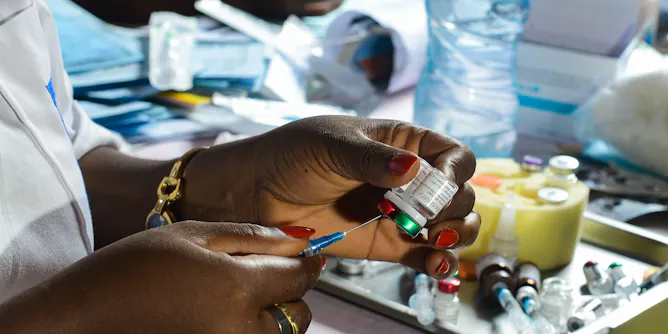
Malaria is still endemic in Africa.
Articles on Genetically modified mosquitoes
Displaying all articles

Methods that don’t rely on insecticides are needed to bolster the fight against mosquito-borne diseases.
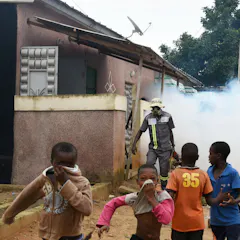
A warming climate may change the types of viruses that thrive. A new report suggests that the threat of malaria may be replaced by dengue, for which there is no treatment and no cure.

Release of GM mosquitoes in Florida is imminent. But a multidisciplinary team of scientists believe that more studies are needed first. They encourage a publicly accessible registry for GM organisms.

In the ongoing arms race to kill off mosquitoes that spread malaria, researchers have modified a naturally occurring fungus that kills mosquitoes with a deadly toxin to wipe out these insects faster.

You may not agree with using the gene-editing tool, CRISPR, to alter the DNA of human babies. But what about using it to engineer plants? Or wipe out one of the world’s most dangerous creatures?
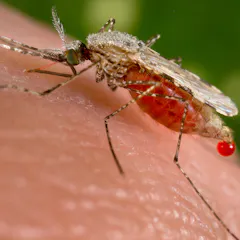
Researchers are exploring genetic forms of population control called gene drives that spread traits faster that happens naturally. The goal is to curb mosquito-borne diseases like malaria.

Genetically modified mosquitoes breed fear and suspicion, especially since the research happens behind closed doors, away from the public. Now scientists and architects are trying to change that model.
For several billion people mosquitoes are more than a nuisance – they transmit deadly diseases. Now genetic modification may prove the most effective defense against the mosquito, preventing disease.
Top contributors
-

Principal Medical Scientist and Head of Laboratory for Antimalarial Resistance Monitoring and Malaria Operational Research, National Institute for Communicable Diseases
-
Professor of Entomology and Disease Epidemiology, Penn State
-
Medical scientist, National Institute for Communicable Diseases
-
Goodnight-NCGSK Distinguished Professor, North Carolina State University
-
Vector Ecologist, University of Illinois Urbana-Champaign
-
Scientific Citizenship Initiative Advisor and Center for Bioethics Lecturer, Harvard University
-
Medical Entomologist, University of Illinois Urbana-Champaign
-
Cornelius Vanderbilt Chair in Biological Sciences, Professor of Biological Sciences and Biomedical Informatics, and Director of the Vanderbilt Evolutionary Studies Initiative, Vanderbilt University
-
PhD Student, Imperial College London
-
UP ISMC: Project Manager and Coordinator, University of Pretoria
-
Senior Medical Scientist at the National Institute for Communicable Diseases, National Institute for Communicable Diseases
-
Director: UP Institute for Sustainable Malaria Control, University of Pretoria
-
Professor of Architecture and Environment, University of Oregon
-
Senior lecturer, Biochemistry, North-West University
-
Associate Professor of Entomology, University of Illinois Urbana-Champaign