

Until now, we haven’t had research that tracks how accessing hormones or surgeries affects how much trans people use mental health services and medications.
Articles on Gender affirmation
Displaying all articles

Without rebates, surgeries for trans people can cost between $20,000 and $100,000.

Recent political attention might imply gender-affirming care is risky, controversial, perhaps even new. But Australian law views it as a legitimate medical treatment.

While it doesn’t constitute a national ban on gender-affirming care for minors, the executive order contains provisions that could have a chilling effect on health care providers around the country.

In ancient Rome, male followers of the goddess Cybele, known as Galli, some of whom surgically removed their testicles, were often considered feminine.

Gender-affirming care assesses psychological, social, medical and surgical options for gender-diverse people.

The findings push back against the notion that many transgender people end up wishing they hadn’t gone through with gender-affirming surgeries.

Because of ethical considerations, there are no clinical trials comparing the effects of hormone therapy to conversion therapy on trans youths. But a set of recent studies tease out cause and effect.

How can we ensure ethical research principles for young trans people and their families are met – especially when they might see research as one of few avenues for accessing care?

The rainbow Pride flags flying this month obscure the ongoing legislative attacks threatening the health and well-being of transgender and nonbinary people and their families.
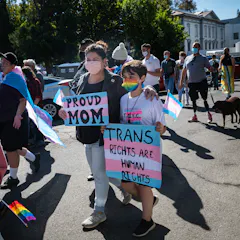
Families can educate themselves, look for other families to connect with and push for coordinated health and social services.
Top contributors
-

Senior Research Fellow in the Specialty of Child and Adolescent Health, Faculty of Medicine and Health, University of Sydney
-
Professor in Paediatrics, University of Sydney
-
Distinguished Professor in Sociology, School of Social Sciences, Western Sydney University
-
Trans Health Research Fellow, The University of Melbourne
-
Associate Professor, College of Medicine and Public Health, Flinders University
-
Senior Principal Research Fellow and Group Leader, Transgender Health Research Group, Murdoch Children's Research Institute
-
Assistant Professor of Health Policy and Administration, University of Illinois Chicago
-
Research fellow, Transforming Early Education and Child Health Research Centre, Western Sydney University
-
Associate Professor of Psychology, Michigan State University
-
Assistant Professor of Economics, Southern Oregon University
-
Assistant Professor of Plastic and Reconstructive Surgery, Johns Hopkins University
-
Postdoctoral fellow, Vanderbilt University
-
Assistant Professor, Social Work, Mount Royal University
-
PhD Student, Centre for Social Research in Health, UNSW
-
Professor of Health Economics, Centre for Health Economics, Monash University