
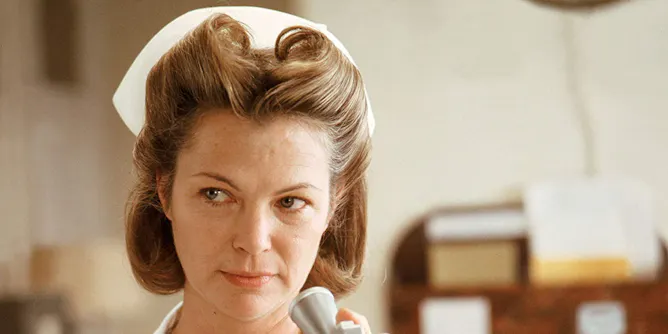
To the public, nursing is much like teaching work – known to be valuable, but not worthy of much critical attention. Accordingly, nursing is rarely represented in any depth in popular culture.
Articles on Friday essay
Displaying 281 - 300 of 405 articles

Alone and adrift in Melbourne, Cassandra Pybus returned on a whim to her childhood home of Tasmania. There, she rediscovered nature’s power, encountering the island’s difficult history as well as her own.
Our identity unquestionably shapes (and can limit) how we interact with the world. But it should not become the only foundation upon which we build our understanding of it.
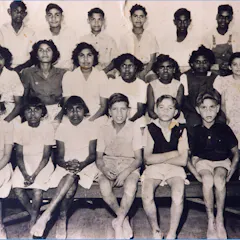
Aileen Marwung Walsh’s grandparents were sent to the Moore River Native Settlement, of Rabbit Proof Fence infamy, half a century ago. In 2018, 100 years after the settlement’s founding, she returned.

Sport is a dominant thread in Australia’s cultural DNA. But it’s also divisive.
Writerly acts of confession are garish, they are vulgar and dazzling, but they are the only form of disobedience at many a woman writer’s disposal.
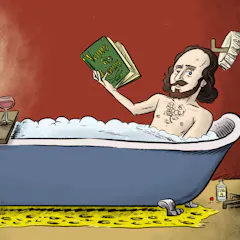
Shakespeare’s first reputation was as a poet, and particularly as a sex poet. He would later incorporate his bawdy inclinations into his most famous plays.

US president Donald Trump’s industrial scale deception has dangerous implications everywhere. What then, can we do to foster a more civilised society?
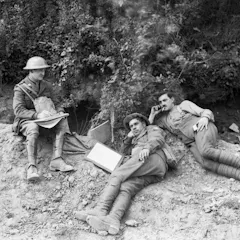
Australian authorities sent artists to the WW1 battlefields to interpret and commemorate war. But unlike similar schemes in Britain and Canada, ours neglected the war experience at home and the perspective of women artists.
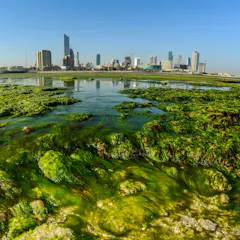
As we enter the age of the Anthropocene, there is a growing recognition of different kinds of ‘un-real’ storytelling.

Leonard Cohen’s final (posthumous) book was released in Australia this week. Another new book sheds light on Cohen’s life on Hydra in the 1960s and the relationships he forged with Antipodeans seeking liberation there.

A growing number of parents are making money out of their children by turning them into social media celebrities. But the chimera of corporate branding is no antidote for lives lived in precarious times.
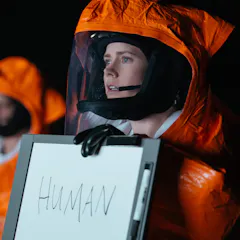
For decades, academics have been portrayed as brilliant, heroic men on our cinema screens. It’s time to tell the story of more heroic female scholars. Here are some suggestions.
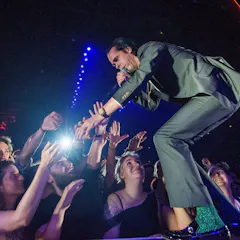
The enquiry into sacredness is not over, it’s just beginning for the 21st century, and in wildly disparate modes and places. In music, Nick Cave, Hozier and Dr G. Yunupingu have led the way.
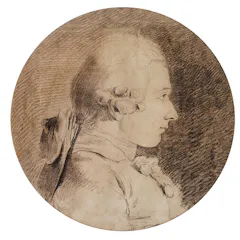
In early 20th-century Australia, a series of highly publicised murders of women saw newspapers widely discuss sadism.
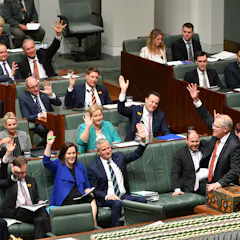
We need a new national narrative, for reasons of diplomacy, trade and social cohesion and to grapple with many global challenges. The humanities and social sciences will be vital in shaping it.
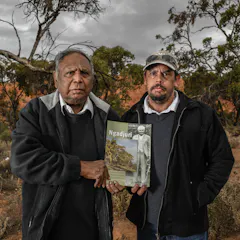
In the 1940s, the last initiated Ngadjuri man, Barney Waria, gave a series of interviews to anthropologist Ronald Berndt. Almost 80 years later, Waria’s grandson wants to share this material with his family.
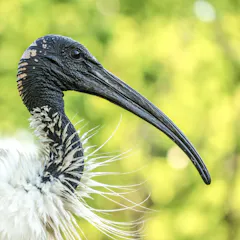
The ibis has become an Australian cultural phenomenon. The birds’ tenacity and fearlessness as environmental refugees mean they attract love and hate alike.
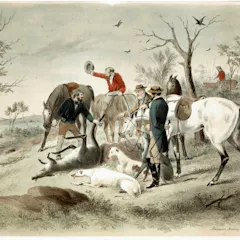
In the mid 19th century, kangaroo hunting was a sport. Colonial hunting clubs were established across Australia and everyone from Charles Darwin to Anthony Trollope tried their hand at shooting roos.

Food is an increasingly popular ingredient in crime fiction, serving up insights into the character of the detective hero and adding spice to the mystery.
Top contributors
-

Professor in Politics and Journalism, University of Notre Dame Australia
-
Associate Professor in Literary Studies, Monash University
-
Associate Professor in Creative Writing, Griffith University
-
Visiting Research Fellow, Department of English and Creative Writing, Adelaide University
-
Emeritus Professor in the History of Religious Thought, The University of Queensland
-
Honorary Professor of Classics and Ancient History, School of Historical and Philosophical Inquiry, The University of Queensland
-
Joanna Mendelssohn is a Friend of The Conversation.
Honorary Senior Fellow, School of Culture and Communication, The University of Melbourne
-
Senior Lecturer, Discipline of English and Writing, University of Sydney
-
PhD Candidate, Creative Writing, The University of Melbourne
-
Associate Professor (adjunct) in Creative Writing, Flinders University
-
Emeritus Professor of Creative Writing, The University of Melbourne
-
Lecturer, Deakin University
-
Professor Emeritus of Media and Culture, Griffith University, Griffith University
-
Professor of English, Flinders University
-
Research Fellow, Digital Cultures & Societies, The University of Queensland