
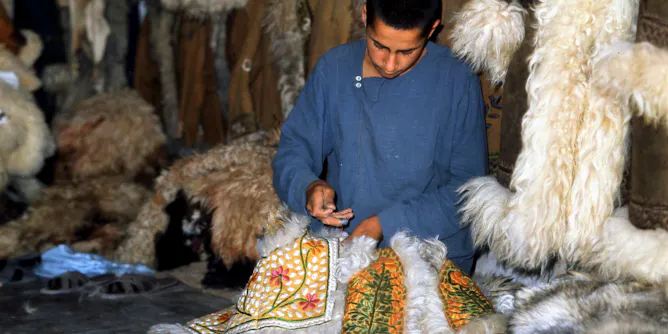
How an item of traditional Afghan dress became a staple of western “hippie” fashion from the 1960s right up to today.
Articles on Friday essay
Displaying 181 - 200 of 405 articles
By the end of the 19th century, the Devil had become a figure of myth. Ironically, that helped his image proliferate in popular culture.
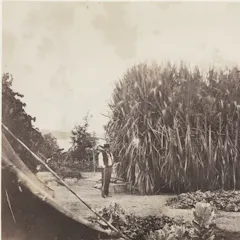
When Britain legislated to abolish slavery in 1833, some former slave owners moved to the Australasian colonies. New research traces this movement of people, money and ideologies.

It’s no coincidence that more books about trees are popping up. There is an air of desperation in new books by Peter Wohllben, Janine Burke and others.
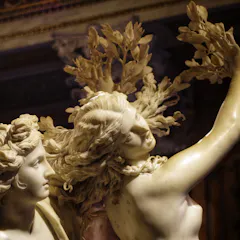
This ancient myth, in which a nymph transforms herself into a tree to escape the lustful attention of the god Apollo, has inspired countless retellings in art. Its themes resonate today.
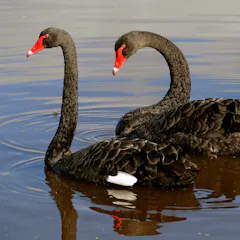
Not only is the black swan important for many Aboriginal people, it was also a potent symbol within the European imagination — 1500 years before Europeans knew it existed.
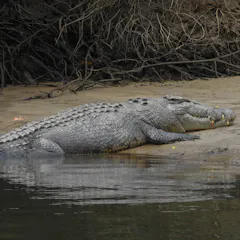
For an ecologist working in a tangle of creeks in North Queensland, crocodiles are a tangible threat. We are food to them, yet we must learn to co-exist with these creatures.
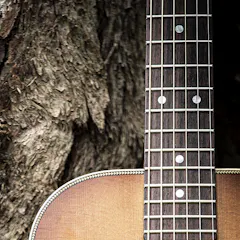
Following scandals over illegal logging, and with an appetite for rare, old-growth wood, the guitar industry is rethinking its environmental footprint. Australian companies are leading the way.

How does the spirit of Byron Byron endure wave after wave of seekers and lately, Instagram influencers? Sally Breen took a road trip and found a something deeper in the beachy township.
The line between what is normal and what is pathological has blurred. We risk our collective sanity and our planet if we stick to business as usual.
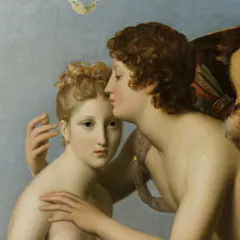
Is there an essence of love? Is it ultimately about commitment? Philosophy can offer some answers.
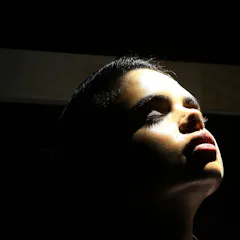
Australian Indigenous languages use a fascinating array of expressions drawing on body parts to describe emotions. Here is a guide to some of the most intriguing ones.
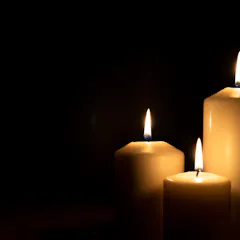
Many Australians believe in the existence of the soul. Here is a brief guide to how the five major world religions imagine the soul’s origin and journey.
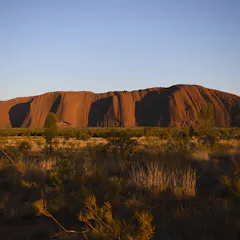
What happens when the distant frontier takes up residence in the family home? How are we to remember our flawed ancestors? A new book grapples with these questions.

Every day, the internet fills up with more and more dead people while our ability to reanimate them grows. The dead are more robust and more vulnerable — and we’re not ready for any of this.
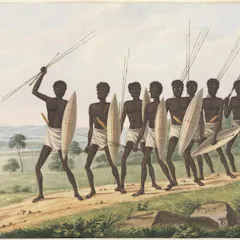
The widespread conflict that accompanied Australian life for 140 years was arguably our most important war. We need a museum telling this story, funded on a par with The Australian War Memorial.
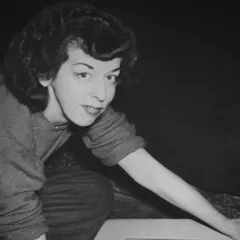
An artist and self-proclaimed witch, Rosaleen Norton defied cultural norms in Menzies-era Australia. Reviled by the media, she was a powerfully unconventional woman.

Before the goldrush, Indigenous people told stories about how the bronzewing pigeon seeded precious minerals across the land. Europeans stole not just land, but the value deep within it.
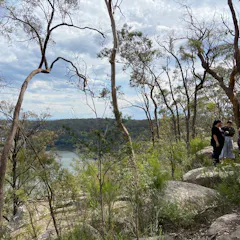
It was once thought the Aboriginal names for the Hawkesbury had been lost forever. But after a remarkable find in the Mitchell Library, almost 100 place names will be restored to Dyarubbin Country.
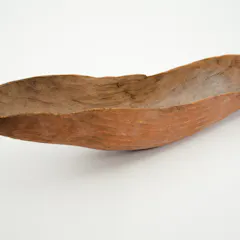
A spear-thrower, a shell, a bowl, a vase, a bucket. Five very different items tell us much about the history of collecting, the role of Indigenous experts and the shadow of colonial violence.
Top contributors
-

Professor in Politics and Journalism, University of Notre Dame Australia
-
Associate Professor in Literary Studies, Monash University
-
Associate Professor in Creative Writing, Griffith University
-
Visiting Research Fellow, Department of English and Creative Writing, Adelaide University
-
Emeritus Professor in the History of Religious Thought, The University of Queensland
-
Honorary Professor of Classics and Ancient History, School of Historical and Philosophical Inquiry, The University of Queensland
-
Joanna Mendelssohn is a Friend of The Conversation.
Honorary Senior Fellow, School of Culture and Communication, The University of Melbourne
-
Senior Lecturer, Discipline of English and Writing, University of Sydney
-
PhD Candidate, Creative Writing, The University of Melbourne
-
Associate Professor (adjunct) in Creative Writing, Flinders University
-
Emeritus Professor of Creative Writing, The University of Melbourne
-
Lecturer, Deakin University
-
Professor Emeritus of Media and Culture, Griffith University, Griffith University
-
Professor of English, Flinders University
-
Research Fellow, Digital Cultures & Societies, The University of Queensland