
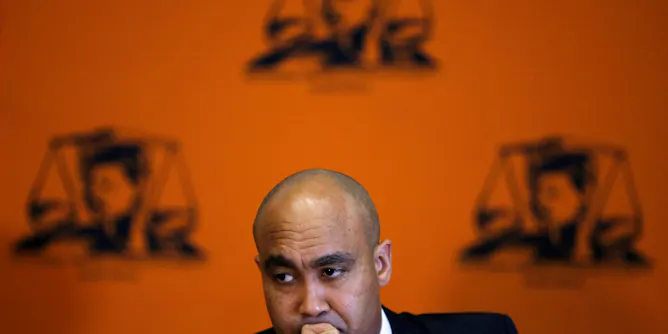
South Africa’s National Prosecuting Authority charged the country’s finance minister Pravin Gordhan and two of his former colleagues at the tax authority, Ivan Pillay and Oupa Magashule, with fraud last…
Articles on Fraud
Displaying 201 - 220 of 250 articles

The thousands of Wells Fargo low-wage employees who defrauded customers likely knew how it felt to face unfair overdraft fees or a deteriorating credit rating. So why did they do it?

One simple measure could go a long way to cracking down on illegal activity that is now widespread in Australia.

Proposed laws will put corporate executives in the firing line when the law is broken on their watch.

Regulators fined Wells Fargo US$185 million for fraudulently opening up more than two million fake deposit and credit card accounts. Will the victims get their pound of flesh from those responsible?

Tanzania’s government has uncovered evidence of 2 000 “ghost” students who are fraudulently obtaining loans. This costs the country and other students dearly.

Victims of online fraud say they’re passed from one authority to another when they try to report it, and they’re still made to feel they are to blame for being caught out by a scam.
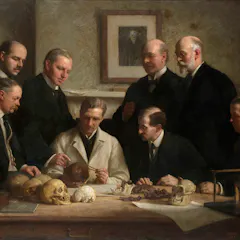
Fossils claiming to be the missing link between ape and humans were manipulated in such a way that Charles Dawson, who discovered them, was most likely the forger.

A loophole in a change to contactless card to prevent fraud had this security sleuth on the case.
Internet fraud – or ‘yahoo-yahoo’ – has become a way of life for some young Nigerian con-artists.
Online fraud is now the most common type of crime, so what should the police and tech firms do to put a stop to these often invisible attacks.

Philip Green has been vilified by MPs just as Theresa May vows to take on bad behaviour in big business. New research reveals just how urgent a task this is for voters.

The scandal at Uganda’s Parliamentary Budget Office shows that figuring out the proper roles, functions, internal controls, and capacities is more pressing than ever.

Two recent controversial cartoons depicting people as apes have raised an important question: what are the legal and philosophical distinctions between harm and offence?

Too often the impact of online fraud on people is trivialised, minimised or not even acknowledged by law enforcement agencies, families and friends. But we can do more to help them.

The government should resist the temptation to soften monitoring efforts aimed at MPs and their families and associates.

It’s bad enough when someone loses money to an online scam. But some victims can also recruit others into the scam causing even further heartache and loss of money.

Consumers lose out when a real estate agent acts fraudulently – be that false advertising, deceptive conduct or misusing trust funds. Research shows a link between such misconduct and lower regulatory and educational standards.

There’s a simple way to protect your contactless card being swiped in your pocket.
Reports of a drop in the number of people caught in online fraud is to be welcomed. But scammers are already changing their plans to bypass existing safeguards.
Top contributors
-

Associate Dean (Learning & Teaching) Faculty of Creative Industries, Education and Social Justice, Queensland University of Technology
-
Professor, Research Centre for Business in Society, Coventry University
-
Associate Professor of Accounting, University of Dayton
-
Professor of Psychology, Scripps College
-
Professor of Sociology (Criminology, Victimology and Security Studies), University of Ibadan
-
Associate professor, Département des sciences comptables, Université du Québec à Montréal (UQAM)
-
Professor of Security and Fraud, University of Portsmouth
-
Professor of Computer Science, Institut de Recherche en Informatique de Toulouse
-
Lecturer, Chinese Studies, The University of Melbourne
-
Professor in Accounting (forensic accounting), Université du Québec à Montréal (UQAM)
-
PhD Candidate in Technology Facilitated Modern Slavery, Ca' Foscari University of Venice
-
Host, The Conversation Weekly Podcast, The Conversation
-
Senior Lecturer, Department of Psychology, Aberystwyth University
-
Professor of Computer Science, Université Grenoble Alpes (UGA)
-
Contributing editor, Retraction Watch