
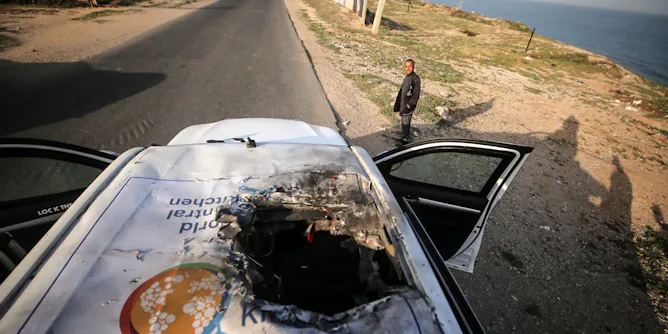
Aid workers used to be considered off-limits in conflicts. The deaths of 7 aid workers in Gaza show that’s not the case anymore. Attacks on aid workers are on the rise.
Articles on Foreign aid
Displaying 41 - 60 of 192 articles

New Zealand was mostly stable in key international rankings and domestic socio-economic measures. But there are signs of slippage in some areas and not enough progress in others.

Government sanctions against Hamas, which the US and the European Union consider a terrorist group, mean that aid groups are not able to directly work with Hamas.
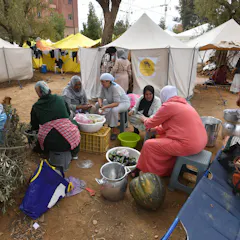
With Morocco, there’s stronger bureaucracy, and in Libya, authorities are weaker. But, as a scholar who has worked in both countries explains, the results are the same: not enough aid getting through.

The federal government’s long awaited new aid and development policy offers a clear and galvanising vision of how Australia should deal with the complex issue.
States with more capacity, more political inclusion and that make good use of foreign aid tend to see better outcomes.
The latest budget shows we’re starting to cement the view that an adequate development budget is non-negotiable if Australia wants to have influence in the region.
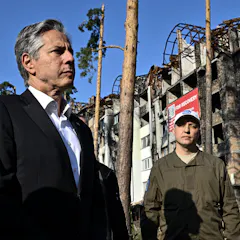
Giving Ukraine large amounts of money while not actually declaring war on Russia has various benefits for the US and other countries. Chiefly, it could protect US soldiers and civilians.

Since the Brexit referendum in 2016, Africa has slipped from its precarious but tangible place in UK political discourse.
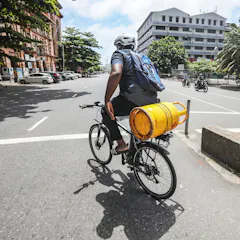
As authorities desperately seek aid, the Sri Lankan crisis continues.
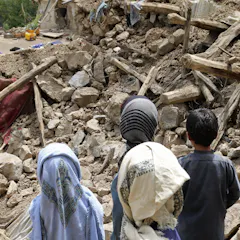
Concerns about Afghanistan’s Taliban leaders have made the rest of the world wary of sending money, and many foreign aid workers have already fled.
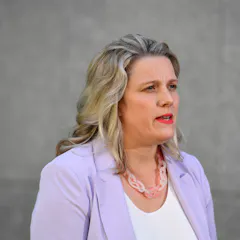
The Albanese government has launched a concerted effort to nip in the bud a threatened resumption of the people smuggling trade, with a visit by Home Affairs Minister Clare O'Neil to Sri Lanka and a $50…
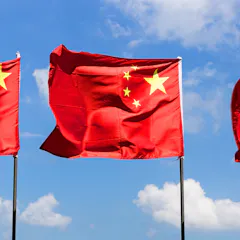
New Zealand – like Australia – must increase its overseas aid spending if it is serious about matching China’s ambitions in the South Pacific.

The money is evenly split between military support and funds for economic, humanitarian and other needs.

The Ukrainian crisis is probably the biggest crowdsourced humanitarian aid operation ever undertaken.
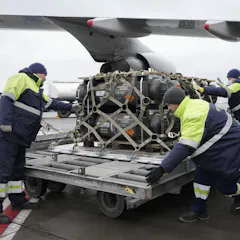
Assistance that began when the Soviet Union collapsed has grown since Russia’s annexation of Crimea, in southern Ukraine, in 2014.
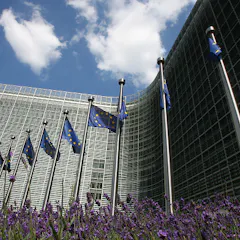
The cooperation should strengthen institutions and rally private entities to fund public projects.
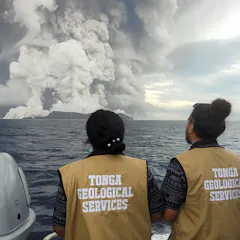
In 1983, a Canadian group helped rebuild traditional cooking houses in Tonga in the aftermath of a devastating cyclone. The Tonga Kitchens project offers lessons for Canadian aid today.
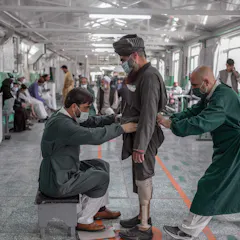
A scholar from Afghanistan outlines what more than $150 billion in assistance did and didn’t accomplish in two decades following the arrival of U.S. troops un 2001.

Low-income countries that sought to spend more on health care during the pandemic have been hit with ratings downgrades, while others avoided borrowing entirely.
Top contributors
-

Professorial Fellow, University of Canberra
-
Honorary Fellow, Asia Institute, The University of Melbourne
-
Associate Director, Development Policy Centre, Crawford School of Public Policy, Australian National University
-
Professor, Griffith Law School, Griffith University
-
Professor of Journalism, The University of Melbourne
-
Associate Principal Research Fellow, Burnet Institute
-
Professor of Public Administration and Policy, University at Albany, State University of New York
-
Professor of Law, University of Waikato
-
Professor of Southeast Asian Studies, The University of Melbourne
-
Professor of International Relations, The University of Queensland
-
Reader in Politics and International Relations and Deputy Director Aston Centre for Europe, Aston University
-
Lecturer in International Relations, Binus University
-
Honorary Fellow, University of Wollongong
-
Honorary Professor of International Relations, University of the Witwatersrand
-
Professor, Crawford School of Public Policy and Director, Centre for Climate and Energy Policy, Australian National University