

Tastier salt, packaging that alerts you to food that has gone off and fish oil that tastes better – nanoparticles have lots of potential.
Articles on Food and nutrition
Displaying 101 - 120 of 264 articles

Around 60% of Australians over the age of two years exceeded the recommended daily maximum intake of salt.

Many people believe eating healthily is expensive – and more costly than buying junk food. But our new research shows this isn’t the case.

If you’re an average-sized adult eating and drinking enough to maintain a healthy body weight, you should consume no more than 12 teaspoons of sugar per day.

Last week I joined 8,500 Australians on the charity challenge to live below the extreme poverty line, spending just $2 a day on food for five days. It was tough and my diet was far from complete.

When we eat a meal, we take for granted that we should feel full afterwards. But eating a diet high in sugar and fat makes it harder for our body to tell if we are full or not.

Oral rehydration is the cornerstone of treatment for gastro, especially if you’re suffering from mild to moderate dehydration.

After years of neglect and a notable absence in last week’s Closing the Gap report, nutrition is finally being recognised as integral to closing the gap on Indigenous disadvantage.

Monday – start diet. Tuesday – break diet! Wednesday – plan to start again next Monday. Sound familiar?

People overeat. And people don’t always make the healthiest food choices. That much is clear. But who is to blame for overeating and poor food choices?

What are some of those food safety myths we’ve long come to believe that aren’t actually true?

Between work Christmas parties, Christmas lunch or dinner, edible presents and New Year’s Eve, it can be an effort not to gain weight.

It’s like putting the fox in charge of the hen house – food advertisers can make and break the rules as they like.

As well as being a favourite seasonal fruit, a bioactive compound found in cherries is showing promising effects for brain health.

While 32 is an arbitrary number, chewing your food for longer could actually aid weight loss.

The numbers listed on your packaged foods replace the chemical or common name of food additives. These are used to enhance the colour, flavour, texture or prevent them from spoiling.

Eating breakfast is associated with higher grades in English, maths and science.
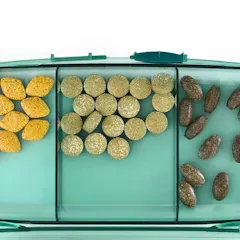
If the antioxidants that occur naturally in food are good for us, that must mean antioxidant supplements are also good for us, right? Not quite.

While a single, smaller portion leads people to eat less, having multiple smaller portions on offer appears to lead some people - notably the diet-conscious - to eat more.

Rather than informing consumer choice, Australia’s year-old health star food rating system is failing customers, and allowing food manufacturers to give an aura of health to junk foods.
Top contributors
-

Laureate Professor in Nutrition and Dietetics, University of Newcastle
-
Clinical Trials Director, Department of Endocrinology, RPA Hospital, University of Sydney
-
Associate Professor, Deakin University
-
Professor of Public Health Policy, Deakin University
-
Professor of Community Health and Wellbeing, The University of Queensland
-
Professor of Medicine, Monash University
-
Senior Lecturer, Nutrition and Food Science, Australian Catholic University
-
Professor of Nutrition, Adelaide University
-
Accredited Practising Dietitian and Lecturer, Southern Cross University
-
PhD Researcher, Australian National University
-
Program Director of Nutrition and Food Sciences, Accredited Practising Dietitian, Adelaide University
-
Associate Professor and Clinical Academic Gastroenterologist, Western Sydney University
-
Senior Visiting Fellow, School of Medical Sciences, UNSW
-
Professor, School of Medical, Indigenous and Health Sciences. Advanced Accredited Practising Dietitian, University of Wollongong
-
Retired nutritionist, Defence Science and Technology Organisation