
Memories endure, histories resurface, places retain physical traces of the past, and forgotten possibilities continue to shape our understanding of the world.
Articles on Folklore
Displaying 1 - 20 of 64 articles
He wasn’t a monster. He was just a man who survived a terrible accident. So why won’t western Pennsylvania let go of its ‘Green Man’ legend? A folklorist explains.

Swedes take pride in being modern – and secular. But interest in the paranormal is high.
Research shows that festivals and gatherings can change the way people choose to live.
From Pig Latin to Punch Buggy, kids have long used nonsensical language, gestures and games to carve out cultures of their own.
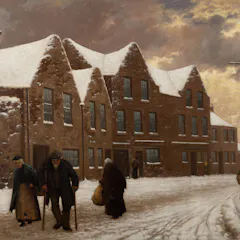
Irish people have historically looked to the natural world to forecast the weather and make sense of their surroundings.

Long ago, people identified fossils in their environment and explained them within their own cultural framework. This was early citizen science.
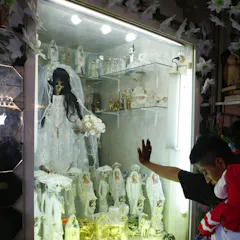
Since appearing as a public shrine in 2001, the female death deity’s popularity has exploded and is a frequent sight in public ceremonies such as the Day of the Dead.
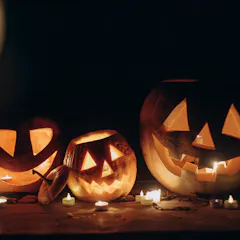
Halloween originated in Ireland, but the Irish used to carve turnips – not pumpkins.
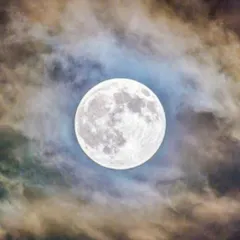
Folklore suggests that a full moon has a strong effect on sleep. But the reality is more complex, and lifestyle habits like screen use before bedtime are likely to have a larger effect.
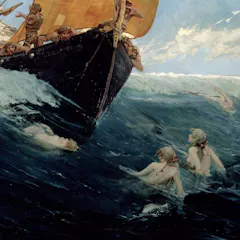
Whistling on a ship was taboo in the 18th century as it was believed to stir the winds.
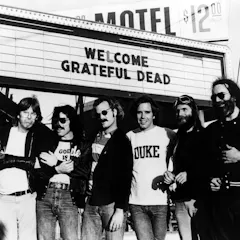
Playing an early gig at a coffee house, the Dead were described by the host as ‘just a panic to watch’.
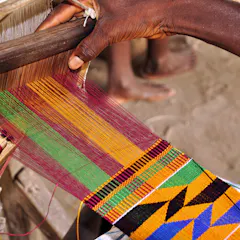
Kente cloth reflects Asante beliefs, values and history.
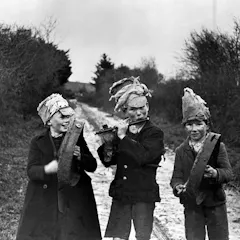
Still celebrated in parts of Ireland and in the diaspora, Wren’s day involves a parade where hunters sing at homes after catching a wren

Where families struggle to cultivate crops on shrinking plots, the baobab is increasingly seen as a competitor vying for space and nutrients.
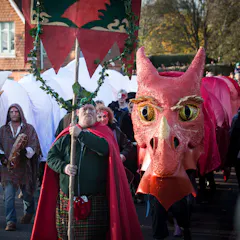
Folklorists created a through line from the Celtic pagan festival of Samhain to Halloween. But the Halloween we know today has more to do with the English, a 9th century pope and American consumerism.
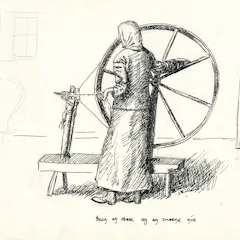
A look at Irish folklore surrounding women’s craft in time for Halloween, a time of the year when boundaries between worlds are said to be thin.
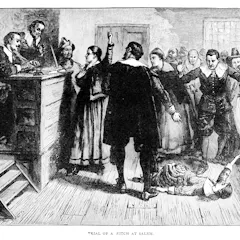
Dogs appeared several times during testimonies, typically because an accused witch was believed to have had a dog who would do her bidding, or because the devil appeared in the form of a dog.
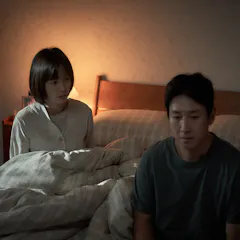
Hyun-su’s sleepwalking is ruining his marriage but it might take more than a few pills to get it under control.
In Brittany in north-west France, the oral narrative tradition was enriched by two languages, just as in Ireland, which shares many folktale versions with the Breton region.
Top contributors
-

Visiting Researcher in Journalism, Media and Cultural Studies, Cardiff University
-
Associate Professor of Research, University of Hertfordshire
-
Research Associate, African Centre for Coastal Palaeoscience, Nelson Mandela University
-
Associate professor in Vertebrate Palaeontology, University of the Witwatersrand
-
Honorary Professor of Classics and Ancient History, School of Historical and Philosophical Inquiry, The University of Queensland
-
Course Leader Masters, Senior Lecturer Screenwriting, Australian Film, Television and Radio School
-
Associate Professor in Entomology, University of Sydney
-
Postgraduate Research Scholar, University of Newcastle
-
Lecturer in History and Philosophy of Medicine, UCL
-
Visiting Fellow, Department of Government, London School of Economics and Political Science
-
Professor of Folklore, Curtin University
-
Associate Professor of Religious Studies, Texas State University
-
Associate Professor in Evolution and Palaeobiology, University of Southampton
-
Senior Lecturer in Mental Health, King's College London
-
Professor of Wildlife Conservation, University of Salford