
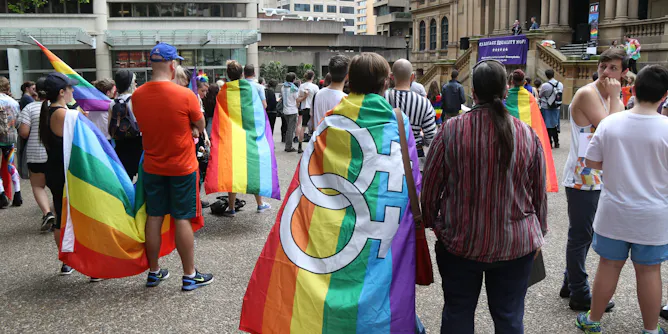
There have been policy issues in recent Australian history considered too important for playing party politics. Sadly, those days are long gone.
Articles on Federal politics
Displaying 41 - 60 of 178 articles
Five months into his prime ministership, it is difficult to know what Malcolm Turnbull really stands for, and his government risks paralysis as a result.
Despite all the media coverage, don’t expect any clear decisions on national tax reform on Friday. But we should see more progress on other issues, including domestic violence and violent extremism.
If Anthony Albanese becomes Labor leader, Australians will have the strongest ideological and stylistic contrast in major party leaders since Malcolm Fraser and Bob Hawke 33 years before.
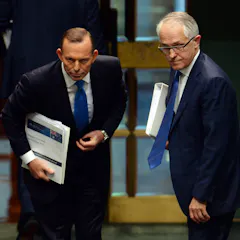
In leadership contests in particular, the media’s role is often markedly different from the competition between parties.
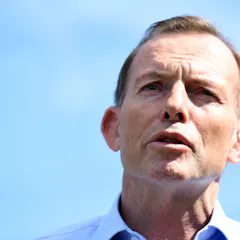
So far, Tony Abbott has failed to position himself as anything more than an opposition leader who has been given power and is unsure what to do with it.
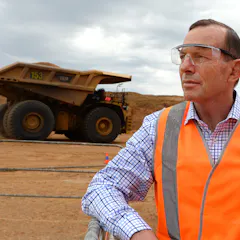
Australia’s failure to lead on climate action marks a stark shift in political priorities in the past decade. The government is all about immediate economic returns whatever the long-term costs.
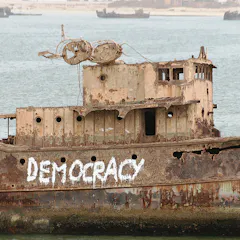
Campaigns are now more focused on how to manipulate the electorate so you can govern as you see fit once you get power.
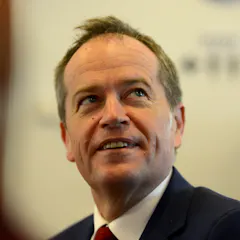
The opposition has widened its two-party lead over the Coalition in Newspoll as MPs return for a new parliamentary session rocked by voters’ anger over parliamentary entitlements.
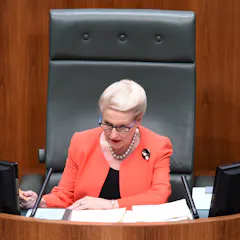
Combined, the nature of the controversy, Bishop’s behaviour as Speaker, and the way she and her party dealt with the issue created the perfect storm for a damaging scandal.
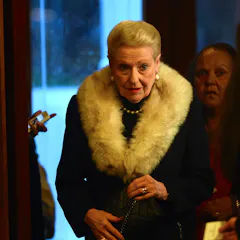
To last a long time, issues need to provide a vivid image. The image of a woman dressed up to the nines with a bouffant hairdo riding in a helicopter is a very vivid one.
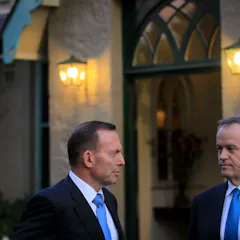
Tony Abbott’s leadership ratings and his standing as preferred prime minister have improved, but only to the point where he is roughly at level pegging with Bill Shorten.
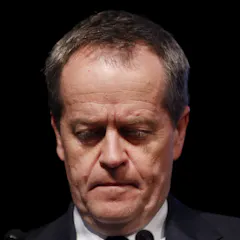
Bill Shorten has neither built the profile nor provided the performance that renders him prime minister-in-waiting rather than fragile whinger-in-chief.
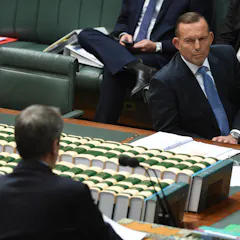
As opposition leader Bill Shorten prepares to introduce an amendment on Monday to the Marriage Act to legalise same-sex marriage, why has Australia lagged so far behind?
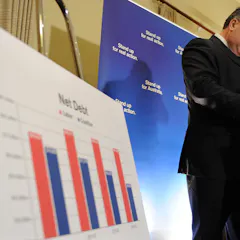
Joe Hockey’s first budget was a declaration of ideological belief. The second is about political survival and depends on breathing life back into the economy – the ideological urgency can wait.
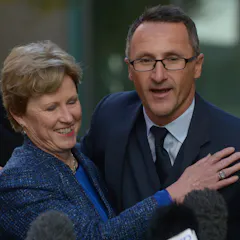
The balance of power in Australian green politics has shifted with the choice of Victorian Senator Richard Di Natale as Greens’ leader – and the speed of the change is a lesson for other parties.
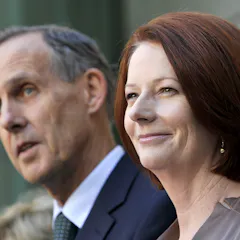
A political party that isn’t sure what it stands for isn’t really a party.
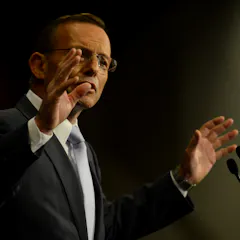
When it comes to producing a comprehensive, far-reaching policy regime – a coherent vision for Australia’s society and economy and how to turn it into reality – the government is only getting started.
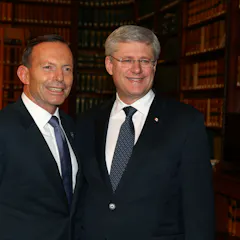
In recent years, a political “state of nature” has replaced what had been the civilised practice of political life in Australia.
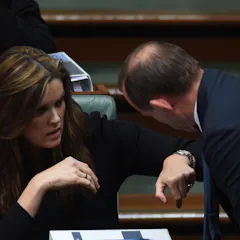
Peta Credlin is in the classic “double bind” of all women in power: if they take charge, they transgress the gendered expectations that “female qualities” are best suited to a supporting role.
Top contributors
-

Professorial Fellow, University of Canberra
-
Senior Lecturer, School of Humanities and Social Sciences, Deakin University
-
Associate Professor in Politics and International Relations, School of Social Sciences, Monash University
-
Vice-Chancellor's professorial fellow, Monash University
-
Emerita Professor of Politics, Adelaide University
-
Dennis Altman is a Friend of The Conversation.
Vice Chancellor's Fellow and Professorial Fellow, Institute for Human Security and Social Change, La Trobe University
-
Associate Professor in Politics, Murdoch University
-
Honorary lecturer, School of Social Sciences, UNSW
-
Adjunct Research Fellow, School of Social Sciences, La Trobe University
-
Professor Emerita in Constitutional Law, University of Sydney
-
Senior Lecturer, School of Political and Social Inquiry, Monash University
-
Doctoral Candidate, Australian National University
-
Adjunct Research Fellow, Department of Politics, Media and Philosophy, La Trobe University
-
Research Manager and Doctoral Candidate, Centre for the Study of Australian Politics, Australian National University
-
Director, Graduate School of Government, University of Sydney