

Women of all walks of life have abortions: married, single, child-free, and mothers. New research shows what’s happening in their life when they do.
Articles on Family planning
Displaying 41 - 60 of 81 articles

How do women decide how many children to have and when to have them? The data reveal a few major patterns.
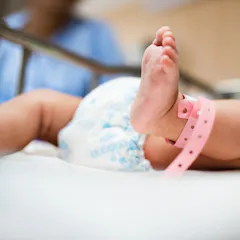
A new study shows that as the father’s age increases, so too the chances of the baby being born prematurely, having a low birth weight, or requiring medical intervention after delivery.
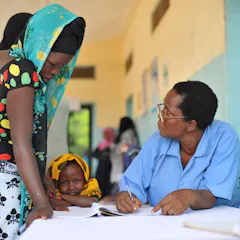
Tanzania was an early, ardent believer in family planning. Now it joins a growing number of developing nations that see potential advantage in having a huge and growing workforce.
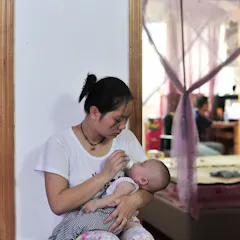
China wants its citizens to have more children. But they are reluctant to.

Empowered women make millions of decisions that add up to a better demographic situation for themselves, their children and for Africa.

There are signs China could drop its two-child policy in an attempt to boost population growth.

Fifty years ago biologist Paul Ehrlich published ‘The Population Bomb,’ an apocalyptic warning that overcrowding would lead to wars and famine. Here’s what the book got right and wrong.

On the 50th anniversary of Humanae Vitae, an encyclical released by Pope Paul VI calling for prohibition on contraceptive use, a scholar describes the struggles of Catholic women, as well as their activism.

Unlike condoms, which need to be used every time with sex, or the pill, which must be taken every day, LARC doesn’t require any action after placement in the body and is immediately reversible.

Male contraceptives have been under development for at least the past 50 years, because of the success of the female pill and pessimism about men taking a pill.

Medical practices have special requirements under the Privacy Act, but the security and privacy systems some providers currently have in place may be inadequate.

We usually focus on the physical health effects of the pill, yet the most common reason women stop or change the pill is mental health side effects.

There is no biological evidence for “giving your body a break” and in fact, it could do your health more harm than good.

Before the pill, contraceptive options were extremely limited and generally required the cooperation of the male partner. Almost 60 years later, the pill remains the mainstay of contraception.

In Hobart supporting the Tasmanian Greens ahead of the state election, Greens leader Richard Di Natale said ‘in one of our states, women are not getting access to safe terminations’. Is that correct?

How to explore the pathways for an objective alliance between demographic dynamics and youth education in sub-Saharan Africa.

Donald Trump seems vague on many policies except one: undoing as much of Barack Obama’s legacy as possible.

Strong political support, community engagement and effective strategies can improve access to family planning in developing countries.
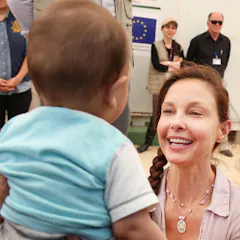
Contraception saves lives, and U.S. spending on it abroad had an unintended upside when it formed the backbone of early HIV prevention efforts.
Top contributors
-

Dornsife Endowed Professor of Global Health, Drexel University
-
Adjunct Professor, La Trobe University
-
Professor of Practice, Sydney Medical School, Faculty of Medicine and Health, University of Sydney
-
Research Scientist, African Population and Health Research Center
-
Director of the Complex Adaptive Systems Research Group, University of Newcastle
-
Senior lecturer, York St John University
-
Professor at Prince Henry's Institute, Hudson Institute
-
Senior Research Fellow, Global and Women's Health, School of Public Health and Preventive Medicine, Monash University
-
Associate Professor in American Politics and American Foreign Policy, University of Leicester
-
Associate Professor of Sociology, Duke University
-
Associate Professor, Health Sociologist, Centre for Health Equity, Melbourne School of Population and Global Health, The University of Melbourne
-
Senior Researcher, University of Cape Town
-
Clinical Ethicist, Children's Bioethics Centre, Royal Children's Hospital
-
Lecturer in American Politics, University College Cork
-
Associate Professor, The University of Western Australia