
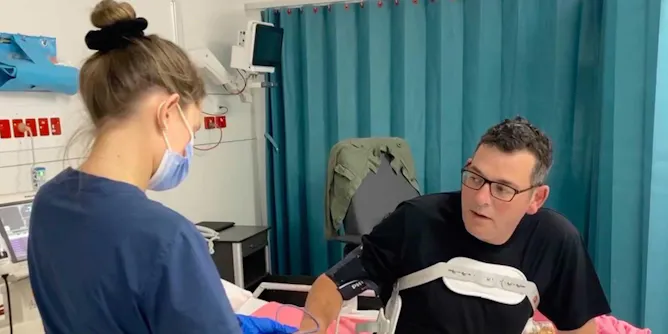
It is difficult for the media to deal in fake news – but the Andrews conspiracy story has been handled very well.
Articles on Fake news
Displaying 81 - 100 of 375 articles
We surveyed social media users from vulnerable groups and found 73% got their vital news from social platforms. How can we protect these people from vaccine misinformation?
Public relations and journalism have always existed in an uneasy balance. Social media and low revenues are shifting that balance in favour of PR, creating a lack of trust in the news.

The first nationally representative survey to investigate the media literacy needs, attitudes and experiences of Australian adults shows they need more help with understanding media.
The researchers are working on a way to train people to be better at spotting fake news.
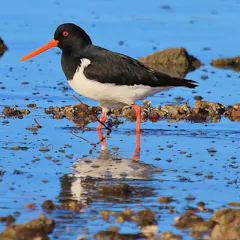
When scientists first thought to deceive predators with bird smells, the idea seemed crazy. But after seeing how fake news messes with the minds of both humans and animals, it now makes sense.
Search engines, like social media algorithms, get you to click on links by learning what other people click on. Enticing misinformation often comes out on top.
A tweet led a scholar to consider how misinformation is changing the ways we evaluate information and trust others.
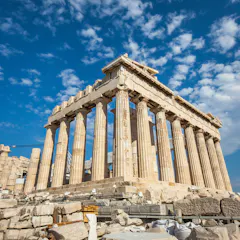
Trump might have popularised the idea of fake news, but 26 centuries ago Plato and Thucydides were convinced intellectuals and poets were duping the people and undermining democracy.
Google, Facebook, TikTok and Twitter have all agreed to a voluntary code of conduct targeting misinformation. But the only real commitment is to appear as though they’re taking action.

Theories that antibodies affect the placenta are completely unfounded.
A ‘psychological vaccine’ has the potential to counter belief in COVID-19 conspiracies.

Prominent ‘danger’ signs are needed online to warn people about misinformation.
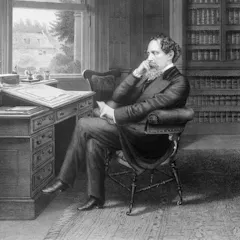
Dickens worried for the safety of his sons when diphtheria broke out in France and - in a newly discovered letter - wrote about how the truth was difficult to find.

Calling out false information on social media may do more harm than good.
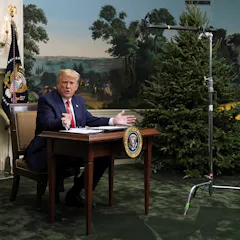
If citizens disbelieve the institutions that count ballots and the organizations that accurately report on those results, it will be impossible to agree on what a legitimate election looks like.

Lying can be more than just telling a few fibs. It can also be used to communicate social status and make a person appear loyal to a particular group.
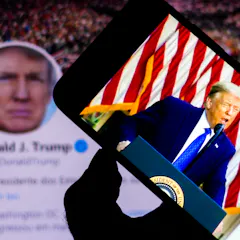
Our new study presents the first empirical evidence that President Trump’s tweets systematically divert attention away from topics that are potentially harmful to him.
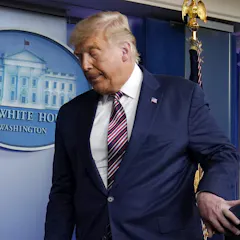
As the US president made unsubstantiated claims about the vote count, many of the major TV networks cut him off. Is this what’s best for democracy?

In an age of democracy via social media, platforms are struggling to combat visual mis/disinformation such as ‘spliced’ images and deepfakes. Digital media literacy has never been so important.
Top contributors
-

Professor of Social Psychology in Society, University of Cambridge
-
Professor and Chair, Department of Journalism, Stellenbosch University
-
Professor of Political Communication; Director CAJII, The University of Melbourne
-
Professor in Digital Media, Western Sydney University
-
Senior Research Fellow, Centre for Advancing Journalism, The University of Melbourne
-
Lecturer in Psychology, University of Cambridge
-
Associate Professor of Interdisciplinary Studies, Royal Roads University
-
Associate Professor, News, Social Media, and Public Communication, Simon Fraser University
-
Professor of Media Industries, University of Nottingham
-
Professor of Policy Impact, University of Leeds
-
Vice-Chancellor and Principal of the University, University of Pretoria
-
Associate Professor of Psychology, Vanderbilt University
-
Associate professor in the Faculty of Business, Government, and Law, University of Canberra, University of Canberra
-
Professor, Digital Media Research Centre, Queensland University of Technology
-
Caxton Professor of Journalism, University of the Witwatersrand