

While these kinds of food labels may be easier to understand, they run the risk of being too generalised.
Articles on Exercise
Displaying 321 - 340 of 808 articles
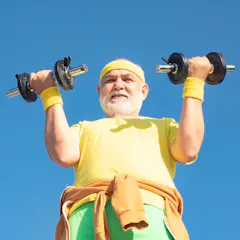
Doing aerobic exercise, such as cycling, is known to reduce the risk of an early death. Less has been known about the effect of lifting weights.
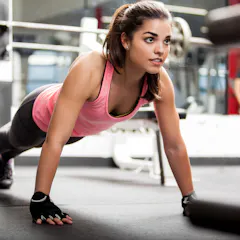
Evidence suggests strength training can offer a variety of benefits when recovering from a respiratory illness like COVID-19.
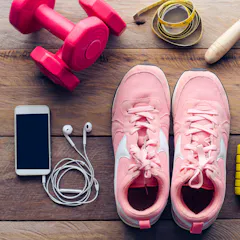
Be sure to include both cardio and resistance training in your workouts for the most health benefit.
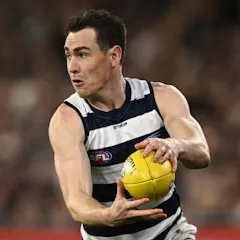
The muscle benefits of a brief ‘priming’ workout seem to last longer than a last-minute warm up.
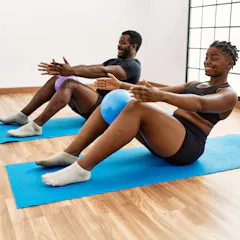
This workout has seen a boost in popularity recently thanks to celebrity endorsements.
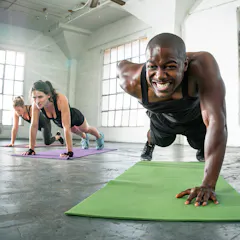
The 75 Hard challenge has more than 1.2 billions views online.

Physical activity levels decline during the teenage years. Introducing your teen to high-intensity interval training (HIIT) is one way to get them moving and feeling better.
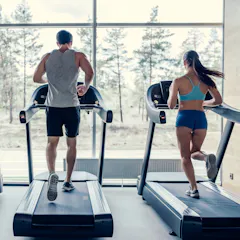
Research has shown training cardio and weights on the same did has little effect on strength and muscle gain.
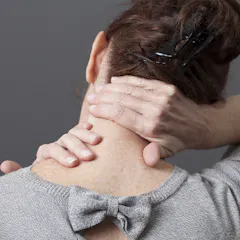
Researchers are still trying to figure out exactly what happens within muscle to create knots, also known as myofascial trigger points. But they do know some ways you can avoid or alleviate them.
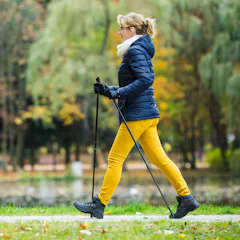
Using poles while you walk can be a great, low-impact way to exercise.

Researchers suggest it is important to build daily habits that support mental well-being and seek care when necessary.
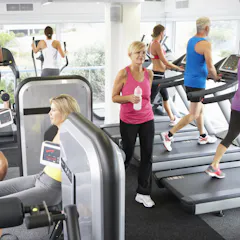
So-called ‘weekend warriors’ had a 30% lower risk of death from any cause compared to those who never exercised.
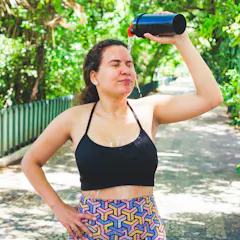
The most important thing is to listen to your body in order to avoid heat illness.
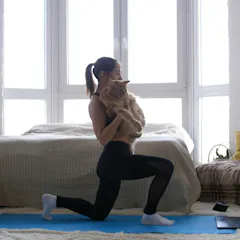
More of us are working out from home post-COVID. There are ways to help you stick to your exercise routine without a gym instructor.
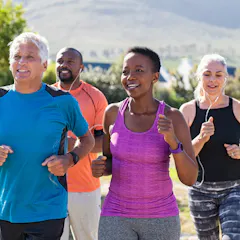
The clue is in exercise’s ability to control levels of our “stress” hormone, cortisol.

Your body follows a circadian rhythm that influences everything from how well your medications work to the best time for exercise.
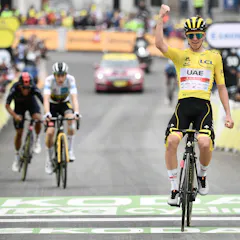
Riders in the 2022 Tour de France will ride more than 2,100 miles (3,400 km) over the 21 flat and mountainous stages of the race. And they will burn an incredible amount of energy while doing so.

Social media content that positively represents body size, shape and weight diversity may help to address the negative psychological effects of ‘fitspiration’ that depicts narrow body standards.
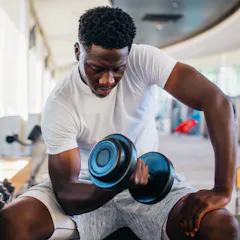
‘Time under tension’ may be a popular weightlifting technique, but research shows it’s no better than exercising at your normal pace.
Top contributors
-

Lecturer in Exercise Science, Adelaide University
-
Professor of Exercise Physiology, Anglia Ruskin University
-
Professor of Physical Activity, Lifestyle, and Population Health, University of Sydney
-
Senior Lecturer in Clinical Exercise Physiology, University of East London
-
Professor of Health Sciences, Simon Fraser University
-
Senior Lecturer in Performance Analysis of Sport, Nottingham Trent University
-
Professor of Nutritional Physiology, Anglia Ruskin University
-
Professor of Health Sciences, Adelaide University
-
Lecturer in Physiotherapy, Adelaide University
-
Professor, research professor in exercise, nutrition and activity, Adelaide University
-
Course Lead, Sheffield Hallam University
-
Research Fellow, Allied Health & Human Performance, Adelaide University
-
Senior Lecturer, Exercise Physiology. School of Health Sciences, UNSW
-
Lecturer, School of Sport, Rehabilitation and Exercise Sciences, University of Essex
-
Senior Lecturer in Integrative Physiology, Lancaster University