

Fake degrees are bad news for universities and employers.
Articles on Exams
Displaying 101 - 120 of 170 articles
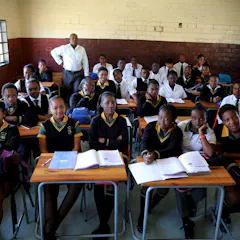
South Africa’s annual matric pass rate obscures important differences in provincial achievements, the rural and urban divide and the unequal outcomes for learners in poorer schools.
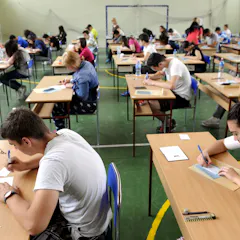
Exams do have a purpose, but they shouldn’t be used to assess the recall of meaningless facts.

With the refugee crisis, Brexit, and the rise of populist extremism, we must defend the teaching of anthropology. And in doing so, we might expand and rethink ideas of “the humanities”.

There are ways to manage exam anxiety so that it doesn’t hugely impact your performance.

An intense night of study won’t help you remember information in the long-term – and the stress of revising under pressure will likely impact on your sleep and thus your exam performance.

Mind blanks are typically triggered in response to a perceived threat. The chemical process that takes place essentially clears out your working memory, quiets logical processes, and walls off memory.
Is there such a thing as a mean marker?

Does the university clearing system work?

Why we should lament the sharp drop in the number of teenagers taking the one-year qualifications.
Not everyone will be celebrating this results day, so here’s a few words of advice for both students and parents, to help put things into perspective.

Here’s how meditation can help make some of those big life decisions a little more easy to handle.

Almost 10% of differences in exam results at age 16 can be explained using individuals’ DNA alone.
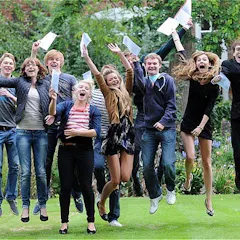
School leavers, listen up – it’s okay not to know what you want to do in life.
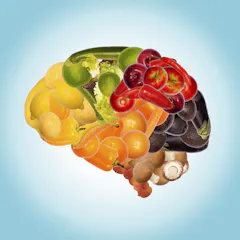
Is there such a thing as brain food?
With exam season in full swing, how you cope with stress might be the difference between brilliance and burnout.

Because exam season can be tough on parents, too.

Good tests may build in failure, but that doesn’t mean they’re an efficient way of measuring a child’s ability.

Technology that wouldn’t look out of place in a Hollywood spy movie is being marketed at students to help them cheat in exams.
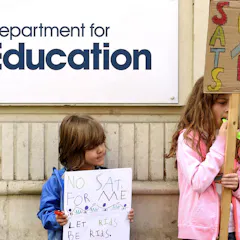
Seven and 11-year-olds feel the pressure from their parents and teachers.
Top contributors
-

Professor of Educational Assessment, UCL
-
Programme Leader, MA in Educational Assessment, UCL
-
Associate Professor, Faculty of Education, Monash University
-
Director of the Oxford University Centre for Educational Assessment, University of Oxford
-
Professor of Educational Psychology, University of Wollongong
-
Professor in Physical Activity and Health, Nottingham Trent University
-
Emeritus reader in science education and communication, University of Sussex
-
Associate Professor, College of Information & Communication Technology, School of Engineering and Technology, CQUniversity Australia
-
Senior Lecturer in Educational Assessment, Macquarie University
-
Director, Nottingham Institute of Education, Nottingham Trent University
-
Thomas Lancaster, Imperial College London
-
Vice-Chancellor and Prinicipal, Brunel University of London
-
Head of Department and Senior Lecturer in Education and Social Justice, Lancaster University
-
Senior Research Fellow, Curtin University
-
Associate Professor of Education Policy, Australian Catholic University