
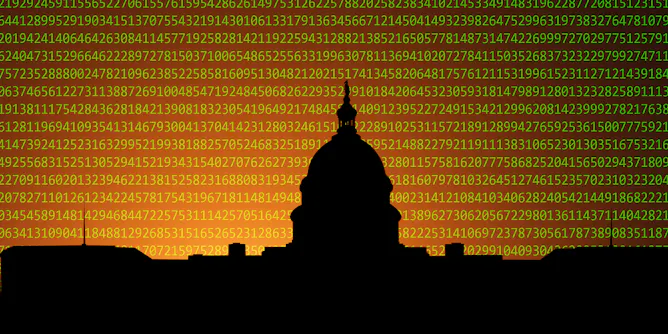
Some governments use legitimate AI concerns as a pretext to control political discussion, particularly chatbot responses about those in power.
Articles on European Union law
Displaying 1 - 20 of 133 articles

Clever clothing that can sense health issues are not far off, but they could prove hard to recycle or reuse.

The rate of AI development creates a significant enforcement problem.
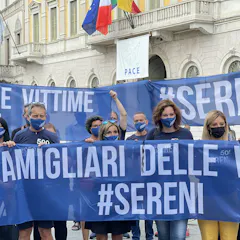
Six years after Italy became Europe’s COVID-19 ground-zero, successful action led by a victims’ association against health governance failings sets an encouraging precedent.
Big tech platforms argue they simply store and display information created by others, so should not be seen as legally responsible for it.

An economist explores the gender data bias behind credit scoring and borrowing money from the bank that excludes women worldwide, denying them the same economic rights as men.

MEPs have backed plans to detain irregularly present migrants outside the EU, as part of the new Returns Regulation.
The wide-ranging measures of the European AI Act are now being phased in.
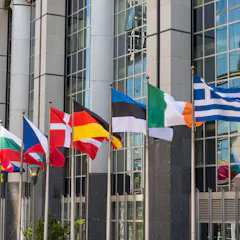
The optional new rules aim to make things easier for ‘innovative’ startups and SMEs, but they could also erode workers’ rights.
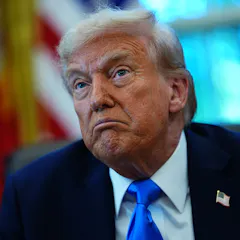
Threats to impose tariffs in retaliation for digital regulation are a line crossed.

The new EU Commission is all about ‘competitiveness’, but their plans to cut data protection rules are extremely short sighted.

Existing efforts to regulate AI share a limitation: they’re built around intended use, not the messy, creative and often unintended ways it is actually being used.

BPA is an endocrine disruptor widely used in plastics.

Trade unions are vital to designing new European labour laws that actually protect workers.

Georgia’s new president was not directly elected after a change to the constitution, and was the only person on the ballot.

AI systems can appear to be black boxes – often, even experts don’t know how systems reach their conclusions. The nascent field of “explainable AI” aims to address this problem.

Certain European technical standards that come from private bodies are a source of EU law, but a recent court ruling points to the need for policymakers to adopt standards via democratic processes.
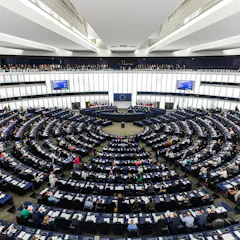
Complex though they may be, European Union laws have directly impacted citizens’ lives for decades.

Legal scholars say the law has its merits, but find loopholes in the way it defines ecocide.

The European Media Freedom Act aims to fight misinformation and ensure an independent press, while also keeping media outlets in business.
Top contributors
-

Professor of Law, University of Essex
-
Professor of Intellectual Property Law, City St George's, University of London
-
Professor of EU Law, University of Bristol
-
Reader in Law at The City Law School, City St George's, University of London
-
Principal Lecturer, College of Business Law & Social Sciences, Nottingham Law School, Nottingham Trent University
-
Associate Professor of European and comparative Labour Law, IE University
-
Senior Lecturer in Law, researcher in international law, Birkbeck, University of London
-
Lecturer in Law, University of Essex
-
Associate Director and Senior Lecturer in Artificial Intelligence and Technology Law, Edge Hill University
-
Senior Lecturer in Economics, Lancaster University Management School, Lancaster University
-
Senior Lecturer (Law), University of Glasgow
-
Lecturer in Law and Co-director Liverpool European Law Unit, University of Liverpool
-
Professor at the Sutherland School of Law, University College Dublin
-
Senior Lecturer in Law, University of Westminster
-
Professor of Applied Environmental Science, University of Southampton