
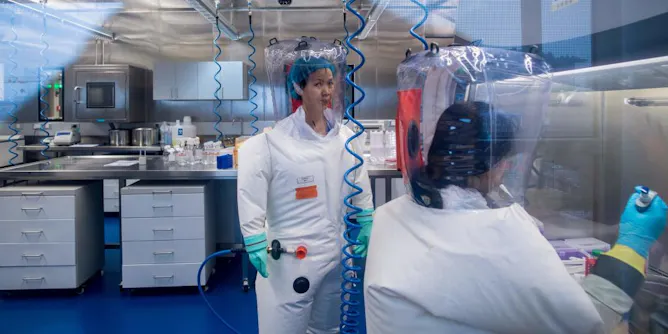
The lab accident theory of the origins of Covid-19 has gained traction in recent months. We need a proper investigation to find out what really happened.
Articles on Epidemics
Displaying 41 - 60 of 184 articles
A more coordinated effort by scientists, stakeholders and community members will be required to stop the next deadly virus that’s already circulating in our midst.
One of the main fears regarding new SARS-CoV-2 variants is that they might be resistant to immunity granted by vaccines, including RNA vaccines.
The dreadful statistics coming out of India are not just numbers – they relate to people and to suffering.
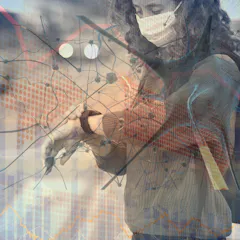
COVIDSafe was only able to detect a handful of cases successfully, but that doesn’t mean Bluetooth isn’t a helpful tool for addressing viral spread.

In 1959, three armed men broke into the University of Montréal and stole the whole supply of polio vaccine — 75,000 vials valued at $50,000. What have we learned from this event?

A bat virus discovered a decade ago in Cambodia indicates that pangolin trafficking remains a credible explanation for the origin of the Covid-19 pandemic.
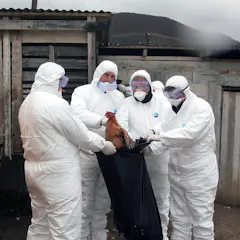
Ever since the 2001 SARS outbreak and H5N1 avian flu in 2003, we’ve developed tools to monitor diseases that transmitted from animals to humans. But what does a large-scale roll-out entail?
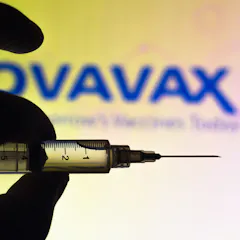
A 1904 revolt against mandatory smallpox inoculation taught Brazilian health officials a deadly lesson on how to vaccinate a skeptical public. Today President Bolsonaro seems to ignore that history.
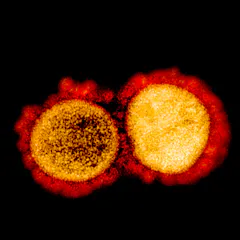
The SARS-CoV-2 virus at the origin of the Covid-19 pandemic is one ten-thousandth of a millimeter in diameter. How can such a microscopic organism have such an immense impact on global health?
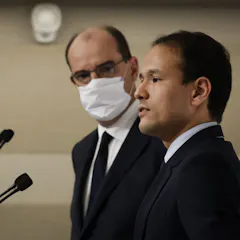
In the current pandemic, finding the right balance between the protection of public health and respecting civil liberties has proven to be supremely difficult.
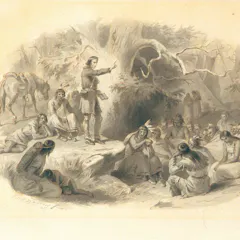
Power, plague and Christianity were closely intertwined in 17th-century New England.

Will the COVID-19 pandemic change the global balance of power? It wouldn’t be the first time.

Irrational behaviour during difficult circumstances is rooted in deeper cognitive and evolutionary psychological mechanisms. Many reflect what are called emergency decision and purchasing contexts.
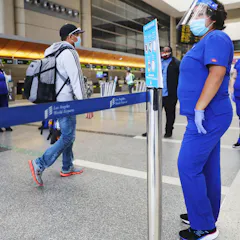
The US response to the coronavirus was slow and problematic, but it also was rooted in a 19th-century way of viewing public health.
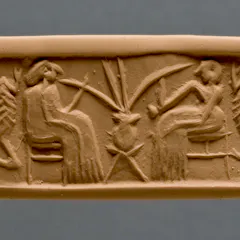
Beer was extremely popular in ancient Mesopotamia. Sipped through straws, it differed from today’s beer and was enjoyed by people from all walks of life.
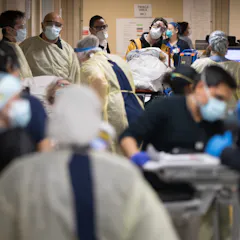
Pandemic policy experts offer 10 recommendations that could reduce the risk that a bad flu season on top of the COVID-19 pandemic will overwhelm hospitals.

The coronavirus pandemic isn’t the first time an illness has disrupted schooling. In 1937, Toronto schools delayed re-opening for six weeks in response to the polio epidemic.
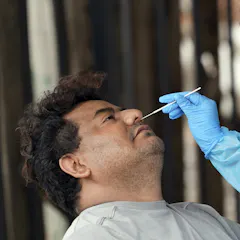
Test positivity rates measure the success of a testing program. Even though the US performs a huge number of tests, high test positivity rates across the country show that that it still isn’t enough.
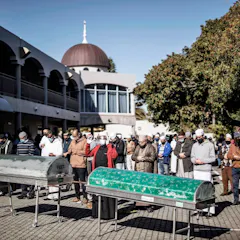
It is important that procedures surrounding funerals are developed by public health officials alongside traditional and religious authorities.
Top contributors
-

Professor of Global Biosecurity, NHMRC L3 Research Fellow, Head, Biosecurity Program, Kirby Institute, UNSW
-
Director of the School of Journalism & Strategic Media, Professor of Media Studies, Middle Tennessee State University
-
Assistant Professor of History, University of Pittsburgh
-
Fellow, Nigerian Academy of Science
-
Principal Visiting Fellow & Former Deputy Director, International Institute for Global Health (UNU-IIGH), United Nations University
-
Professor of Political Studies, University of Johannesburg
-
Research Scientist, African Population and Health Research Center
-
Director, Scowcroft Institute of International Affairs and Executive Professor, Texas A&M University
-
Associate Professor of Epidemiology, Texas A&M University
-
Assistant Professor, Texas A&M University
-
Lecturer, Biomedical and Life Sciences, Lancaster University
-
Associate Professor of Biology, Penn State
-
Professor of Clinical Microbiology, University of Lagos
-
Associate Professor, Epidemiology, Deakin University
-
Lecturer in Virology, Queen's University Belfast