
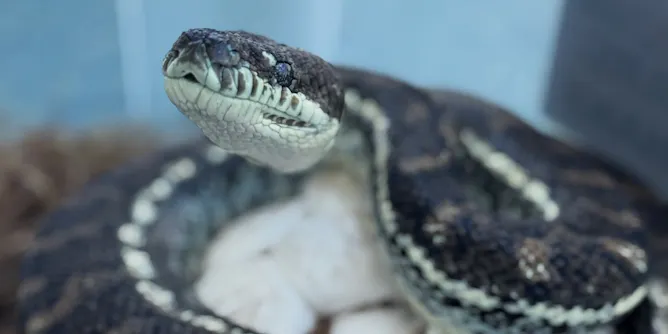
Australia’s huge diversity of reptiles could be at risk from new fungal diseases.
Articles on Emerging diseases
Displaying all articles
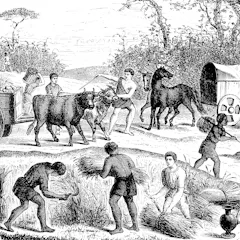
Human factors − such as how people produce food and how they organize themselves and live together − influence disease outbreaks.
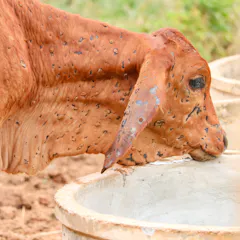
A disfiguring disease of cattle and buffalo has arrived on our doorstep. We need to keep lumpy skin disease out of Australia, while preparing for the almost inevitable outbreak.
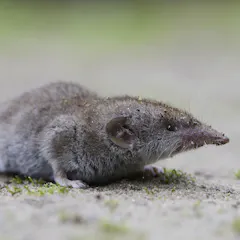
The virus is related to Hendra and Nipah viruses. But we don’t know whether it spreads from human to human.
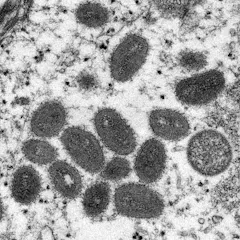
This is not the first time that the monkeypox virus has spread beyond Africa, its continent of origin. But the current epidemic is unprecedented for a number of reasons.
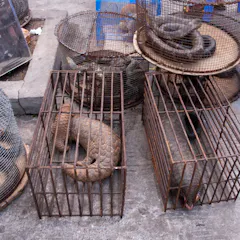
To better anticipate and manage the emergence of new pandemics, a paradigm shift is needed to take into account the complex interactions between human health, animal health, the environment and the economy.
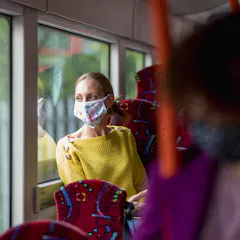
As ready as you are to be done with COVID-19, it’s not going anywhere soon. A historian of disease describes how once a pathogen emerges, it’s usually here to stay.

The US and its allies are demanding answers over how COVID-19 became a pandemic. But instead of pointing fingers at China, the inquiry should focus on scientific clues to help us thwart future disasters.
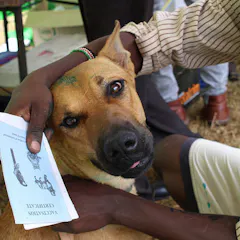
By tackling local threats and controlling existing diseases, countries are able to build the capacity needed to deal with future emerging disease threats.
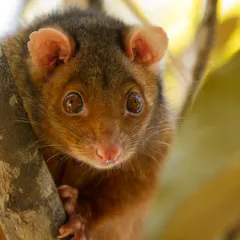
Tularemia is an animal disease that can be transmitted to humans. While it can be fatal, it is rare in Australia and can be treated with antibiotics.
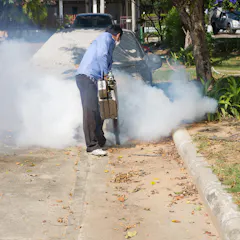
Emerging diseases on which the experts are keeping a close eye.

The federal government’s recent White Paper on developing northern Australia has disturbing echoes of the 1890s, a time when unbridled capitalism and indentured labour developed the North.
Top contributors
-

Institute of Biodiversity, Animal Health and Comparative Medicine, University of Glasgow
-
NHMRC early career fellow, Faculty of Science, University of Sydney
-
Janet Dora Hine Professor, University of Sydney
-
Lecturer, Biomedical and Life Sciences, Lancaster University
-
Postdoctoral Research Fellow, School of Veterinary Science, The University of Queensland
-
Professor of Microbiology, University of Tromsø
-
Biologiste, Immunologiste. Directeur de recherches au FNRS, Université Libre de Bruxelles (ULB)
-
Médecin infectiologue - Epidémiologiste - médialab Sciences Po, Sciences Po
-
Professor of Infectious Diseases, Monash University
-
Médecin, directeur de l'Unité d'épidémiologie des maladies émergentes à l'Institut Pasteur, professeur titulaire de la Chaire Santé et Développement du CNAM, Conservatoire national des arts et métiers (CNAM)
-
Associate Professor of History, Rutgers University - Newark
-
Professor of Medicine, Monash University
-
Professor of Bioethics & Medicine, Sydney Health Ethics, Haematologist/BMT Physician, Royal North Shore Hospital and Director, Praxis Australia, University of Sydney
-
Professor of Anthropology, Macalester College
-
Professor, School of Veterinary Science, The University of Queensland