

A new study shows how migrant families struggle to get the childcare they need and how an easier visa system would help.
Articles on Early childhood education and care
Displaying 21 - 40 of 48 articles

The government is paying childcare services in hot-spots 25% of pre-pandemic revenue. But without parents’ fees, the sector is still in a tough position.
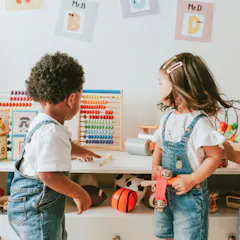
Early childhood education and care centres, which includes childcare and preschool, are part of our village. They form a support network established to ensure parents’ and children’s lifelong success.

If the government really wants to invest in early childhood education, it needs to back the workforce.
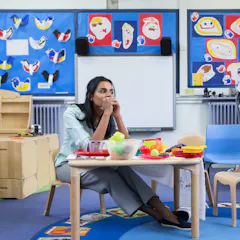
One in five early childhood educators said they planned to leave their job within a year. It is vital we design a system and policies to ensure there are enough to meet the demand.

A large study shows preschool benefits Aboriginal children’s development more than childcare or being taken care of at home. But the benefits of preschool are not as large as for non-Aboriginal kids.

Whether the policy benefits high-income or low-income families matters, but it also misses the point — early childhood policies need to focus on what benefits children.

The NSW and Victorian preschool funding announcements are likely to increase the growing focus on early childhood education, which is shaping up to be a major issue.

Parents can find it difficult to choose a childcare service, given the plethora of types on offer. Here are three of the most well-known alternative educational philosophies explained.

A study found no statistically significant difference between the literacy and numeracy scores of school children who had attended preschool or childcare and children who didn’t.
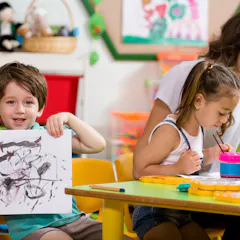
In 2009, Australian governments made an agreement to provide all four-year-olds with access to preschool delivered by a trained teacher from 2013. We’re a long way from this goal.

Australia is far from having an early childhood sector that delivers what children and families need. The government can look to these three areas to ensure access for all Australian children.

A recent study has shown educators can include and teach children on the spectrum in mainstream childcare, alongside their non-autistic peers.
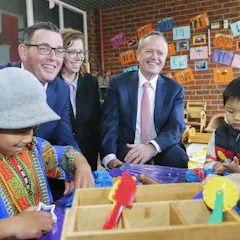
We know from research children benefit from two years of preschool, rather than one. Universal access to preschool would also return benefits to the economy, and help parents with childcare costs.

Valuing the skills and contributions of our educators and reversing the high rates of turnover is critical and can only be achieved through fair pay and rewards.

Children aged three to five don’t need to do formal academic assignments in early childhood education to hit their milestones.
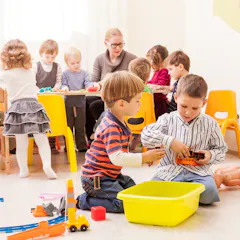
Overall, we’ve seen huge improvements, particularly for children aged three to five years, but now we need a universal approach to quality education and care for our youngest children.

Australia has the third most expensive education system in the OECD, but we might not be getting what we pay for.
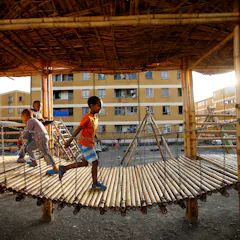
Poor childhood conditions, such as exposure to poverty and stunting, are associated with long-term disadvantages to health, education, social adjustment and earnings.

Research shows early childhood educators tend to prop up their low-paid jobs using their household income, or by borrowing from families.
Top contributors
-

Associate Professor in the Early Childhood Education, University of New England
-
Lecturer, School of Education and Social Work, University of Sydney
-
Professor and Head of School, School of Early Childhood and Inclusive Education, Queensland University of Technology
-
Professor and Director, Mitchell Institute, Victoria University
-
Associate Professor, Flinders University
-
Adjunct Associate Professor of Education Policy, Victoria University
-
Associate Professor, Faculty of Education, Southern Cross University
-
Honorary Senior Fellow, The University of Melbourne
-
Professor, Queensland Brain Institute, The University of Queensland
-
Professor of Work and Organisation, Queensland University of Technology
-
Former Education Policy Fellow, Mitchell Institute, Victoria University
-
Professor of Economics and Director, Tax and Transfer Policy Institute, Crawford School of Public Policy, Australian National University
-
Associate Professor of Developmental Psychology, La Trobe University
-
PhD in Education, School of Communication and Education, Jönköping University
-
Professor, Applied Psychology & Human Development, OISE, University of Toronto