

Overdose deaths did go up in Oregon after drug decriminalisation, but they were already increasing, as they were in nearby states.
Articles on Drug use
Displaying 41 - 60 of 167 articles

LGBTQ+ people face barriers to accessing substance use services, but research shows there are ways to make them more inclusive and supportive.

A police policy of not making arrests for simple possession is a way to essentially decriminalize personal drug use. However, confiscating drugs — even without arrests — can be harmful in many ways.

Potential inaccuracies in CDC high school surveys may have created an exaggerated perception that LGBQ youth engage in risky behaviors, new research shows.

MDMA and cocaine are known to speed up people’s perception of time, while LSD can induce a sense of timelessness.

Nature-based programmes are a way to support people with drug and alcohol problems at a time when health problems related to substance use are rising.

Xylazine, or tranq, is increasingly being mixed with drugs like fentanyl or heroin and can be difficult to detect. Most people who use drugs are unable to tell if they have been exposed to it.

Judy Ryan’s book describes, in meticulous detail, what it took for the Victorian government to trial the state’s first safe injecting facility, through the lens of a local Richmond resident.

Photographing the lives of women meth users in rural America.

As British Columbia begins a new era in drug policy, the drug poisoning crisis continues without an end in sight.
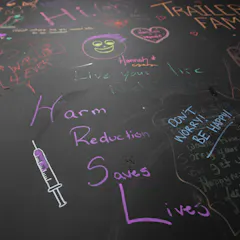
Supervised consumption sites provide essential community connections and services for those who use them. By closing them, governments are risking the welfare of people who use drugs.

If governments want to tackle drug use, targeting those at most risk is a better strategy than mass campaigns.
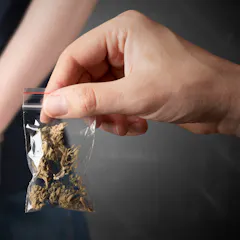
Research has long shown that criminalising otherwise law-abiding citizens for their drug use is no deterrent. It only damages their life chances, in a discriminatory fashion.

More than 50 overdoses happen in bathrooms every month in British Columbia. Public bathrooms can be made safer for everyone, including people who use substances.

The UK could learn from the kind of action Scotland is taking on drug deaths.
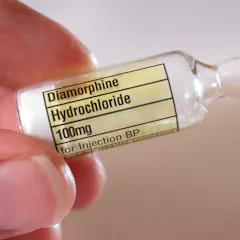
Current supply shortages may also be a problem for people in palliative care or receiving cancer treatment.

British Columbia’s bold experiment provides an opportunity to implement more balance in Canadian drug policy, and a more principled withdrawal from the war on drugs.

The eyes can reveal many health problems, from high cholesterol to thyroid disease.

Euphoria tackles the status quo head on with an esthetic that transgresses the codes of television, while criticizing several taboos and social issues.

Kava is not commonly used in Australia. But that will change and we need to keep an eye on what happens next.
Top contributors
-

Adjunct Professor at the National Drug Research Institute (Melbourne based), Curtin University
-
Honorary Fellow, Department of Health Sciences, University of York
-
Lecturer, RMIT University
-
Emeritus Professor, National Centre for Youth Substance Use Research, The University of Queensland
-
Professor, Mental Health and Addiction, Rural Health Research Institute, Charles Sturt University
-
Senior Lecturer of Addiction, Edith Cowan University
-
Professor, Deakin Law School, Deakin University
-
Associate Professor, National Drug Research Institute / enAble Institute, Curtin University
-
Alcohol and other drug specialist, UNSW
-
Professor and Deputy Director, Monash Addiction Research Centre, Monash University
-
Professor in Substance Use, Liverpool John Moores University
-
Senior Lecturer in Criminology, UNSW
-
Senior Research Fellow, National Drug and Alcohol Research Centre, UNSW
-
Research Fellow, National Drug Research Institute, Curtin University
-
Associate Professor, School of Psychological Sciences, University of Tasmania