

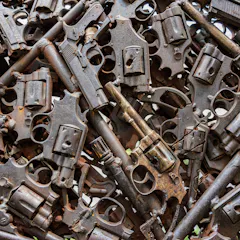
Some of the same people caught illegally trafficking firearms across the border to Mexico are also selling illicit drugs, including fentanyl, meth and heroin.
Articles on Drug cartels
Displaying 21 - 40 of 44 articles

Independent gun dealers supplied 83% of crime guns seized in Mexico and traced back to purchases in the US. Chain stores supplied the other 17%.
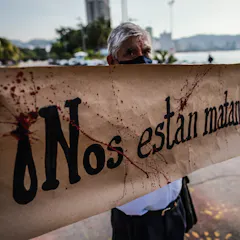
National and local governments are thought to be responsible for almost half of all attacks on journalists in both countries.
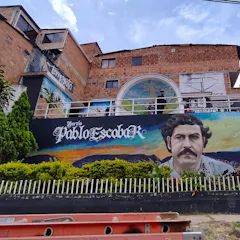
Colombia’s history as a drug trafficking hub still plays a major role in attracting visitors to the country.
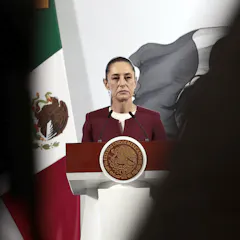
Donald Trump’s claims of an alliance between Mexico’s government and the cartels misses the bigger picture.
Fluctuating rates of illegal migration to the US over the past few decades show that the government’s approach of trying to stop migrants with more security has not worked.
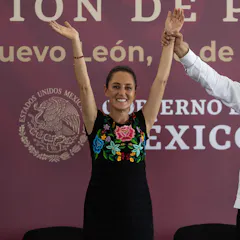
Claudia Sheinbaum takes office in a climate of spiralling violence.

Many young Mexican men that are working in precarious conditions are drawn into the fold of drug cartels.
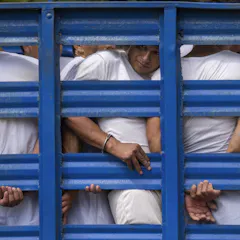
Ecuador is soon holding a referendum to decide whether to follow El Salvador’s controversial strategy to end drug trafficking.

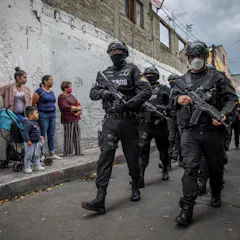
Widespread violence tied to Ecuadorian drug gangs has left the country looking at a draconian response.
Mexico would not fully legalize cannabis; its new regulation plan makes recreational use legal. However modest, that would be a symbolic milestone for a country immersed in a long, deadly drug war.
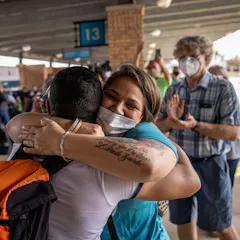
Luck and tenacity paid off for some 15,000 migrants who may now pursue their asylum cases in the US But nearly 42,000 cases filed from Mexico under a Trump-era rule were already rejected.
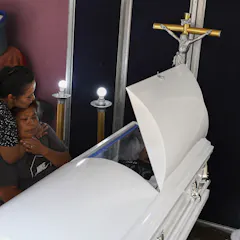
The American public should understand that the United States has played a critical role in creating and fuelling violence in Latin America via its unsuccessful war on drugs.
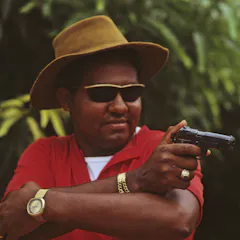
Step aside, Pablo Escobar. New research shows it was poor farmers who helped turn Colombia into the world’s largest drug producer when they started growing and exporting pot in the 1970s.
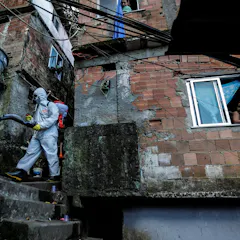
Coronavirus is serving Latin American organised crime well.

Methamphetamine use has increased dramatically in Asia in the past five years, overtaking even the US. Now cartels spy an opportunities in Europe.

Government policies and dangerous conditions affect the ability of researchers working on both sides of the US-Mexico border to conduct scientific fieldwork.
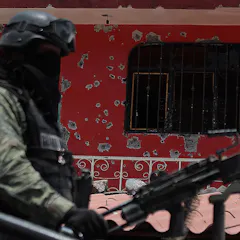
Many governments can’t afford to offer the sort of economic stimulus we’ve seen in the west, and organised crime is only too happy to fill the gap.
A researcher who fled crime-beset Mexico returns to interview the drug cartels behind so much of the violence, asking 33 ‘narcos’ everything about their lives, from birth to their latest murder.
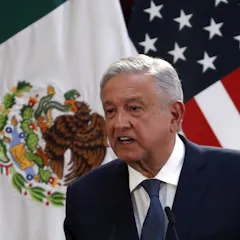
In his first year in office, the Mexican president is dismantling the political and economic structures that have made Mexico one of the most inequitable countries in the world.
Top contributors
-

Senior Lecturer in Human Rights, Constitutional Law and Legal Theory, University of Wollongong
-
Lecturer in International Relations, Coventry University
-
Research Fellow in the War Studies Department, King's College London
-
Professor of International Politics, Lancaster University
-
Richard von Weizsäcker Fellow na Bosch Academy e Co-fundador, Instituto Igarapé; Princeton University
-
Professor of Economic Development & Peacebuilding, University of San Diego
-
Investigative Journalist, The Conversation
-
Associate Professor of Political Science, UMass Lowell
-
Research Assistant Professor, Transactional Records Access Clearinghouse, Syracuse University
-
Reader, University of Huddersfield; Independent Social Research Foundation
-
Honorary Fellow, Department of Health Sciences, University of York
-
Full Professor of Compared Politics, L’Université d’Ottawa/University of Ottawa
-
PhD Student, Department of Political Science and Institute of Political Economy, Carleton University
-
Profesora de la Escuela de Sociología, Política y Relaciones Internacionales y del departamento de Estudios Latinoamericanos
-
Assistant Professor of History, Northwestern University