

A new study of nearly 40,000 family violence reports shows more than 99% of people with risk factors for killing a family member don’t go on to do so.
Articles on Domestic violence support services
Displaying all articles

A commonly prescribed antidepressant has sparked a reduction in domestic violence reoffending among highly impulsive, violent men.

Current crisis accommodation is isolating, frightening and doesn’t meet the needs of woman and children, but one program is succeeding where others fail.

Women who have moved to Australia, particularly from traumatic settings, are particularly at risk of gendered violence. Here’s what our research found helps them to speak up.

Australian laws fall well short of protecting women from an abusive partner’s debts by adopting a US law removing their liability.

Some countries closer to achieving gender equality still have high rates of domestic violence, but look a bit closer and you’ll see the full story.
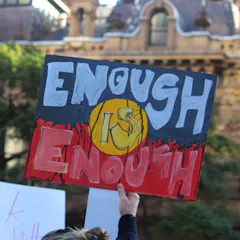
First Nations women are 32 times more likely to be hospitalised as a result of domestic violence than non-Indigenous women. We need to put Indigenous women at the centre of the discussion.

A domestic violence disclosure scheme is a resource people can check to find out if a particular person has a documented history of domestic violence.
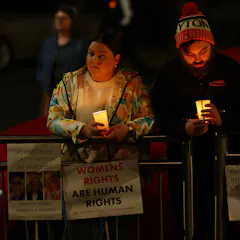
It has been a distressing time. Australians have been – and will continue – taking action to end gender-based violence. So, are we making any progress? Here’s what the data show.

Our research found missed opportunities are evident in child protection, health settings, mental health settings, drug and alcohol interventions, and in corrections.

Coercive control seeks to disempower victims of domestic abuse on every level. Leaving the family home – and disentangling feelings of care – is a complex process.
Top contributors
-

Professor of Family and Sexual Violence, RMIT University
-
Professor (Practice), Faculty of Business and Economics, Monash University
-
Eleanor Rathbone Chair of Sociology, University of Liverpool
-
Professor and Program Head, Justice Health Research Program, UNSW
-
Post-Doctoral Research Fellow, UNSW
-
Associate Professor, School of Social Sciences, University of Wollongong
-
Professor and Founding Director of UNSW Tax and Business Advisory Clinic, UNSW
-
Research Fellow, La Trobe University
-
Associate Professor, Indigenous Education & Research Centre, James Cook University
-
Research Fellow, School of Health and Society, University of Wollongong
-
Associate Professor in Law, Curtin University
-
Chief Investigator for the Australian Research Council Centre of Excellence for the Elimination of Violence against Women (CEVAW), School of Philosophical, Historical & International Studies, School of Social Sciences (SOSS), Monash University
-
Research Fellow, University of Wollongong
-
Professor of Clinical and Forensic Psychology, Swinburne University of Technology
-
Research fellow, Monash University