
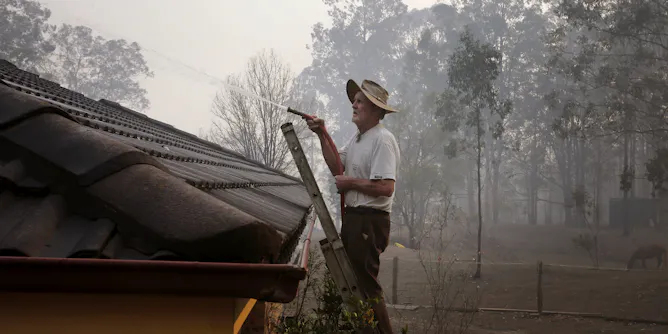
New research also identified steps people wished they’d taken to prepare for disaster, such as protecting sentimental items, planning a meeting place and better managing stress.
Articles on Disaster and Resilience series
Displaying all articles
How to prevent future disasters by learning from the past. Listen to episode 21 of The Conversation Weekly podcast.
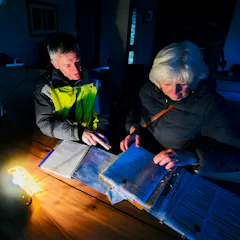
Could this disaster have been avoided? And under climate change, how can we prepare for more events like this?
Many flood-ravaged homes have not been repaired, while others are infested with mould. Farmers are dealing with financial stress and the memories of livestock killed in traumatic circumstances.
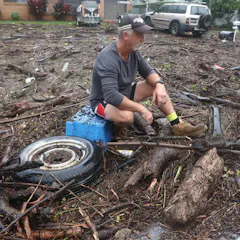
Evacuation and relief centres are often the first place disaster-affected people go, and should provide a minimum standard of living and care. But this standard is not always met.

Following the 2009 Victorian Black Saturday bushfires, more than half the women in one study reported experiencing domestic and family violence. Many had never experienced it before.
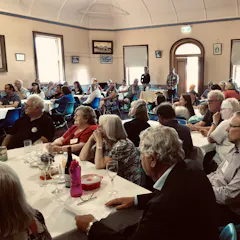
The small fire and heatwave prone town of Tarnagulla got together, applied for funding and co-produced a resilience action plan so they’re better prepared for the next disaster.
Top contributors
-

Senior Ecological Economist, Charles Darwin University
-
Associate Professor, School of Architecture and Built Environment, University of Newcastle
-
Deputy Head of School, School of Architecture and Built Environment, University of Newcastle
-
Associate Professor, International Research Institute of Disaster Science, Tohoku University
-
Senior Lecturer and Team Lead Teaching Development, Te Puna Ako Centre for Tertiary Teaching and Learning, University of Waikato
-
Honorary Fellow, Disaster, Climate and Adversity Unit. Melbourne School of Population and Global Health, The University of Melbourne
-
Professor of Social Work, Dean (Sustainable Development Goals Performance), Griffith University
-
Adjunct Senior Lecturer, School of Architecture and Built Environment, University of Newcastle
-
Senior Lecturer, School of Global, Urban and Social Studies, RMIT University
-
Professor of Globalisation and Development; Director of the Oxford Martin Programmes on Technological and Economic Change, The Future of Work and the Future of Development, University of Oxford
-
PhD student and Senior Researcher, RMIT University
-
Researcher, Griffith University
-
Associate Professor in Environmental Science, Western Sydney University