

Those determining bail must reflect on their own beliefs and show restraint as they determine risk to avoid relying on false racist narratives. So should those calling for bail reform.
Articles on Criminal justice system
Displaying 21 - 40 of 69 articles

Experts still disagree about why the US prison population has grown so much over the last few decades. But crime is only one part of the problem.

To protect communities, we must improve the likelihood that accused people can comply with their bail conditions by offering greater support on several fronts, from social services to law enforcement.

Sexual violence by police is more common than many might think. Failing to fully investigate can have a chilling effect on what is already the most underreported violent crime in Canada.
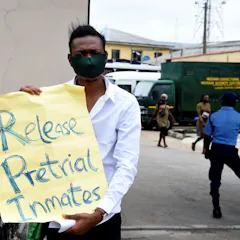
A central repository system offers practical solutions to reducing the large number of awaiting-trial inmates in Nigeria.

Modern DNA sampling is shockingly sensitive – you can get someone’s profile from just 80 cells.
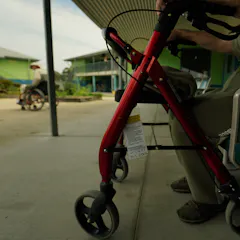
People with disability in prison may need help with personal hygiene, reading, filling in forms, understanding rules, participating in criminal justice proceedings, or making complaints.
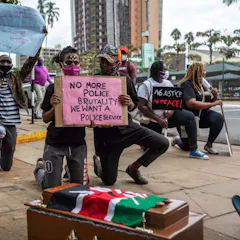
A host of problems are behind police failures, including poor evidence gathering and the mistreatment of witnesses.

Scholars discuss the meaning of Ketanji Brown Jackson’s elevation to the highest court in the land.

Scholars discuss the meaning of Ketanji Brown Jackson’s potential elevation to the highest court in the land.

Statistics on rape and sexual assault show an abysmal prosecution rate, and that cases can drag on for years.

A cornerstone of the First Step Act, passed with bipartisan support, is the PATTERN risk-assessment tool.
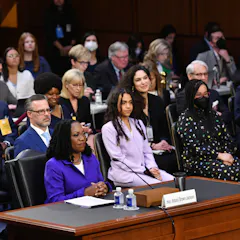
A constitutional law professor provides insight on what Judge Ketanji Brown Jackson, the first Black woman nominated to the Supreme Court, could mean for how that court works.
People who have had interactions with the criminal justice system as defendants continue to face barriers, even after paying their debt to society.
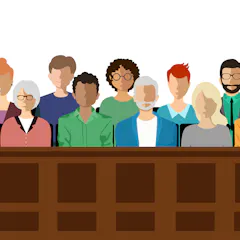
Finding out what goes on behind jury decisions and the biases that influence them is hugely important if the criminal justice system is to work properly.

Researchers estimate around half of the adults who end up in prison are parents.

As the royal commission investigates the risk factors around veterans’ mental health it needs to look at contact with the criminal justice system.

The 13th Amendment is given credit for freeing an estimated 4 million enslaved people during the Civil War era. It also enabled a prison system of free labor and involuntary servitude.
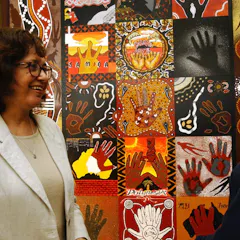
Opportunities to give voice to Aboriginal people in prison have the potential to address the growing impacts of racism in the justice system in Australia.
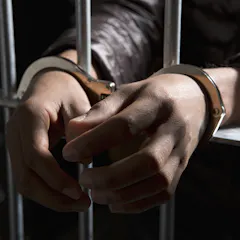
While guilty people are more receptive to plea offers, innocent defendants can also see pleading guilty as an attractive option.
Top contributors
-

Assistant Professor, Justice Studies, University of Guelph-Humber
-
Associate Professor of Law, Rutgers University - Newark
-
Senior Lecturer in Criminology, University of Wollongong
-
Associate Professor of Law, Santa Clara University
-
Professor of Political Science, University of Florida
-
Associate Professor of Sociology, University of Guelph
-
SSHRC Postdoctoral Fellow in English and Cultural Studies, McMaster University
-
Associate Professor of Gender, Religion and Critical Studies, University of Regina
-
Co-Director, Columbia University Justice Lab, Senior Research Scientist, Columbia School of Social Work, Columbia University
-
Claude Leon Foundation Chair in Constitutional Governance, University of Cape Town
-
Associate Professor, Criminal Justice, Penn State
-
Review Counsel, Adjunct Professor of Law, Western University
-
Professor in Criminology and Justice Studies, RMIT University
-
Assistant Professor of Educational Psychology, University of Lethbridge
-
Professor of Global & Language Studies, RMIT University