

The climate action plans of three companies in different industries – Delta Air Lines, Amazon and Microsoft – illuminate the three key strategies needed to cut carbon emissions.
Articles on Corporate social responsibility (CSR)
Displaying 61 - 80 of 166 articles

New research shows that when companies do things like give to charity or reduce their carbon footprint, consumers perceive their products as less risky.

Even if employees don’t care about a particular cause to begin with, they will react positively or negatively to the reason they believe their organization is choosing to engage in that cause.

Companies that want to reduce their environmental footprint need to ensure their entire workforce feels a shared sense of purpose.
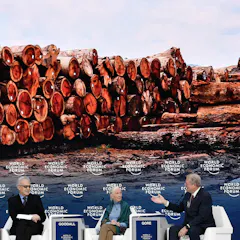
As capitalism’s image crumbles, many of the world’s biggest companies are trying to give it new life by showing it can mean more than just making money.
In time Australia’s AAA credit rating will be at risk.

A new study shows that stress, fatigue, and even feelings of injustice are felt more strongly by those who have been suffering from chronic pain for three or more months.

The National Basketball Association’s difficulty dealing with a tweet in support of Hong Kong protesters shows the challenges of having values and expanding into new markets.

What and who businesses exist to serve is an age-old debate – but it’s nearly always been driven by the bottom line.
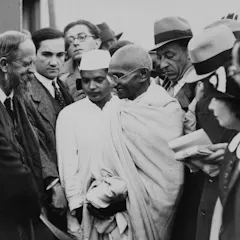
Although Gandhi is best known for expelling the British from India and inspiring the likes of King and Mandela, he also wrote a lot about the behavior of good business leaders.

Corporations are often stepping in to fill the void when governments are failing to adequately address social, economic and environmental crises.

Feminist activists are finding new avenues for activism in neoliberal times.

Contradictions abound as companies seek to style themselves as advancing gender equality while at the same time marketing sexist products or thriving on sexist employment practices.

New research suggests that non-profits tempted by the social enterprise model do not necessarily lose sight of their social mission in favour of profits. In fact, the opposite is true.

181 business leaders say they’ve changed tack. From now on they’ll look after “stakeholders” as well as shareholders, but it’s not clear they mean it.

A lesson from the 2012 massacre of mineworkers is the need for government to retain its role as primary governance agent, enforcing clear rules and ensuring the provision of public goods and services.

What they say about big issues may be a clue to the working environment they run.

Zara, a fast-fashion clothing company, recently pledged to produce its line using only sustainable textiles. But it is not enough to curb the company’s significant impact on climate change.

A new kind of capitalism is emerging in which companies value communities, the environment and workers just as much as profits. Even the Business Roundtable agrees.

Losing revenue from hotels and liquor retail outlets will hurt Woolworths Group, but not too much. The long-term reputational benefits are considerable.
Top contributors
-

Professor of Business and Society, University of Technology Sydney
-
Fellow at the Center for Advanced Study in the Behavioral Sciences at Stanford and Professor of Management and Sociology, University of Michigan
-
Research Fellow, Melbourne School of Government, The University of Melbourne
-
Associate Professor, Associate Director of Research Operations at ECU Centre for People, Place and Planet (CPPP), Edith Cowan University
-
Professor of Business Law and Ethics, Indiana University
-
Senior Lecturer of Marketing, Swinburne University of Technology
-
Senior Lecturer, Politics, University of Glasgow
-
Associate Professor, Faculty of Business and Law, QUT, Queensland University of Technology
-
Associate Professor, Organisation, Technology & Sustainability, University of Bristol
-
Lecturer in Management Accounting, University of Glasgow
-
Professor in Organisation & Sustainability, University of Exeter
-
Associate Professor, University of Sydney Business School, University of Sydney
-
Associate professor, University of Sydney
-
Chair in Accountancy and Professor in Sustainability Accounting and Transparency, University of Aberdeen
-
Senior lecturer, University of Technology Sydney