
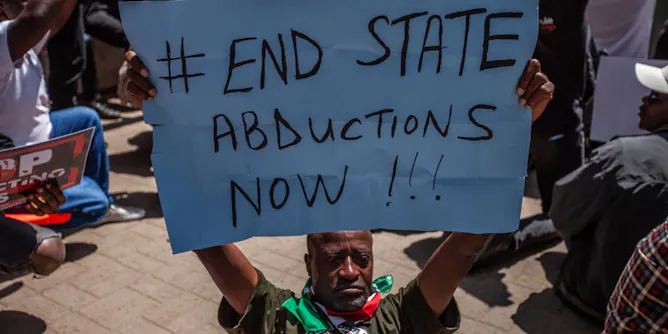
Citizens considered a threat to the government’s survival have become targets for enforced disappearances.
Articles on Constitution of Kenya
Displaying all articles

Popular discontent with the government’s performance doesn’t provide sufficient legal grounds to remove a Kenyan president.
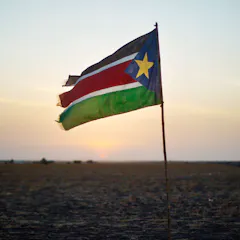
The ruling Sudan People’s Liberation Movement dominated the drafting of the current transitional constitution. History could repeat itself.

Constitutional amendments sought to make it easy for Kenyatta and Odinga to craft a broad tribal coalition against the deputy president.

Justice Martha Koome’s ascendance to the role of Chief Justice raises hope and expectations among many for a better world for women and children.
Given their ability to accept correction, children have a better claim to rehabilitation, reorientation and reintegration.
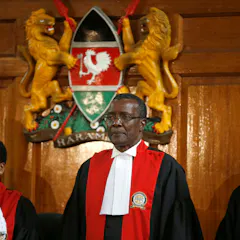
For decades, power in Kenya has lain with the government and administrative organisations that serve it. The Supreme Court’s decision calling for a new election suggests that this may have changed.
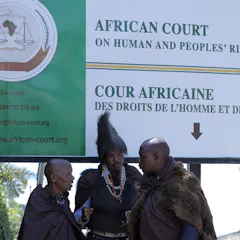
The African court has demonstrated its autonomy in a continent where judicial independence remains shaky in many states.

A Kenyan court has ruled that the government’s closure of Dadaab refugee camp is unconstitutional. This will affect the future of the refugees currently in the camp.

The striking doctors in Kenya have vowed not to resume work until the government meets their demands.
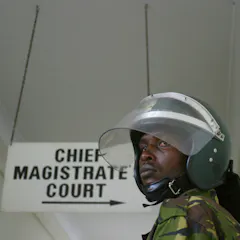
Despite some criticism, the screening of 50-odd judges and nearly 300 magistrates was a remarkable achievement. But Kenya’s new Chief Justice has some cleaning up left to do.
Top contributors
-

Professor, Weber State University
-
Research Fellow and Project Coordinator, Children's Rights, University of Pretoria
-
Researcher/Advocate on Customary Land Rights, Fellow at Van Vollenhoven Institute for Law, Governance and Society, Leiden University
-
Teaching Fellow, University of Warwick
-
Associate Senior Research Fellow, British Institute of International and Comparative Law
-
Lecturer and Senior Research Fellow at the South African Research Chair in International Law (SARCIL), University of Johannesburg
-
McKenzie Postdoctoral Research Fellow, Charles Darwin University
-
Tutorial Fellow, School of Medicine, University of Nairobi, University of Nairobi
-
International Relations Scholar, University of the Witwatersrand
-
Extraordinary Research Fellow: South African Research Chair in Cities, Law and Environmental Sustainability, Faculty of Law, North-West University
-
Professor of History, Durham University