

In many museums, children’s only access to information is through labels tailored to adult ways of viewing art.
Articles on Children
Displaying 161 - 180 of 1273 articles

When discussing the sleepover with the host family, it’s helpful to share that you have an open and honest communication style with your child.
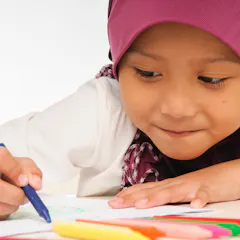
One of the tricky things about researching child development is that it occurs within a cultural and social context.

Science-based insights can help dial down parents’ anxiety by reminding them to let go of what they can’t control and focus on what matters most.
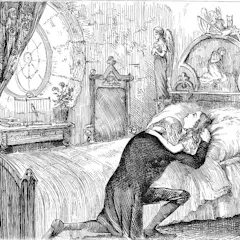
Between 40% and 50% of children didn’t live past 5 in the US during the 19th century. Popular authors like Charles Dickens documented the common but no less gutting grief of losing a child.

A philosopher argues that children benefit both from the Santa fiction and from the eventual realisation that it’s not true.

A well-known book or episode can provide comfort in a world full of strange new things.

To create inclusive, sustainable communities, we must challenge the restrictive boundaries that confine children’s experiences.

Lead can end up in cinnamon in a number of ways, but how much it contributes to blood lead levels in consumers depends on the amount of lead, as well as the frequency and amount of spice consumption.

This bill may well fall foul of the implied freedom of political communication by cutting children out of large parts of social media conversation.

Clumsiness can cause some children to withdraw from physical, sporting and leisure activities.

Although many US cities have recovered from economic downturns during the COVID-19 pandemic, they still are losing young families in large numbers. Here’s how that trend degrades urban life.
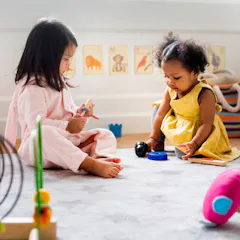
Canadian 24-hour movement guidelines for healthy development recommend naps for infants and children under two years, and nap options for ages three to four.

Neither prospective school board social media lawsuit wins, nor proposed Ontario or federal privacy or AI legislation, would prevent problems related to rampant processing of human-derived data.

The Albanese government has announced a plan to ban kids under 16 from social media. There’s no explanation why this age was chosen, and the decision flies in the face of expert advice.

It is normal for an older child to behave in ways parents will find challenging when a sibling arrives, and for parents to feel upset they cannot spend as much time with their older children.
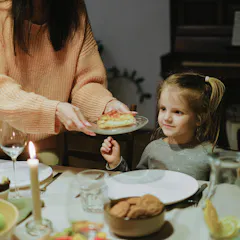
There’s a uniting theme when it comes to manners in Australia: in Australian English, good manners centre on honouring personal autonomy, egalitarianism and not appearing to tell people what to do.

Without comprehensive public and global support for care provision and the integration of care in the climate agenda, unmet care needs will only grow and inequalities will widen.

Treating all adversity as inherently negative does a disservice to children and their ability to develop adaptive coping mechanisms that can protect them in future cases of adversity.
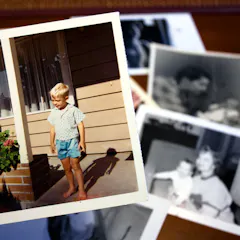
The advantages of being a part of a family are so obvious that losing that affiliation, intentionally or not, is tragic.
Top contributors
-

Professor, Canada Research Chair in Determinants of Child Development, Owerko Centre at the Alberta Children’s Hospital Research Institute, University of Calgary
-
Researcher, Digital Wellbeing, Western Sydney University
-
Associate Professor in Language, Literacy and TESL, University of Canberra
-
Professor of Social Psychology, London School of Economics and Political Science
-
Assistant Professor, Department of Psychology, Université de Montréal
-
Extraordinary Research Fellow: South African Research Chair in Cities, Law and Environmental Sustainability, Faculty of Law, North-West University
-
Associate Professor in Child Psychology and Education, University of Staffordshire
-
Postdoctoral Research Fellow, Department of Psychology, University of Calgary
-
Tier 1 Canada Research Chair in School-Based Mental Health and Violence Prevention, L’Université d’Ottawa/University of Ottawa
-
Elizabeth Handsley is a Friend of The Conversation.
Adjunct Professor of Law, Western Sydney University
-
Policy Fellow, Mitchell Institute, Victoria University
-
Associate Professor of Pediatrics, University of Virginia
-
Adjuct Faculty University of Guelph, Former Chair, Early Childhood Studies and Founder of The Love Model Inc.
-
Professor in Child Health Literacy, Edge Hill University
-
Professor of Pediatrics in the Faculty of Medicine and Senior Scientist at the CHEO Research Institute, L’Université d’Ottawa/University of Ottawa