
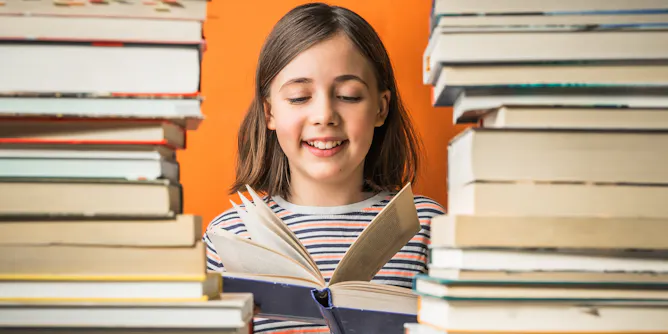
In adolescence, reading stimulates cognitive development and critical thinking.
Articles on Children
Displaying 61 - 80 of 1273 articles

Unstructured play – especially the kind that allows kids to test their limits – can help children become competent, independent adults.

Here are 4 things to avoid and 3 things to try to help model good eating and body image for your kids.

Children in family court cases face higher self-harm risk, but these moments could be opportunities to offer support and prevent harm.
A major Australian study found kids who spend 40 hours or more in childcare may struggle more with social skills and emotions than those who attend for less time.

Parents want to see if medicinal cannabis can help their child’s behavioural or emotional problems. But the evidence isn’t in and there are potential safety concerns.

For many citydwellers, parks are sanctuaries, But they may also be home to harmful pathogens.

Liquid medicines are often messy, expensive and hard to give so why do they remain the default?
While 9 till 3 seems normal, this is not necessarily what’s best for high school students as they grow.

The new study shows the number of moles on almost 4,000 children dropped by 47% between 1992 and 2016. But here’s what parents still need to watch for.
The use of polluting household fuels and gas was associated with an increased likelihood of eczema, followed by severe asthma symptoms.

Obesity remains a problem in Africa.
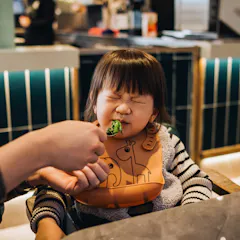
While genes do influence some food preferences, positive experiences can help make new tastes easier to swallow.
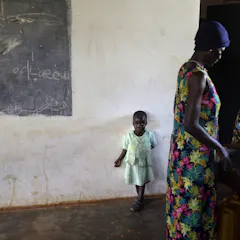
War does not end when the fighting stops or peace agreements are signed. Its harms are transmitted across generations.

New research shows that parents who read to their 6- to 8-year-olds nightly boost their children’s creativity and empathy.

Out study found that dogs and cats are not the same in this regard.
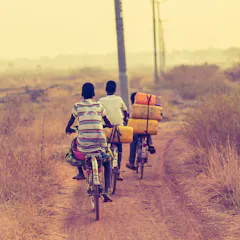
Even young children can make choices.

This debilitating disease is particularly dangerous for babies, but can affect people at any age. Vaccination remains a key line of defence.
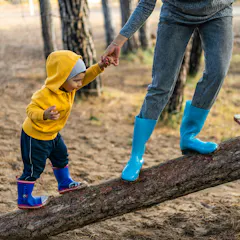
Our reaction can teach a child how to read their body signals and whether feelings are safe to feel.
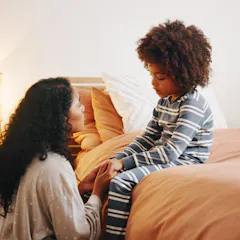
The ‘saddest day of the year’ is made up, and ignores the importance of feeling and expressing our emotions.
Top contributors
-

Professor, Canada Research Chair in Determinants of Child Development, Owerko Centre at the Alberta Children’s Hospital Research Institute, University of Calgary
-
Researcher, Digital Wellbeing, Western Sydney University
-
Associate Professor in Language, Literacy and TESL, University of Canberra
-
Professor of Social Psychology, London School of Economics and Political Science
-
Assistant Professor, Department of Psychology, Université de Montréal
-
Extraordinary Research Fellow: South African Research Chair in Cities, Law and Environmental Sustainability, Faculty of Law, North-West University
-
Associate Professor in Child Psychology and Education, University of Staffordshire
-
Postdoctoral Research Fellow, Department of Psychology, University of Calgary
-
Tier 1 Canada Research Chair in School-Based Mental Health and Violence Prevention, L’Université d’Ottawa/University of Ottawa
-
Elizabeth Handsley is a Friend of The Conversation.
Adjunct Professor of Law, Western Sydney University
-
Policy Fellow, Mitchell Institute, Victoria University
-
Associate Professor of Pediatrics, University of Virginia
-
Adjuct Faculty University of Guelph, Former Chair, Early Childhood Studies and Founder of The Love Model Inc.
-
Professor in Child Health Literacy, Edge Hill University
-
Professor of Pediatrics in the Faculty of Medicine and Senior Scientist at the CHEO Research Institute, L’Université d’Ottawa/University of Ottawa