
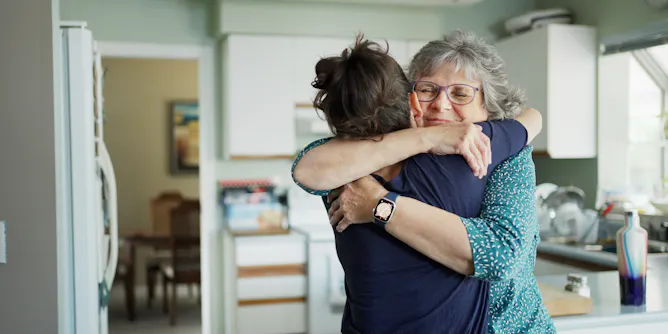
Parenting’s ultimate goal is raising healthy, happy, successful children. Figuring out how to keep parenting once the kids are adults is just another transition.
Articles on Child development
Displaying 61 - 80 of 394 articles

Research shows that many factors influence how social media can impact – positively and negatively – the wellbeing of young people. But the media and politicians often draw simpler conclusions.
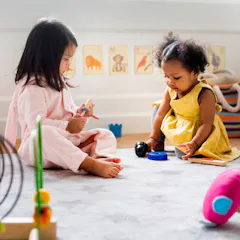
Canadian 24-hour movement guidelines for healthy development recommend naps for infants and children under two years, and nap options for ages three to four.
Everyone knows a kid who cheats at Monopoly, backyard cricket or perhaps even a test at school.

Physical activity, screen time and sleep levels for preschoolers in Canada and globally don’t meet recommendations, risking global health challenges. It’s time to get little ones a little more active.

Young people are growing up in an era where – thanks to technology – boredom is rare. This can be challenging for classroom teachers, who want to encourage their students to reflect and contemplate.

Adults use these phrases all the time to try and support children. But this type of praise may not always be helpful or healthy.
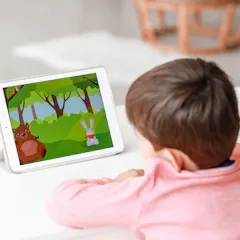
Using screen media as a calming tool to help manage young children’s emotional outbursts may be an effective short-term solution, but is likely to backfire in the long run.
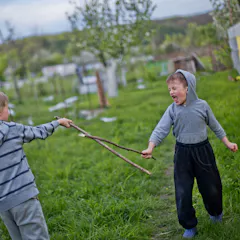
An expert in child development explains why some kids are prone to pick up the nearest stick – or even banana – and turn it into a weapon.

Prime Minister Anthony Albanese said ‘parents are worried sick’ about kids and social media as he announced he would introduce a ban this year.

Parents offer rewards because they think it will help a child reach a desired goal. But it is more helpful to focus on effort than ‘success’.
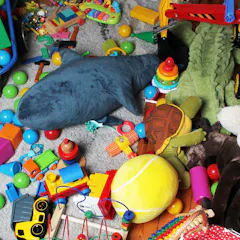
There are developmental reasons for children being messy. But there are ways to encourage your child to look after their rooms without stressful conflict.

Strong, positive and supporting relationships between siblings can support people’s well-being throughout their lifetimes, and parenting approaches matter.

The latest Closing the Gap data contains some good news – there is a marked increase in early childhood enrolments for Aboriginal and Torres Strait Islander children.

For many years, researchers have been concerned about a drop in children’s throwing and catching skills.
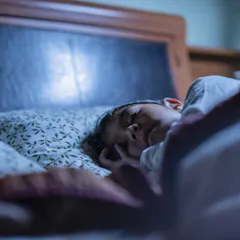
Less sleep and later bedtimes are linked to a section of the brain involved in emotion regulation suffering reduced growth, along with weaker connections to other brain areas.
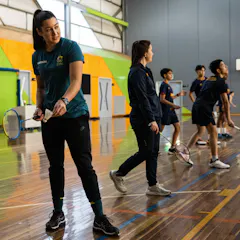
Many athletes dream of reaching the Olympics but very few reach it. What is the process for identifying and developing athletic talent?

Given the physical, social and economic prioritization of physical activity in our society, why are young children with disabilities missed from physical activity monitoring and reporting?

Over time, baby babbling will increasingly resemble the sounds of their language, eventually morphing into recognisable words.

You may find yourself wondering why it seems your kids listen to their teachers, coaches, friends’ parents … basically anyone else but you.
Top contributors
-

Professor, Canada Research Chair in Determinants of Child Development, Owerko Centre at the Alberta Children’s Hospital Research Institute, University of Calgary
-
Deputy Director, The Kids Research Institute Australia, Professor of Autism Research, The University of Western Australia
-
Associate Professor in Psychology, Deakin University
-
Professor of Clinical Neuropsychology, University of Cambridge
-
Postdoctoral Research Associate, Cognitive Neuroscience, University of Cambridge
-
Associate Professor of Developmental Psychology & Psychopathology, University of Leeds
-
Professor of Educational Psychology, University of Wollongong
-
Associate Professor, School of Psychology, Scientist, Children's Hospital of Eastern Ontario Research Institute, L’Université d’Ottawa/University of Ottawa
-
Professor of Science and Technology for Brain-Inspired Intelligence/ Computer Science, Fudan University
-
Director, Center for Community Child Health Royal Children's Hospital; Professor, Department of Paediatrics, University of Melbourne; Theme Director Population Health, Murdoch Children's Research Institute
-
Associate Professor, Department of Psychology, University of Essex
-
Assistant Professor in Psychology, Bond University
-
Senior Industry Fellow, School of Education, RMIT University
-
Associate professor, Monash University
-
Inaugural Roberta Holmes Professor, La Trobe University