

Little kids cover their own eyes and feel hidden, even if they’re still fully visible. New research suggests this doesn’t mean children can’t understand others’ perspectives, as had been assumed.
Articles on Child development
Displaying 281 - 300 of 394 articles

Babies first learn to recognize the rhythm and intonation of language. The process begins in the womb, where the intonation patterns are transmitted to the baby through the fluids.

An increasing number of parents are choosing to toilet train their children from birth, without using nappies. But how effective is this?

The lead author of a new American Academy of Pediatrics statement summarizes important guidelines for children’s use of electronic devices.
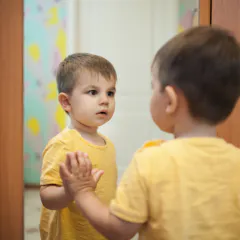
Children start to demonstrate self-awareness as they approach their second birthday – and it helps them to learn.

A small minority of children with mental health issues is getting the help they need. School-based mental health is essential to keep students engaged.

People often tell new parents to avoid ‘baby talk’ because it will slow down the child’s language development. But evidence shows it does the opposite.

Learning how to overcome boredom can boost a child’s creativity and independence. So why are parents scared of it?
The good and bad things that happen in early childhood set the stage for health and well-being throughout a person’s life.
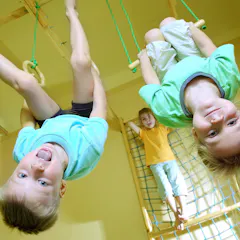
Why children shouldn’t specialise in one sport too early.

If children aren’t sufficiently coordinated, it could affect their ability to learn.
Almost 10% of differences in exam results at age 16 can be explained using individuals’ DNA alone.

Language, culture and brain development all contribute to ‘childhood amnesia’.

If you thought babies’ babbling was just nonsense, it’s time to think again.

Fathers experience an equal rise in the bonding chemical oxytocin as mothers do when interacting with their infant.

The development of ‘handedness’ and language are closely linked.
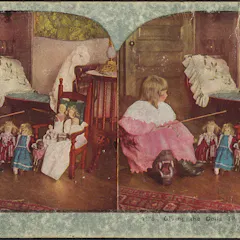
Research has found a relationship between pretend play and a child’s developing creativity, understanding of others and social competence with peers.

If you use a tablet device to keep a child quiet at the dining table or other event then you could be limiting their social skills. That could have an impact on the way they behave later in life.
Non-verbal learning disability is a complex neurological learning disability that becomes more obvious with age. Here are the signs to look out for.
A child mainly learns empathy through imitating adults – yet another reason to treat others well.
Top contributors
-

Professor, Canada Research Chair in Determinants of Child Development, Owerko Centre at the Alberta Children’s Hospital Research Institute, University of Calgary
-
Deputy Director, The Kids Research Institute Australia, Professor of Autism Research, The University of Western Australia
-
Associate Professor in Psychology, Deakin University
-
Professor of Clinical Neuropsychology, University of Cambridge
-
Postdoctoral Research Associate, Cognitive Neuroscience, University of Cambridge
-
Associate Professor of Developmental Psychology & Psychopathology, University of Leeds
-
Professor of Educational Psychology, University of Wollongong
-
Associate Professor, School of Psychology, Scientist, Children's Hospital of Eastern Ontario Research Institute, L’Université d’Ottawa/University of Ottawa
-
Professor of Science and Technology for Brain-Inspired Intelligence/ Computer Science, Fudan University
-
Director, Center for Community Child Health Royal Children's Hospital; Professor, Department of Paediatrics, University of Melbourne; Theme Director Population Health, Murdoch Children's Research Institute
-
Associate Professor, Department of Psychology, University of Essex
-
Assistant Professor in Psychology, Bond University
-
Senior Industry Fellow, School of Education, RMIT University
-
Associate professor, Monash University
-
Inaugural Roberta Holmes Professor, La Trobe University