
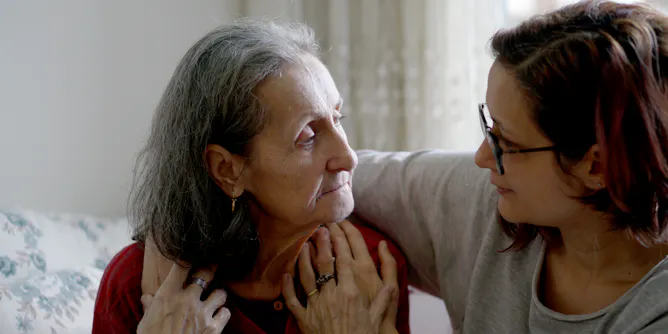
About 1 in 4 US adults are family caregivers.
Articles on Caregiving
Displaying 1 - 20 of 133 articles

Medicare and Medicaid provide limited help with caregiving for older adults – and that means unpaid relatives often bear big burdens.

SNL’s Sister skit takes aim at the gender inequity of caregiving. One of the most important places to bring about serious change is the workplace.

Drinking is partly a brain-regulated behaviour: the brain detects changes in the body’s fluid balance, generates thirst and helps translate that signal into seeking and drinking water.
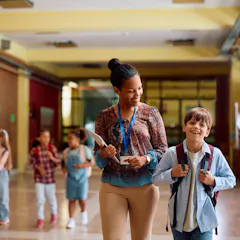
Across three countries, people agree that teaching is centered on the teacher-student relationship. But they don’t agree on which profession teaching most resembles.

Family members can offer invaluable support to patients, but a trained advocate can provide an objective perspective as well as knowledge of resources that families may lack.
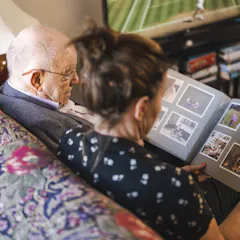
The demands of caregiving can reverberate through family relationships, exposing old disagreements about expectations and responsibilities.

Our latest study takes a closer look at the emotional lives of humpback whales.
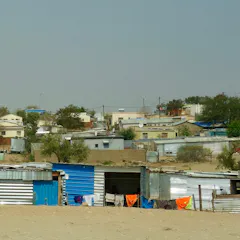
Caregivers said their priorities were pension increases, a dedicated allowance, food security and basic infrastructure.
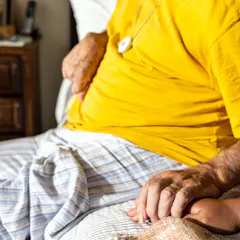
People living with Alzheimer’s as well as their caregivers benefit from culturally informed care.

Alberta’s move to shift disability recipients onto a lower-paying, employment-focused benefit assumes people can make up the difference through work, savings or family. Research suggests few can.

An eight-country study assessed whether parenting programmes that were developed through research also work when offered at a wider scale in real-life conditions.
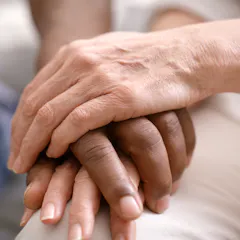
‘Fix-it’ medical approaches often go against people’s wishes near the end of life, creating unnecessary and preventable suffering.

As religious affiliation declines, the rituals and guidance it once provided around dying have disappeared for many people. Death doulas fill that gap.

Mothers still bear the majority of care work and fathers are still largely excluded or pushed to take unpaid leave.

Comedic portrayals of incompetent dads can distort public understanding of fathers’ essential and real-life contributions to children’s development.

Pennsylvania’s proposed paid leave may not be enough for sandwich generation caregivers, who are raising children and supporting aging parents.

The COVID-19 pandemic exposed and intensified an already disproportionate burden of caregiving, emotional labour and financial inequality by women — a burden that remains largely invisible.

Cinema has helped normalize caregiving as a moral, non-negotiable family duty. But in diasporas, these inherited expectations are often too difficult to sustain.
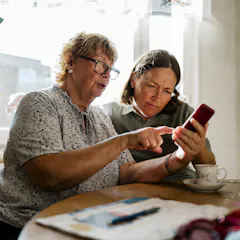
As devices get smarter, families and communities bear a heavier burden of technology caregiving for older adults.
Top contributors
-

Doctoral Candidate, Aging, Health and Well-being, University of Waterloo
-
Professor of Sociology, University of Cape Town
-
Professor, Faculty of Science, McMaster University
-
Doctoral candidate, University of Cape Town
-
Professor and Co-Director, Research on Aging, Policies and Practice, University of Alberta
-
Assistant Professor, Faculty of Health Sciences, Simon Fraser University
-
SARChI: Human Capabilities, Social Cohesion and the Family, University of the Western Cape
-
Professor, Department of Anthropology, University of Toronto
-
Professor, Canada Research Chair in Determinants of Child Development, Owerko Centre at the Alberta Children’s Hospital Research Institute, University of Calgary
-
Gerontologist, University of Waterloo
-
Professor of Sociology, University of Lincoln
-
Professor and Canada Research Chair in Person Centred Interventions for Older Adults with Multimorbidity and their Caregivers, School of Nursing, McMaster University
-
Professor of Public Administration and Policy, American University School of Public Affairs
-
Associate Professor, Arthur Labatt Family School of Nursing, Faculty of Health Sciences, Western University
-
Research fellow, Stellenbosch University