

Justin Trudeau has been in power for almost a decade, achieving some of his objectives and stalling on others. What will be his legacy, and is constitutional reform in the cards in the next two years?
Articles on Canadian cannabis legalization
Displaying all articles

There were concerns about changes that cannabis legalization might bring. But some trends that were already underway beforehand mostly carried on afterward.
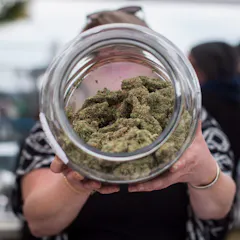
The government’s advice to cannabis users is to start low and go slow. Given the potential harms of a rapidly expanding retail market, it should heed its own advice and move slowly on regulatory changes.

More licensed store openings led to larger legal sales growth but little extra increase in Canadian cannabis user numbers.

As many as 33 American states and several European countries are looking to legalize recreational cannabis. Canada’s experience has lessons for them about how best to sell cannabis.

U.S. Congress might not pursue full cannabis legalization this year. But it should still provide Americans with some of Canada’s legal clarity.
If the goal of cannabis legalization was to protect public health and safety, education and awareness campaigns must normalize safe cannabis use, not stop cannabis consumption.

Health Canada should revise its cannabis regulations to let producers differentiate themselves from competitors and explain their products to consumers.

The Ontario Cannabis Store’s performance greatly improved but still trailed Quebec’s. However, both provinces still lack a sufficient number of outlets.

Canada’s cannabis industry needs to reduce costs and improve quality. That’s difficult to do when key government data is unreliable.

Cannabis edibles will be legal in October. But the regulations set by Ottawa on cannabis edibles are confusing to retailers, making it difficult for Canada to lead the way for other countries.
Top contributors
-

Professor of Operations Research, Brock University
-
Public Health Physician and Canada Research Chair and the University of Ottawa, L’Université d’Ottawa/University of Ottawa
-
Associate professor, School of Pharmacy, Memorial University of Newfoundland
-
Professor, School of Public Policy and Administration, York University, Canada
-
PhD Student, Social Anthropology, Dalhousie University
-
Assistant Professor, Department of Management, Sobey School of Business, Saint Mary’s University
-
Assistant Professor, Management Area, McIntire School of Commerce,, University of Virginia
-
Associate Professor of Health Policy and Systems Research, Memorial University of Newfoundland
-
Assistant Professor, Retail Management, Toronto Metropolitan University
-
Assistant Professor, Ted Rogers School of Management, Toronto Metropolitan University
-
Assistant Professor, School of Pharmacy, Memorial University of Newfoundland
-
Professor, Retail Management, Toronto Metropolitan University
-
Director, Agri-Food Analytics Lab, Professor in Food Distribution and Policy, Dalhousie University
-
Project Coordinator, Marketing and Communications, Memorial University of Newfoundland
