

First round result was a warning against complacency, but the runoof comeback does not resolve the structural tensions facing a fourth Lula administration.
Articles on Bolsonarism
Displaying all articles
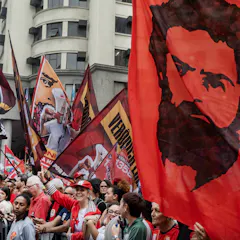
President Lula’s spectacular reelection sends a clear warning to the global far right after seven conservative presidential wins in Latin America in 18 months.
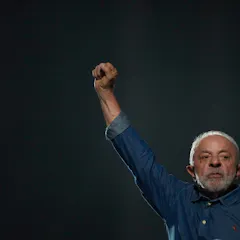
Lula won through a resonant message and new outreach success on social media. But governing in the face of a strong right at home and in Washington won’t be easy.
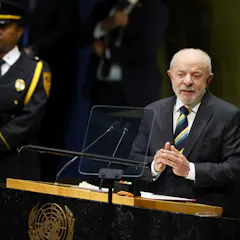
The race between the incumbent president and Flávio Bolsonaro is a part of a decades-long right-left split in the country over the meaning of the nation.

President Donald Trump’s relationship with Brazil’s President Luiz Inácio Lula da Silva is complicated by the US administration’s broader strategy in Latin America.

However, there is a more profound lesson we can learn from Brazil: Democracy depends on more than institutions.

US president’s letter to Brazilian counterpart mentioned trade deficit. But don’t be fooled, these tariffs are political rather than economic.
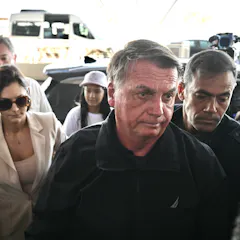
The latest legal developments could galvanize his right-wing base.
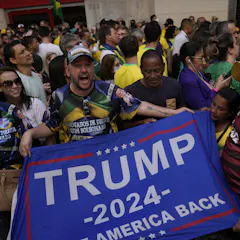
Protectionist policies could harm exports of Brazilian industrial products, and the alliance between the US and Argentina will jeopardise Brazil’s efforts to integrate South America
Top contributors
-

Executive Director of the Stone Center for Latin American Studies, Tulane University; King's College London
-
Associate Professor of Brazilian Studies, Florida International University
-
Professor of Modern Latin America History, University of Denver
-
Assistant Professor of History and International Studies, Louisiana State University
-
Cientista política e pesquisadora de pós-doutorado no Instituto Nacional de Ciência e Tecnologia em Representação e Legitimidade Democrática (INCT ReDem), Universidade Federal do Paraná (UFPR); Sciences Po
-
Political Science Researcher, Sciences Po; Universidade Estadual de Campinas (Unicamp)
-
Visiting Assistant Professor of Political Science, University at Albany, State University of New York
-
Professora Adjunta de Relações Internacionais, Universidade Federal Rural do Rio de Janeiro (UFRRJ); PUC-Rio