
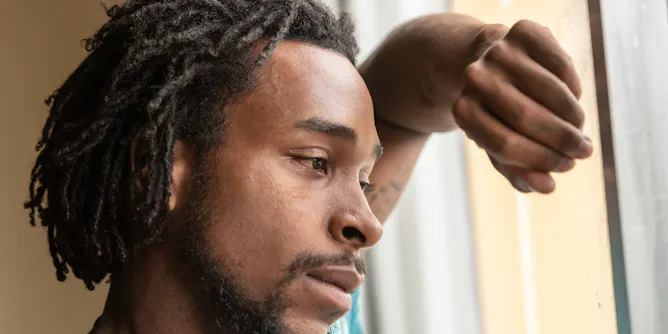
The issues facing Black Americans are not confined to only racial discrimination. Gender plays a part too.
Articles on Black women
Displaying 61 - 77 of 77 articles

Women of color are woefully underrepresented in leadership positions in higher education. What will it take to turn things around?

Four decades after Ellen Craig-Jones of Urbancrest, Ohio, became the US’s first Black woman mayor, seven of the nation’s largest cities are lead by Black women. And what a time to be in charge.

Studies show the physical and emotional pain of minorities and women is often discounted by both the U.S. justice and health care systems. That has serious consequences.
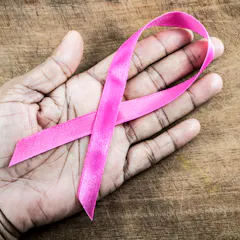
Late detection of breast cancer means treatment is often drastic and frightening for patients.
In some ways, perhaps Morrison is even more relevant in South African universities today than she’s ever been.
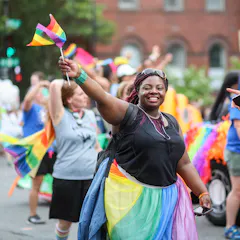
According to the General Social Survey, the percentage of men and women who identify as gay or lesbian has held firm. But the share of women who say they’re bisexual has skyrocketed.
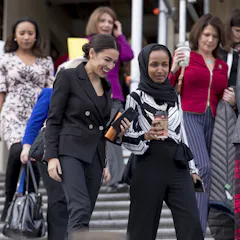
Women of color in public office often face great scrutiny and hostility. New research shows how France’s first black female senators used their experience fighting Nazis to pass landmark legislation.

As we celebrate moms this Mother’s Day, let’s remember that maternal health is a right that many do not enjoy.
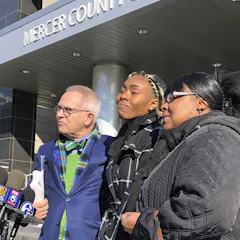
In protecting their children, low-income Black mothers risk being viewed as irrationally overprotective and simultaneously neglectful.
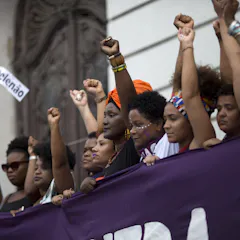
In Brazil, a record 1,237 black women will stand for office in Sunday’s general election. As in the US, their campaigns reflect deep personal concern about rising racism and sexism in politics.

As Brazil’s black women become more conspicuous and powerful, they are bullied and threatened in social media’s modern-day pillory.
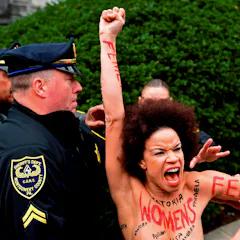
Any movement against sexual assault must take into account historical, state-sanctioned violence against black women in the US that goes back centuries.

Getting to the White House would mean overcoming issues of race and gender.

Black lives in Brazil are devalued and subject to violence on a horrific scale.

Stigma about black or African hair reflects deep-seated politics around race and history.
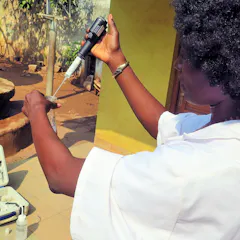
Family, marriage and culture are among the factors that influence black women’s experiences as scientists.
Top contributors
-

Professor of Political Science, University of Florida
-
Assistant Professor, Faculty of Social Work, Wilfrid Laurier University
-
Associate Professor of Law, Rutgers University - Newark
-
Assistant Professor of Communication, Florida International University
-
Adjunct professor of Justice, Law and Criminology, American University School of Public Affairs
-
Associate Professor of Social Epidemiology, The Ohio State University
-
Associate Professor of Law, Santa Clara University
-
Adjunct professor, Southern Cross University
-
Assistant Professor of Government and Legal Studies, Bowdoin College
-
Professor of Social Anthropology, University of Manchester
-
PhD Candidate, University of the Witwatersrand
-
Associate Professor, Department of Literary Studies in English, Rhodes University
-
Academic Excellence Coordinator, Tshwane University of Technology
-
Professor of Social Work, University of Johannesburg
-
Doctoral Candidate, Peter A. Allard School of Law, University of British Columbia