Articles on Benjamin Rush

Displaying all articles

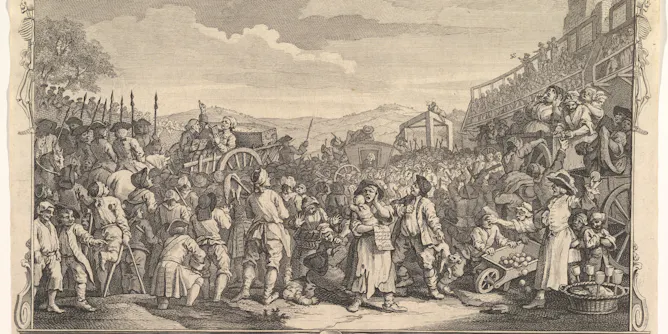
A 1747 print of a public execution at the so-called Tyburn Tree, a gallows in London that served for hundreds of years as a site of hangings. William Hogarth

In newly independent US, Americans debated whether public executions taught a lesson or just showed off the state’s power to destroy

The conflict over the wisdom of Nidal Hasan’s public execution is not a new one. Americans at the republic’s founding debated – and doubted – whether watching someone die would teach a useful lesson.
The men responsible for producing the Declaration of Independence, known as the Committee of Five, were, left to right: Benjamin Franklin, Thomas Jefferson, Roger Sherman, John Adams and Robert R. Livingston. Vintage etching circa late 19th century, digital restoration by Pictore via Getty Images

John Adams and Thomas Jefferson disagreed about the American Revolution’s meaning even as they lay dying

The founding generation in America was not of one mind. John Adams and Thomas Jefferson differed on crucial ideas, but exemplify the capacity for people to disagree and yet work for a common cause.
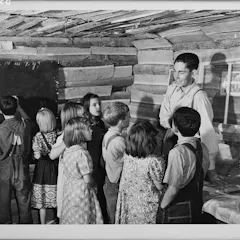
The founders believed education was crucial to democracy. Here, a one-room schoolhouse in Breathitt County, Ky. Photograph by Marion Post Wolcott/Library of Congress

America’s founders believed civic education and historical knowledge would prevent tyranny – and foster democracy

Democracies degenerate because of cunning leaders. Democracies also crumble because of the people themselves – and the US founders believed education would be crucial to maintaining democracy.

Top contributors