
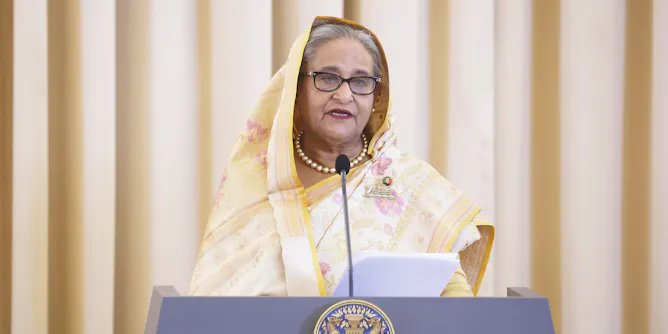
The family of Sheikh Hasina were at the forefront of the independence movement but were soon linked to allegations of corruption and authoritarianism.
Articles on Bangladesh
Displaying 21 - 40 of 177 articles
Recent experiments make the case for a paradigm shift in the provision of social assistance.
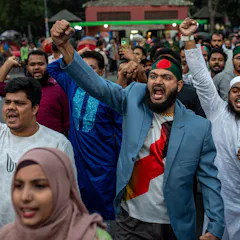
Restoring democracy will be a tall order for the interim government as it grapples with security, economic and geopolitical crises.
Population resettlement has become a part of South Asia’s post-colonialism playbook. The practice causes real harms to ethnic cohesion, solidarity and collective rights.
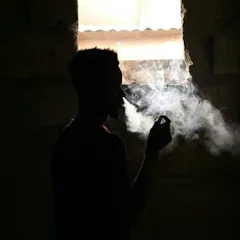
What can we learn from the trajectories of those who have taken part in a gang? Can they ever get out? What do they tell us about the societies in which these gangs operate?
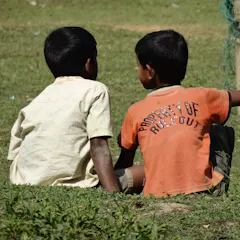
Sharif was forced to live on the streets at 14 and became affiliated with criminal gangs as a means to survive. He and I discussed his childhood and how he overcame adversity, war and conflict.

Public sector corruption has become an increasingly common part of life in Bangladesh over the past 15 years.

Calls to return Bangladesh’s ousted prime minister, Sheikh Hasina, from India are growing, but is this a feasible outcome?
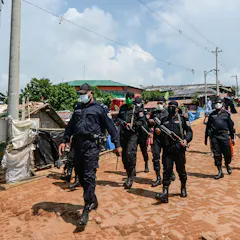
Hundreds of thousands of minority Muslims fled Myanmar in 2017 amid a government crackdown. Seven years on, they remain in refugee camps.

Bangladesh’s interim government faces an uphill battle to get the country’s economy back on track.

Aid successfully narrowed gender gaps in nearly every country researchers examined.
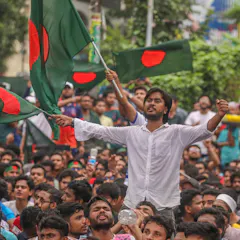
Young people in Bangladesh are not alone in their struggle to get decent work.
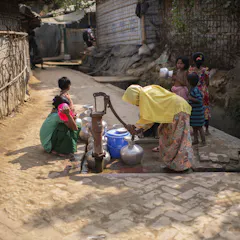
Bangladesh’s interim government must balance demands for justice from its citizens with the urgent needs of Rohingya refugees. If it succeeds, it will be monumental for the global refugee governance.
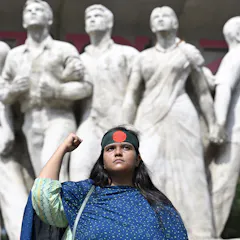
The country’s interim leader shoulders the weight of a nation’s hopes, facing monumental expectations of uniting a fractured society, restoring the economy and reestablishing law and order.
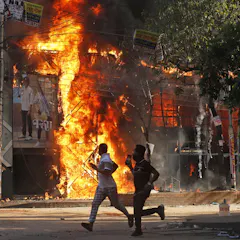
The disproportionate impact on men during the Bangladesh protests highlights how gender roles and socio-economic disparities push men into the frontline of civil unrest.
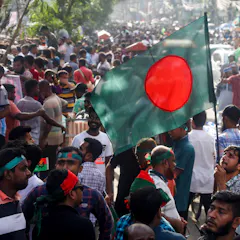
Bangladesh has avoided total collapse, but what step the country takes next remains to be seen.
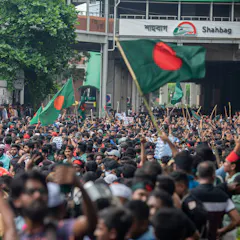
Military leaders have formed an interim government and promised a transition to civilian rule. Protesters who brought down the previous government are demanding nothing less.

Bangladesh’s repressive leader has been forced out after 15 years in power.
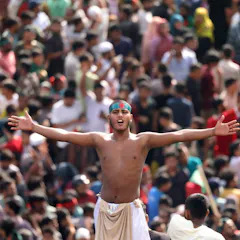
The protesters initially wanted to change a quota system for government jobs. But deep-seated frustrations quickly erupted.
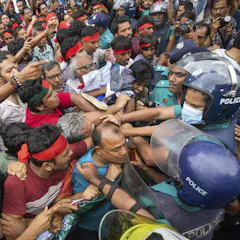
A curfew has sealed Rohingya refugees inside camps run by armed criminal gangs. Here’s what Australia and other nations should be doing to help.
Top contributors
-

Director, Centre for Accountability and Global Development, University of Essex
-
Professor of Intersectional Justice, UCL
-
Professor of Social Policy, University of South Wales
-
Lecturer in Government, Jeff Bleich Centre for Democracy and Disruptive Technologies, Flinders University
-
Professor of Development Economics, Monash University
-
Adjunct Research Fellow, Humanitarian and Development Research Initiative, Western Sydney University
-
Senior Research Fellow and Lecturer in Environmental Management, University of Manchester
-
Assistant Professor, Michigan State University
-
Senior Professorial Lecturer of Global Governance, Politics and Security, American University School of International Service
-
Associate Professor in International & Community Development, Deakin University
-
Professor of Disasters and Health, UCL
-
Senior Research Fellow, Digital Media, Western Sydney University
-
Senior Lecturer in Politics and International Relations, University of Dundee
-
Senior Lecturer in Anthropology, University of Sussex
-
Lecturer, University of South Wales