
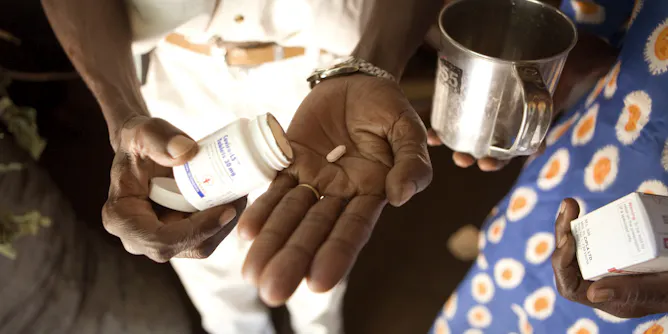
There are currently 1.2 million Ugandans enrolled on antiretroviral therapy (ART). They are especially affected by the lockdown.
Articles on Antiretroviral therapy
Displaying 21 - 40 of 61 articles
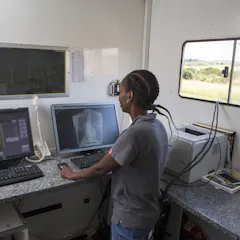
South Africa needs a public health response that expands the successes of the country’s HIV testing and treatment programme to provide care for multiple diseases.

Not achieving the targets for children and adolescents in sub-Saharan Africa means that new infections will continue to increase and HIV related mortality will be a reality for decades to come.
Cryptococcal ceningitis is one of the main causes of death of people with HIV. The tests and medicines to diagnose and treat it exist but remain inaccessible to most. A global strategy is needed.
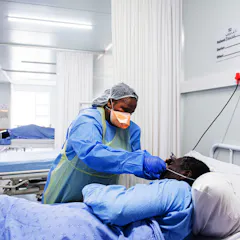
Where there are not enough health workers to deliver medical care, one solution is to move certain tasks to less specialised health workers, a process called task-shifting.
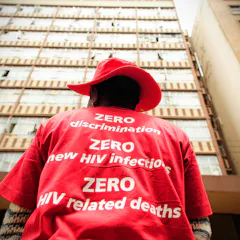
If the world is single-minded and focuses purely on combating one pandemic, forgetting others, the effects of other morbidity and mortality on healthcare systems will be seen for a long time to come.
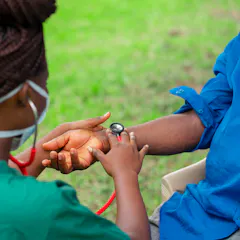
Nurses represent 50% of the global healthcare workforce. And they are often the sole healthcare providers in many low and middle-income countries.
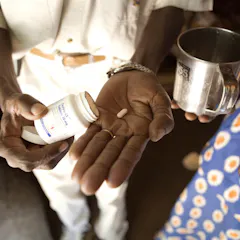
The giant leap in the number of people accessing HIV treatment would not have been possible without task shifting from medical doctors to less-specialised cadres such as nurses and midwives.

One of the main challenges remains that diagnostics and drugs for people suffering from advanced HIV aren’t readily available. This group of people is vulnerable to deadly opportunistic infections.
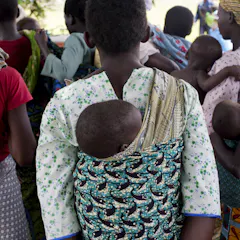
The use of antiretroviral therapy among pregnant and breastfeeding women in Zambia has increased but adherence is a problem.
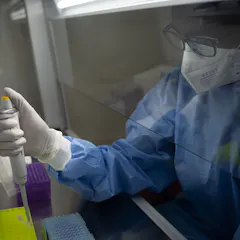
Pooled testing, or group testing, has been used to diagnose relatively rare conditions, such as infection in blood donors. It could be used for universal early infant diagnosis and viral load testing.

The redirection of resources to COVID-19 has enormous consequences for the provision of healthcare services for other diseases, in particular, HIV programmes.

Reducing maternal deaths in developing countries relies on the ability of health systems to swiftly identify and manage women at high risk.

In Eswatini, Botswana, South Africa and Lesotho more than 1 in 5 children are HIV-exposed but uninfected. A coordinated strategy is needed to ensure all children reach their developmental potential.

South Africa has set ambitious targets to eliminate mother to child transmission of HIV completely. It will require innovative strategies and continuous quality improvement to achieve them.

Babies born with the HIV virus in their blood are at a turning point in the infection. With immediate treatment these children can develop much stronger immune systems to fight the virus.

New research supports kidney transplants from HIV-positive donors to recipients with HIV.
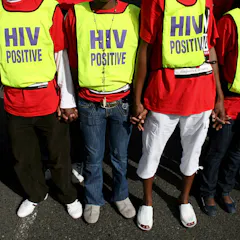
There’s an urgent need for interventions to increase uptake of antiretroviral therapy and improve services for adolescents.

Many of the most fundamental aspects of TB disease remain unknown. For example, after exposure to the organism that causes TB, why do only some people get infected and only some of those fall ill?

Rapid population ageing has prompted researchers to study disease trends in older South Africans. The aim is to understand the role that specific health conditions play in ageing among rural people.
Top contributors
-

Professor: Health and Population Division, School of Public Health, University of the Witwatersrand
-
Professor of medicine and deputy director of the Desmond Tutu HIV Centre at the Institute of Infectious Disease and Molecular Medicine, University of Cape Town
-
Senior lecturer in Paediatrics and Child Health, Stellenbosch University
-
Honorary Research Associate, Centre for Infectious Disease Epidemiology and Research, University of Cape Town
-
Health Systems Researcher, Makerere University
-
Research Manager at MRC/Wits Agincourt Research Unit, University of the Witwatersrand
-
University of the Witwatersrand
-
Associate Professor (Reader), Wits School of Public Health, University of the Witwatersrand
-
Assistant Professor, Africa Health Research Institute (AHRI)
-
Assistant Professor, Family Health Care Nursing, University of California, San Francisco
-
Doctoral Researcher, School of Public Health and Public Health Technical Advisor, Anova Health Institute, University of the Witwatersrand
-
Associate Professor and Director of the Centre for Infectious Diseases Epidemiology and Research, University of Cape Town
-
Assistant Professor, Harvard University
-
Head: Cell Biology, Centre for HIV and STIs, National Institute for Communicable Diseases
-
Public Health Medicine Specialist, University of the Witwatersrand