
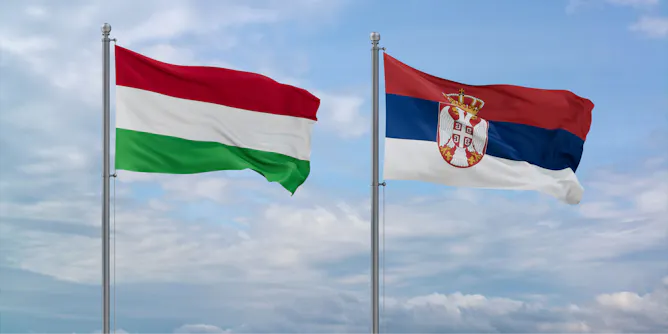
By breaking away from illiberal rule, Serbia and Hungary provide examples of states seeking the best of both worlds in their relations with China, Russia and the West.
Articles on Aleksandar Vucic
Displaying all articles

Netanyahu clings on to power, the Student List triumphs and the US prepares a report card for Donald Trump.

With no leader or political experience, Serbia’s student movement now begins talks to form a government.
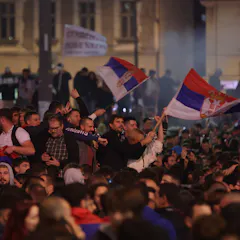
A record number of voters turned out to end Alexander Vučić’s longstanding dominance of Serbian politics.
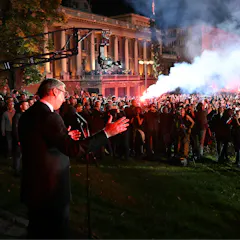
Serbians will go to the polls in October for what looks set to be their closest national election in years.
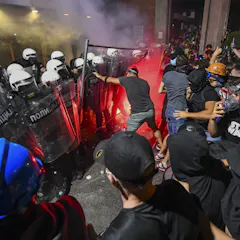
For almost a year, Serb demonstrators have called for the ouster of the increasingly authoritarian president.

The EU has mostly stayed silent since the protests began.

Tension in the western Balkans, which has been troubled by ethnic tensions since the wars of the 1990s, is becoming an increasing concern for the EU and Nato.

Kosovo is under pressure from the US and EU to give in to some of Serbia’s demands.

Serbia’s nationalist government seeks re-election. If it succeeds, Europe may be poised for renewed war in the Balkans.

The U.S. and the EU have neglected the Balkans, hoping that the allure of EU integration would be enough to placate Serbia and other countries. It was not.

Despite an openly lesbian prime minister, Serbia’s deep-seated problems with homophobia remain.
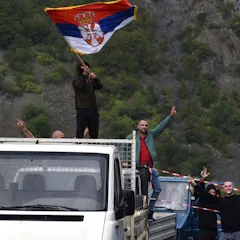
Unrest in the Balkans might be orchestrated by Russia, but the crisis is also an opportunity for the west.

Serbians go to poll on April 2. Will the country’s trend of illiberalism and authoritarianism continue its three-year run?
Top contributors
-

Professor of Political and Cultural Sociology, UCL
-
Lecturer in Law, King's College London
-
PhD Candidate in Political Science and International Studies, University of Birmingham
-
Associate Professor and Edward and Emily McWhinney Professor in International Relations, Simon Fraser University
-
Reader in International Politics, City St George's, University of London
-
Professor of International Security, University of Birmingham
-
Phd Student in Applied Linguistics, Universität Wien
-
Professor of Politics and Global Studies, Arizona State University
-
Professor of Social Psychology, International Psychoanalytic University Berlin
-
Professor of Political Psychology, Department of Politics and International Relations, University of Southampton
-
Docteur en science politique, Université Lille 2, spécialiste des Balkans, Université de Lille
-
Policy Leader Fellow, European University Institute
-
Reader in International Relations, University of Westminster