
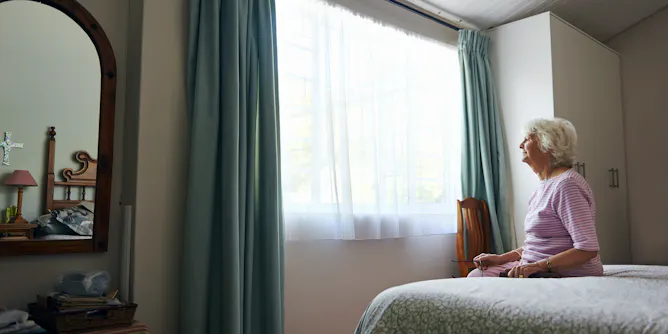
Some family members of aged care residents have resorted to hidden cameras to detect abuse and protect loved ones. But it’s legally murky and erodes the privacy of the resident, staff and visitors.
Articles on Aged care
Displaying 241 - 260 of 325 articles

Better aged care will only come when we as a society stop marginalising older people and start recognising the needs of their carers.
Large institutions for people with disability and mental illness were once commonplace. These have now been replaced with smaller community-based services. With aged care, we’re doing the opposite.
Four Corners this week revealed understaffing and poor staff training in aged care. These issues have also been found in previous reviews into aged care.
Older people living in residential aged care often have few friends, no meaningful interactions and feel socially isolated. Most people are depressed and some may no longer wish to live.

Because of their sedative effect, antipsychotic medications are often used – in fact they are over-used – to “manage” people with dementia. This is against clinical guidelines.

Amid concerns about their quality of care, aged care providers are getting bigger or getting out.

Australia’s aged care sector is in trouble. Our experts have previously explored the complex aspects of the system, exposing where the problems are, and have been for some time.
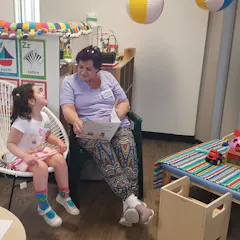
Intergenerational care gives children and older people the chance to interact, resulting in significant benefits for participants and the wider community.

People with dementia can become agitated or distressed when the temperature isn’t right, but some aged-care facilities aren’t designed or operated to keep them comfortable.

Tech-savvy baby boomers are driving the trend towards retirement living in high-rise city apartments.
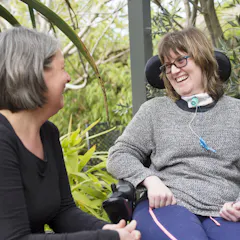
The NDIS has started to reduce the admissions of young people with disabilities to aged care facilities, but more than 6,000 are still waiting for more suitable accommodation.

Outcomes are better when people with dementia are in home-like care rather than standard nursing homes.

The Australian government provides a safety net of subsidies for elderly Australians unable to fully fund their own care. But will the extra 14,000 home care places in the budget meet demand?
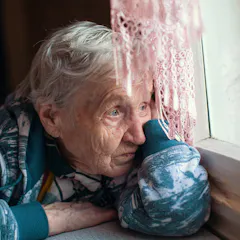
The government has announced funding to combat loneliness in the elderly.

While the budget will come in for its share of criticism, looked at overall it is designed not to offend an electorate that has already turned off the government.

Around 140 Australian nursing-home residents have taken their own lives between 2000 and 2013, our new study shows.

Twenty years since the Aged Care Act was introduced, the situation for older Australians remains dire. They’re sicker and have more complex care needs, but little access to medical care.

There has been a substantial improvement compared to 15 years ago, when the incidence of poverty among the elderly was 32.4%.

The rising global prevalence of dementia, particularly in the nursing home population, means aggressive behaviours between residents will increasingly be an issue.
Top contributors
-

Professorial Fellow, University of Canberra
-
Professor, Aged Care Medical Research Australian Centre for Evidence Based Aged Care, La Trobe University
-
Honorary Enterprise Professor, School of Population and Global Health, and Department of General Practice and Primary Care, The University of Melbourne
-
Emeritus Professor of Public Health, La Trobe University
-
Professor of Health Economics, University of Technology Sydney
-
Professor in Ageing and Health, University of Sydney
-
Associate Professor of Accounting, University of Technology Sydney
-
Head of Clinical Services, Dementia Support Australia, & Associate Professor of Psychiatry, Monash University
-
Senior Associate, Grattan Institute
-
Professor, School of Public Health, The University of Queensland; The University of Melbourne
-
Associate Professor in Aged Care, Corporate Governance and Accounting, University of Technology Sydney
-
Senior Lecturer in Dementia Care, University of Tasmania
-
Professor of Nursing Aged Care (Dementia), University of Technology Sydney
-
Senior Research Associate, International Centre for Future Health Systems, UNSW, UNSW
-
Adjunct Professor, Summer Disability Research Centre, La Trobe University