
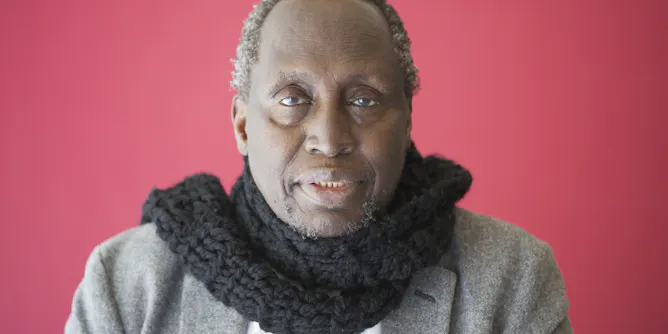
From the late 1950s a new generation of African writers challenged colonial systems and used their work to imagine a new world.
Articles on African writers
Displaying 21 - 40 of 98 articles
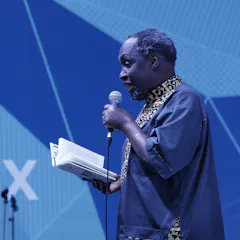
No African writer has as many major, lasting creative achievements in such a wide range of genres as Ngũgĩ wa Thiong’o.
Morojele’s creative career was remarkable. He not only played the jazz changes, but lived and wrote the social and political ones.

Seven queer African creative works you should know about, from short stories to music videos.
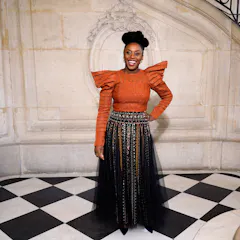
Dream Count rewards the attentive reader who is willing to let the book slowly add layers of meaning.
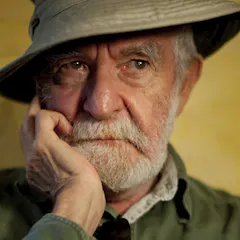
His characters – tramps, discarded people, poor people, people on the fringes – are connected with all the people we know of today who are refugees.
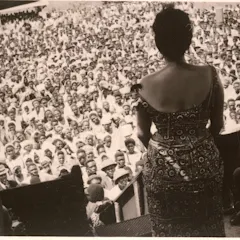
Andreé Blouin was erased from history despite her pivotal role in African independence. Today she has a book prize named after her.

Deep South, a small publisher with big influence, has expanded its website with easy-to-access information about its poets and their work.
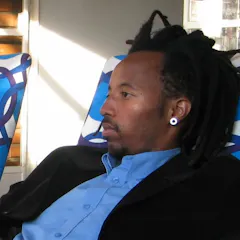
He explored the darker realities of South African life in three novels before his untimely passing at the age of 30.

Mozambique struggles to create a unified nation because of its diverse cultures, colonial history, socialism and globalisation.
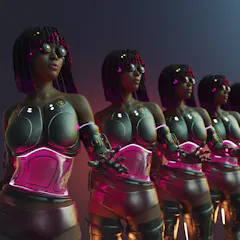
From angry spirits and parallel universes to alien abductions and epic folklore, African writers are offering fresh new horizons for the world’s science fiction landscape.
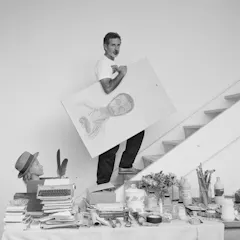
The celebrated South African writer and poet Breyten Breytenbach has died at 85. He used his art to fight for justice for marginalised people throughout his life.
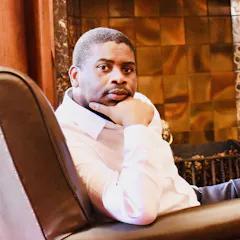
Nthikeng Mohlele is a unique voice in South African literature. Revolutionaries’ House is his most political work so far, but far from his best.
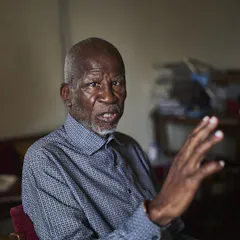
A public figure who appeared often on TV and radio, Pathisa Nyathi celebrated the history and culture of Zimbabwe’s marginalised Ndebele people.

A new generation has been disrupting traditional publishing using new technologies and marketing methods.

A Colonial Boy is a welcome book for Eppel scholars, but some readers may be put off by its use of literary sketches.
Fanon’s famous book was translated to isiZulu by South African writer and scholar Makhosazana Xaba.
The award-winning South African playwright has written a masterful short story about a woman having to play a challenging theatre role.
After a messy break-up, Mangi loses his job and finds himself destitute in downtown Johannesburg. That’s where his transformation begins.
Despite being detained by the apartheid government and his work being banned, Matthews never stopped writing truth to power and was celebrated around the world.
Top contributors
-

Assistant Professor, Harvard University
-
Senior Lecturer, Stellenbosch University
-
Associate professor, University of Johannesburg
-
Research Associate, University of Johannesburg
-
Research Associate, Humanities Research Centre (and African Literature Department, University of the Witwatersrand), University of York
-
Assistant Professor, American University of Paris (AUP)
-
Associate Professor, Department of Literary Studies in English, Rhodes University
-
Senior Lecturer in International Political Economy, University of Manchester
-
Senior research fellow, University of the Western Cape
-
Lecturer, School of Languages and Literatures, University of Cape Town
-
Fellow, King's College London
-
Professor of Religion and African Studies, University of Leeds
-
Adjunct Professor, Richmond American International University
-
Poet and lecturer in Creative Writing, University of the Witwatersrand
-
Chief Albert Luthuli Research Chair, University of South Africa