
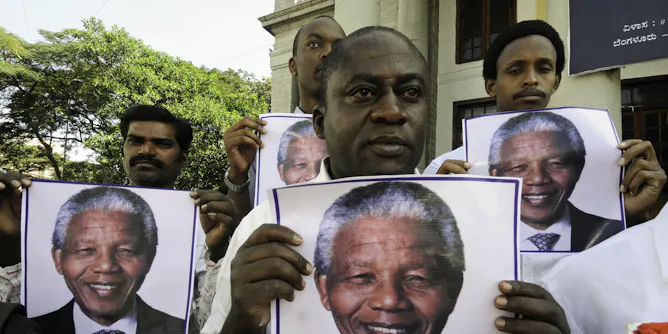
Mandela left at the right time in 1999, when the country still seemed in a healthy state, after which he consolidated his international reputation.
Articles on African National Congress (ANC)
Displaying 121 - 140 of 480 articles
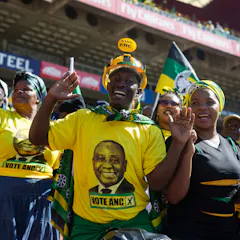
The challenge for the deepening of South Africa’s democracy is that the very existence of vanguardism prevents the realisation of empowered citizens.

The stalemate in Tshwane is a manifestation of coalition arrangements that serve the partisan interests of parties, to the detriment of citizens.
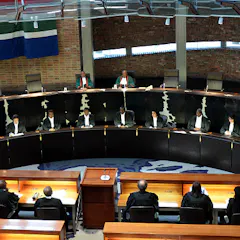
South Africa’s Constitutional Court verdict is possibly a defining moment for South Africa’s electoral system.
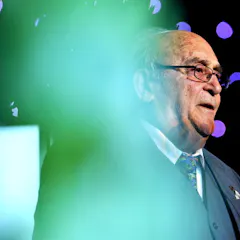
Goldberg was the youngest Rivonia triallist. Segregated prisons meant he was sent to Pretoria, while his fellow accused were incarcerated on Robben Island.

A readable and important new book on the struggle for justice in South Africa’s Oukasie township does not go far enough to question the feasibility of grassroots resistance.

The life and work of seminal South African writer, intellectual and politician Sol Plaatje seems more relevant than ever. We look into some of the latest scholarly inquiry.
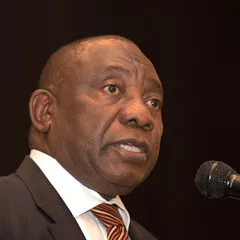
The challenge to deliver a persuasive speech comes firstly in the context of intense doubts as to whether President Ramaphosa is truly in charge of the ANC.
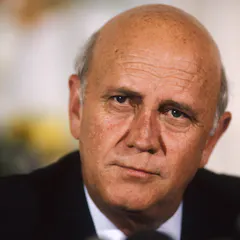
In his new capacity as President of South Africa, FW de Klerk directly experienced for the first time how the international community had abandoned its support for minority white rule.

In South Africa, state corruption has taken hold with utter disregard for ethics and democratic norms in a cynical exploitation of the post-apartheid transformation agenda.
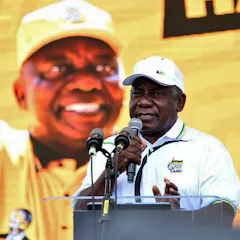
The year ahead promises to be a very difficult but also a very decisive year for South Africa. Is President Ramaphosa equal to the challenge?
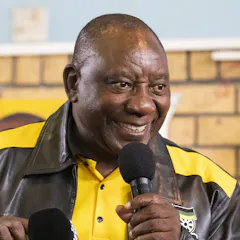
The most that may be hoped for from the party’s annual statement is evidence of a president who is confident, clear and courageous.
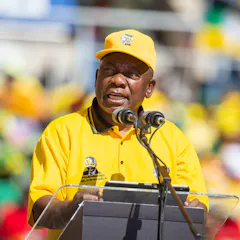
Coalitions work best when parties in the partnership are aligned politically.
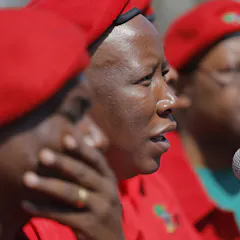
Political mistrust is high as the country looks to the next municipal elections in 2021.

Successful coalition governance ultimately depends on political maturity and the ability to govern across divisions.
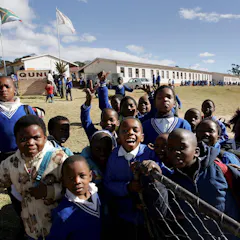
Objections raised about the school syllabus by parents, schools and civil society point to a bigger problem with the state.
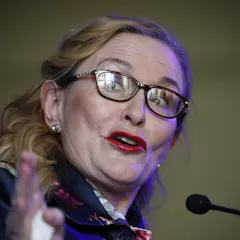
All signs point to the Democratic Alliance being in deep turmoil which will affect its strength as South Africa’s official opposition.
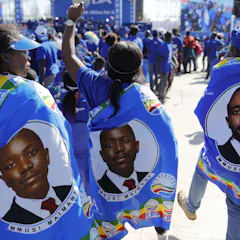
Race is the fault line. Prominent black DA figures label attempts to remove leader Mmusi Maimane as an attempt by whites to force black members into a subordinate position.
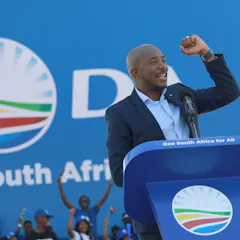
Because it’s a blend of political influences the transition it is facing has, inevitably, had an existential effect on the Democratic Alliance.
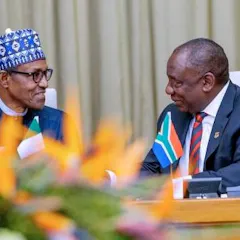
Although Nigeria and South Africa are often cast as rivals they have a strong bilateral relationship
Top contributors
-

Political Scientist, University of the Western Cape
-
Professor of Sociology, University of the Witwatersrand
-
Professor of Political Studies, University of Johannesburg
-
Professor of Public Affairs, Tshwane University of Technology
-
Professor in Political Science, University of South Africa
-
Visiting Professor at the Business School, University of the Witwatersrand
-
Professor of Urban Governance, University of the Witwatersrand
-
Professor of World Politics, SOAS, University of London
-
Visiting Professor and Professor Emeritus, University of the Witwatersrand
-
Associate professor, University of Cape Town
-
Emeritus Associate Professor in Public Law, UCT. Visiting Adjunct Professor, WITS School of Governance; Director, Africa Programme, University of Cambridge Institute for Sustainability Leadership, University of Cambridge
-
Post Doctoral Researcher, Graduate School of Business (GSB), University of Cape Town
-
Extraordinary Professor, Department of Political Sciences, University of Pretoria
-
Chief Research Specialist in Democracy and Citizenship at the Human Science Research Council and a Research Fellow Centre for African Studies, University of the Free State
-
Senior Research Fellow, Horn of Africa and Southern Africa, Institute of Commonwealth Studies, School of Advanced Study, University of London