
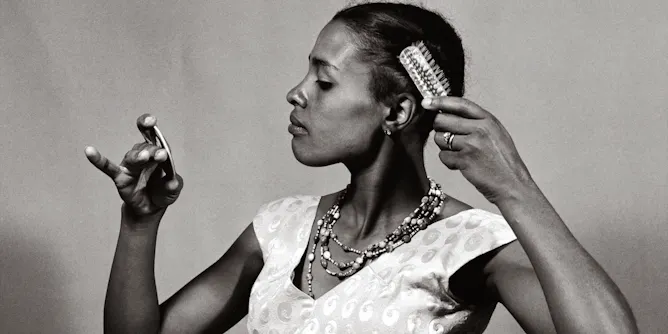
Drum’s male reporters are legendary, but women were far more involved in shaping the magazine’s content than many realise.
Articles on African cities + societies
Displaying 1 - 20 of 57 articles
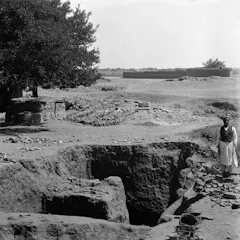
The flints reveal that villagers created local economies from their skills long before state enterprise began.

Digital platforms offer opportunities for African dance influencers to construct their own visions of what it means to be African.

While some creators proudly embrace the label of sex worker, many others reject it outright.
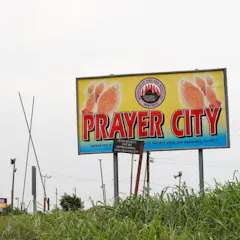
The vast prayer camps challenge stereotypes of Nigerian cities as chaotic, dysfunctional, and driven by religious tension.
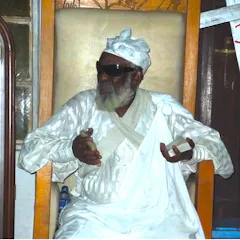
To secure health and wealth, many people combine elements from different religious traditions. One such movement is Chrislam.
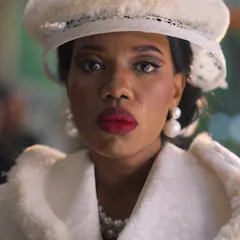
Power and pleasure collide with Black hopes and dreams in the show that has sparked global conversation.

Because iron could be used in tools, it was a technical and social revolution, especially for agriculture.

Literature about royal animals was used in workshops to imagine better futures.
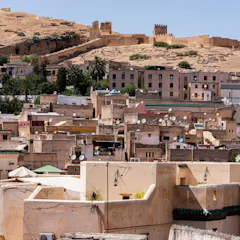
City transformation is increasingly being shaped by a complex interaction between the past and the future.
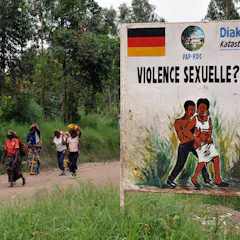
Men and women who took part in an interfaith programme experienced a remarkably lower incidence of violence, even years later.
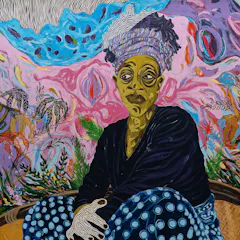
The show’s opening included a ritual performance by the artist, connecting the living with their ancestors.
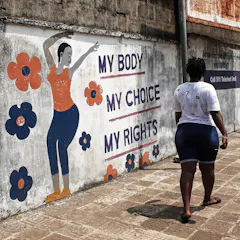
The new laws often shield the wealthy and punish the powerless, especially adolescent couples in relationships.

Why has international success evaded a region that’s so in love with the game?

Sexuality – especially queer sexuality – has always been one of the most heavily policed themes in African film.
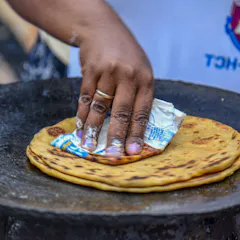
Rural people mostly grew their own food. But in the city, the daily meal became a commodity to be bought and sold.
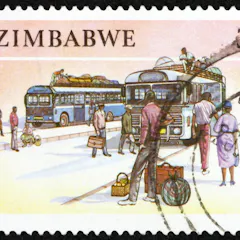
The respectful return in death, like the festive Christmas return of migrants, reinforces ties between generations.

Men and women experience and try to cope with stress in diverse ways.
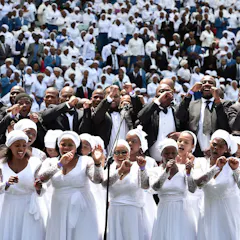
South Africans report greater inner peace, hope, forgiveness, and engagement with faith than the global norm.
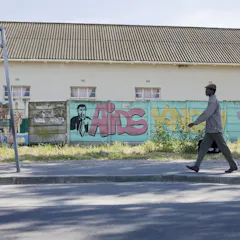
Young men in low-income communities in Cape Town and London often walk with great fear.
Top contributors
-

Assistant Professor, Harvard University
-
Professor of West African Anthropology, SOAS, University of London
-
Assistant Professor, Acadia University
-
Assistant Professor, Department of History, West Virginia University
-
Associate Lecturer at the National School of Architecture and Urbanism, Université de Carthage
-
Senior Lecturer, Stellenbosch University
-
Lecturer at the National School of Architecture and Urbanism, Université de Carthage
-
Professor and Chair of Allied Health Studies, Stephen F. Austin State University
-
Associate Professor of Sociology, School of International Service, American University
-
Ph.D Candidate and Public Scholar, Concordia University
-
Research Fellow, University of Manchester
-
Lecturer, Bayreuth University
-
Assistant Professor of African Studies and City Planning, University of North Carolina at Chapel Hill
-
Lecturer, University of the Witwatersrand
-
Senior Lecturer in Film and Television Studies, University of Cape Town