
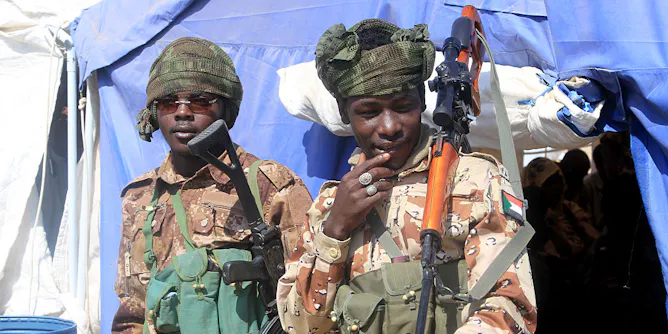
A new peace initiative has put the future of Sudan’s Islamist movement at the centre of post-war politics.
Articles on Africa
Displaying 41 - 60 of 1217 articles
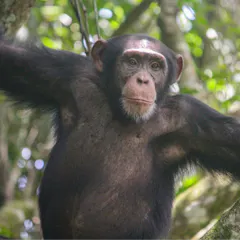
To study accumulative stone throwing among wild chimpanzees, researchers hike deep into the savanna-woodland of Boé — a habitat increasingly threatened by industrial mining.
Three experts explain how the rare Bundibugyo strain of Ebola may have crossed continents.
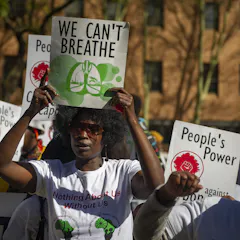
A landmark climate case before the African Court asks what African states must do to protect human rights, phase out fossil fuels, and tackle climate change.
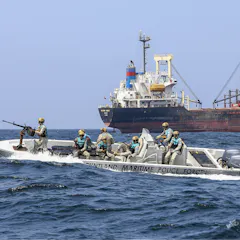
Three incidents in recent weeks have sparked concern over whether we’re seeing a resurgence of Somali piracy.
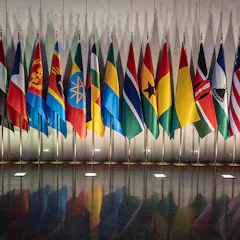
Sovereign debt markets are beginning to develop a way to manage shocks before they escalate into full restructuring episodes.
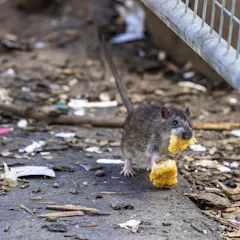
Weak surveillance and climate change could allow deadly hantaviruses to spread unnoticed across African countries, raising the risk of future outbreaks.
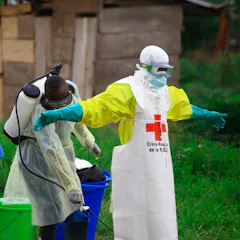
Everything you need to know about the Bundibugyo virus outbreak that has prompted the WHO to declare it a global health emergency.

The World Bank Group’s integration process must at least maintain the current independence, accessibility and effectiveness of its three accountability mechanisms.
Science can only change the world when societies decide to give it the means to do so.
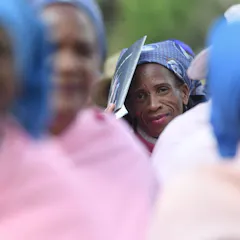
Botswana has significantly expanded income support for older people but it’s left them without the care they need.

These little predators are on tiny missions to seek and destroy mosquitoes, especially ones full of blood.
The Conversation Africa marks its eleventh anniversary this year with more than 12,000 articles celebrating varying levels of impact.
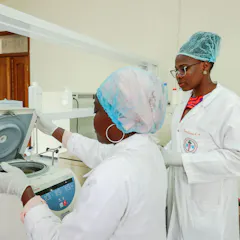
While Africa accounts for roughly 25% of the global disease burden, its people are largely invisible in randomised controlled trials.
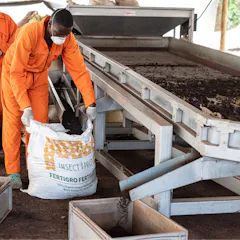
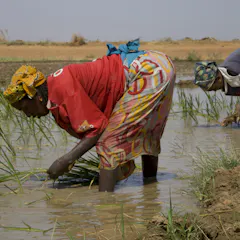
African food systems import 80% of the fertiliser they need. With Iran as a major producer, supplies are now limited and farming with less fertiliser is important.
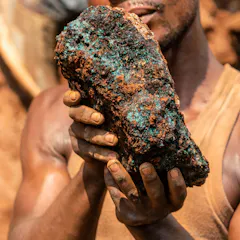
The rapid expansion of critical mineral extraction is trading away human and ecological well-being for technological breakthroughs. There are ways to fix this.

In the wake of the WHO’s One Health summit, a new atlas explores the interdependency between environmental, health and food security issues, and strategies for supporting sustainability and the welfare of all life forms.
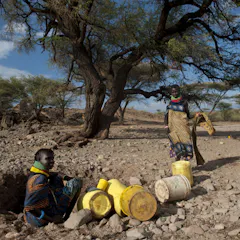
Climate change increases vulnerability to extremist recruitment, while al-Shabaab activity blocks adaptation, reinforcing a cycle of fragility.
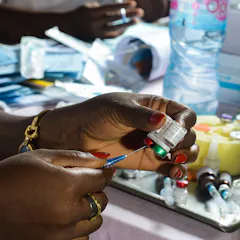
Malaria is still endemic in Africa.
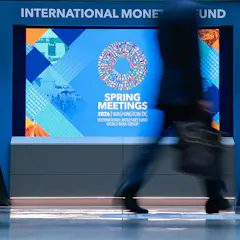
The IMF is not a neutral arbiter on any discussions relating to preferred creditor status. It is itself a direct beneficiary of the creditor hierarchy.
Top contributors
-

Professor of World Politics, SOAS, University of London
-
Professor/Senior Research Fellow, Centre for Advancement and Senior Non-Resident Fellow, Global Development Policy Center, Boston University of Scholarship, University of Pretoria
-
Post Doctoral Researcher, Graduate School of Business (GSB), University of Cape Town
-
Host, The Conversation Weekly Podcast, The Conversation
-
Senior Fellow, Centre for Policy Research (UNU-CPR), United Nations University; Aston University
-
Honorary Professor of International Relations, University of the Witwatersrand
-
Professor of Communications, Howard University
-
Research Professor, World Christianity and African Studies, DePaul University
-
Associate Professor of History, University of Washington
-
Associate Professor, China Studies Centre, Adelaide University
-
Professor of Economics, Salisbury University
-
Senior Research Fellow, Horn of Africa and Southern Africa, Institute of Commonwealth Studies, School of Advanced Study, University of London
-
Associate Science Editor & Co-Host of The Conversation Weekly Podcast, The Conversation
-
Gilles Pison is a Friend of The Conversation.
Anthropologue et démographe, professeur émérite, Muséum national d’histoire naturelle (MNHN); Ined (Institut national d'études démographiques)
-
Associate Professor, Department of Entomology; African-American Studies, University of Illinois Urbana-Champaign