

Children and teens with chronic diseases and their caregivers need to be able to find, evaluate and use electronic health information.
Articles on Adolescents
Displaying 1 - 20 of 187 articles

Offering daily recess to young children and teenagers alike can help strengthen students’ executive functioning skills, focus and creativity, among other benefits.

Understanding adolescent cannabis use requires looking beyond store locations to consider how young people obtain cannabis, why they use it and how to prevent harmful patterns of consumption.

Protection must also mean building the conditions young people need like stable relationships with adults who stay and real involvement in decisions about their care.

Droughts and floods reduce agricultural production, disrupt supply chains, and limit families’ access to fruits, vegetables, and other fresh foods.

Group interpersonal psychotherapy is an effective way to manage depression among perinatal adolescents.

Thinking about the quality of friendships allows us to consider the different elements that promote safety, support and security for both teens in a relationship.

Ghanaian adolescents with disabilities often face hostile experiences that contribute to negative self-perceptions.

An eight-country study assessed whether parenting programmes that were developed through research also work when offered at a wider scale in real-life conditions.

Alcohol use among adolescent girls and young women cannot be separated from transactional sex, coercion and violence in high HIV-burden settings.

This study shows peers are linked to mental health. But this doesn’t mean anxiety and depression are ‘contagious’.

Young people and those with trauma, such as veterans, are especially vulnerable to the difficulty of stopping cannabis use for sleep.

Young people don’t all contribute in the same way, and understanding the broader picture is the starting point for adults who want to support them.

Adolescents’ digital risks are shaped by inequality.

Whether a young person has public or private insurance – or is uninsured or underinsured – significantly influences their risk of death across many cancer types.

Our research found that teenagers who consumed high amounts of sugary drinks had 34% higher odds of being diagnosed with an anxiety disorder.
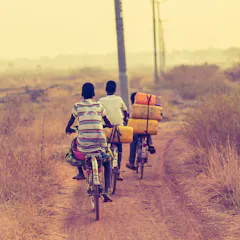
Even young children can make choices.
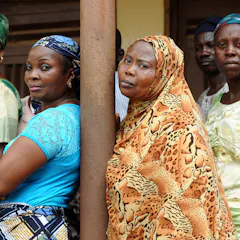
Unequal access to contraception poses risks to reproductive-age women, families and Nigeria’s development.

Angry, sad, worried, anxious. If your teen has ‘big feelings’ after the social media ban, here’s how to support them and keep your relationship intact.

Factors contributing to school violence are found in the family, the community and the school.
Top contributors
-

Professor, Canada Research Chair in Determinants of Child Development, Owerko Centre at the Alberta Children’s Hospital Research Institute, University of Calgary
-
Associate Professor of Neurology, University of Pittsburgh
-
Behavioural Scientist, Human Sciences Research Council
-
Associate Professor, School of Psychology, Scientist, Children's Hospital of Eastern Ontario Research Institute, L’Université d’Ottawa/University of Ottawa
-
Research fellow, UNSW
-
Senior Research Scientist, African Population and Health Research Center
-
Senior Research Fellow, National Drug and Alcohol Research Centre, UNSW
-
Senior Research Fellow and Deputy Director, Centre for Alcohol Policy Research, La Trobe University
-
Professor of Psychology, Texas State University
-
PhD student in Clinical Psychology, University of Calgary
-
Professor of Demography and Social Statistics., Obafemi Awolowo University
-
Senior Lecturer in Māori Language Revitalisation, Auckland University of Technology
-
Research Scientist, African Population and Health Research Center
-
Research Scientist, African Population and Health Research Center
-
Research Fellow, The Matilda Centre for Research in Mental Health and Substance Use, University of Sydney