

Dementia is now the leading cause of death, overtaking heart disease. The Conversation’s experts explain how Australians’ health has changed – both good and bad.
Articles on Access to health care
Displaying 1 - 20 of 26 articles

The NHI bill aims to ensure that all South Africans have access to quality healthcare services.

Despite Australia spending so much money on prisons, incarcerated women’s reproductive health care is lacking to the point of being degrading.

Mental distress can be a temporary reaction to life stress, or the beginning of a serious mental illness. It’s important to choose strategies and supports that work best for the individual.

The future of our health system depends on recruiting and retaining passionate and highly skilled health-care workers. It’s essential to build work environments where they feel supported and safe.

At the time Australia needs it most, there is a crisis in the workforce of psychologists trained to assess and treat brain and mental health conditions.

Government health organisations need to provide better support for Indigenous people suffering from musculoskeletal conditions.

A recent report has found First Nations children in Victoria have better health outcomes, however culturally appropriate research can better highlight what’s going well for First Nations kids’ health.

The Northern Territory has had alcohol restrictions since 2012. These restrictions are going to be lifted in July of this year, despite concerns expressed by First Nations people in the community.
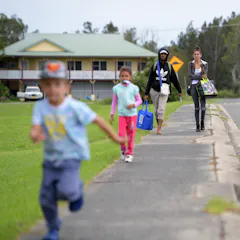
Australia’s east coast flooding is forcing people to confront challenges such as evacuations and loss of property. However, Aboriginal people are being left to find their own way through this crisis.
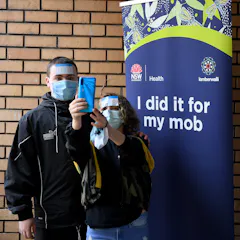
There have been many barriers for Aboriginal communities to access the vaccine during the pandemic. Despite this, communities are taking the lead in ensuring everyone gets vaccinated.
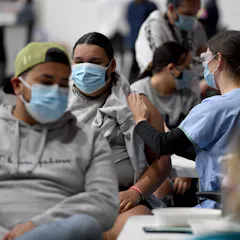
Predominantly white perspectives in health practice and policy development can exclude First Nations people in some health services. This is proving evident during the COVID-19 global pandemic.

The COVID-19 crisis in Wilcannia demonstrates how entrenched neglect has led to a community devastated by the global pandemic.
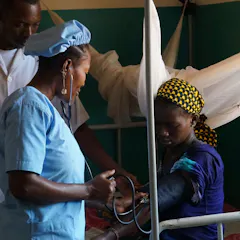
The exceptional measures deployed around the world during the COVID-19 pandemic have impeded access to urgent services like birth control, abortion and maternal and newborn care.

Indigenous people in Australia experience poorer health outcomes than non-Indigenous Australians. So it’s crucial health messaging is delivered in culturally appropriate ways.

Palliative care is about living well and meeting patients’ goals, but referral can be more complex than access to medical assistance in dying (MAID). Palliative care should be as accessible as MAID.

Inuit living in their traditional territory must travel long distances — often with no personal support — for specialized health-care services like cancer care, obstetrics and dialysis.

People with schizophrenia are almost three times more likely to die from COVID-19 than those without the serious mental illness, making it second only to age as a risk factor for mortality.
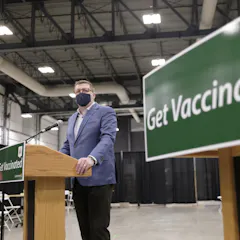
One important metric by which we can measure the success of our public health system: Ensuring everyone has access to immunization in their community.

People with disabilities are overlooked for COVID-19 vaccine distribution and triage protocols. We need to make this group a priority and address issues that put them at risk.
Top contributors
-

Director of Research, Centre for Democratic Development Ghana
-
Senior Research Officer and the Afrobarometer Project Manager for Anglophone West Africa, Centre for Democratic Development Ghana
-
Afrobarometer Project Manager for Francophone West Africa, based at the Institute for Empirical Research in Political Economy (IREEP), African School of Economics
-
Project manager and research professional, CIDIS (Centre interdisciplinaire de développement international en santé), Université de Sherbrooke
-
Program Director, Health and Aged Care, Grattan Institute
-
Ottawa Health Services Network Inc.
-
Professor, Public Service Research, UNSW
-
Adjunct Professor at the National Drug Research Institute (Melbourne based), Curtin University
-
Co-Director, Global Centre for Preventive Health and Nutrition, Deakin University
-
Community Legal Educator, North Australian Aboriginal Justice Agency, Indigenous Knowledge
-
Associate Professor of Linguistics and Director of Language Lab, The University of Western Australia
-
Honorary Research Fellow and Associate, School of Social Sciences, Linguistics, The University of Western Australia
-
Associate Dean Education, Gnibi College, Southern Cross University
-
Pro Vice Chancellor Indigenous (Academic) and Director, National Centre for Cultural Competence, University of Sydney
-
PhD Psychology Department, Stellenbosch University