
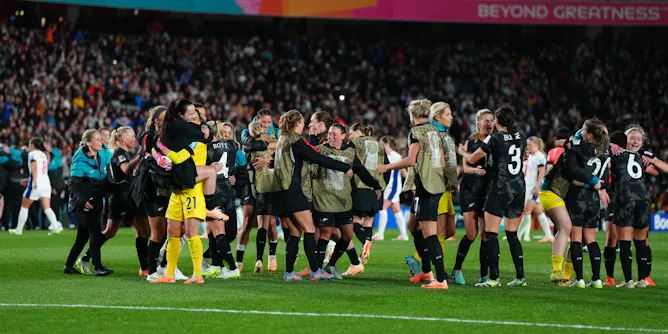
A sensational opening match win by New Zealand proves the doubters wrong and sets the stage for a milestone Women’s World Cup.
Articles on 2023 FIFA Women's World Cup
Displaying 21 - 38 of 38 articles

Data suggests most professional sports experience some form of home ground advantage. But it’s not straightforward.

Many concussions in soccer occur when two players compete to head the ball. But extra technique training, modifying how we play the game, and more ‘red cards’ help cut the risk.
While positive change has been seen, especially surrounding this year’s Women’s World Cup, there is still much work to be done by organizations governing women’s professional sports.
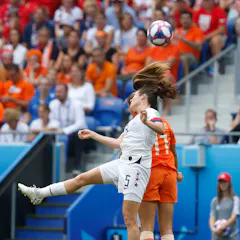
Football is starting to take concussion seriously – but there’s more to do.
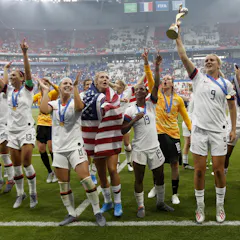
The US national team is the favorite going into the tournament in New Zealand and Australia. But growth in the global game has seen others catch up.
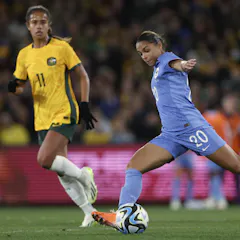
While the 2023 Women’s World Cup might be the best yet for women in terms of investments and viewership, there is still room for improvement for the 2027 World Cup.

Nigeria leads in the rankings of the four African teams. Two others are making debut World Cup appearances and there’s a storm cloud over South Africa.
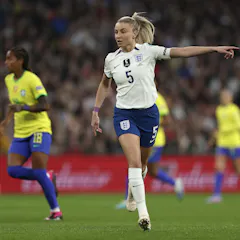
Women are twice as likely as men to tear their ACL, and it’s not just because of physiological differences.
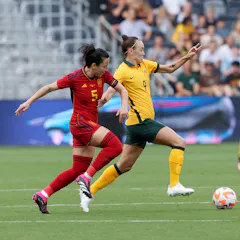
Many athletes playing in the 2023 FIFA Women’s World Cup will likely suffer breast injury from play. Symptoms can last for weeks, harm performance and have long-term consequences.
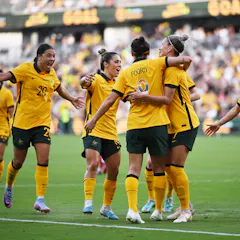
It’s the biggest sporting event in Australia since the 2000 Sydney Olympics.
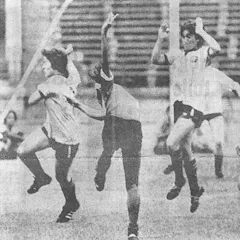
In the lead-in to the 2023 FIFA Women’s World Cup, it is revealing to look back on the media coverage of women’s international soccer.
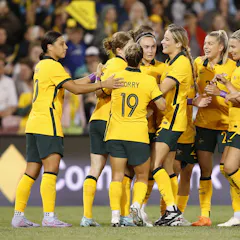
The tournament is an opportunity to dispel period myths and put a focus on the specific needs of athletes who menstruate.

We examined how newspapers in the UK covered the 2015 and 2019 FIFA Women’s World Cups.
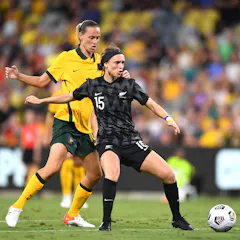
The successful Australia-New Zealand bid for the Women’s World Cup made much of the tournament’s potential to build the game for girls and young women. History suggests this is easier said than done.
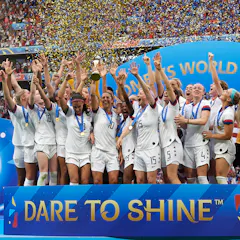
Growing interest in women’s football must be encouraged.
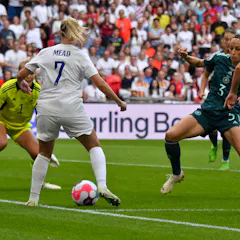
ACL injuries are the most serious kind of knee damage and they are more prevalent in female footballers.

The Qatar World Cup has attracted criticism of the country’s human rights. With Australia set to host the women’s world cup next year, there’s some work we need to do in this area, too.
Top contributors
-

Football Consultant & Visiting Senior Lecturer in Strategy and Governance in Women's Football, University of Portsmouth
-
Associate professor, California State University, Fullerton
-
Lecturer of Communication, Sports Media, Deakin University
-
Vice-Chancellor Independent Research Fellow, Sport, Business and Society Research Group, Loughborough University
-
Senior Lecturer, Western Sydney University
-
Senior Lecturer, School of Business, Western Sydney University
-
Adjunct Lecturer at the Centre for Justice, Queensland University of Technology
-
Associate Professor in Accounting and Sport Finance, University of Portsmouth
-
Professor in Sociology of Sport and Gender, University of Waikato
-
Senior Lecturer, School of Business, Western Sydney University
-
Professor, Kinesiology & Physical Education; Fellow, Balsillie School of International Affairs, Wilfrid Laurier University
-
Professor and Chair of Allied Health Studies, Stephen F. Austin State University
-
Senior Researcher, Department of Family Practice, University of British Columbia
-
Researcher and Senior Lecturer, University of Wollongong, APA Sports Physiotherapist, University of Wollongong
-
Senior Lecturer in Physiotherapy and Post-doctoral Research Fellow, La Trobe University