
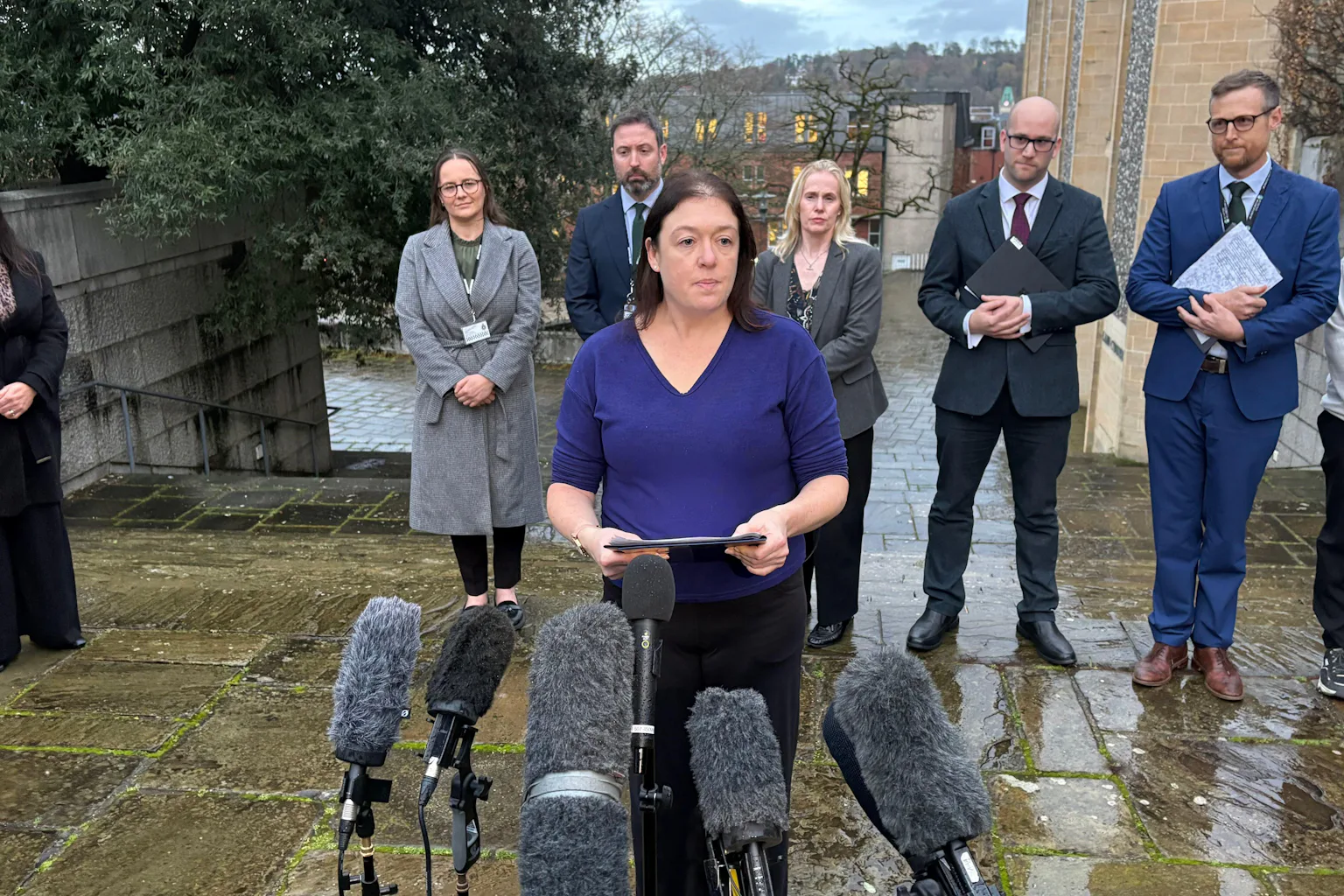
Echoing the case of Gisèle Pelicot in France, Joanne Young waived her right to anonymity following the conviction of her ex-husband for drugging her, raping her and allowing other men to rape her too. Philip Young had routinely drugged his wife over many years, soliciting men online to come into their home and rape her.
In the UK and Ireland, victims of sexual violence are entitled to lifelong anonymity. This reflects an enduring reality: rape and sexual assault remain highly stigmatising experiences.
Yet there is growing evidence that survivors are choosing to forgo that protection. Along with colleagues, I have been systematically studying those who choose to waive their right to anonymity. Though survivors’ experiences are very different, common themes emerge.
By waiving this right, Young and Pelicot have opened up a conversation about violence against women and girls. This conversation is sorely needed.
During their trial, Norman Macksoni, Richard Wilkins, Connor Sanderson-Doyle and Mohammed Hassan argued that their sexual activity with the unconscious Joanne Young was consensual as her then-husband gave consent. Another man, Dean Hamilton, admitted charges including rape in February, and Philip Young also pleaded guilty at an earlier hearing to a string of offences.
Pelicot and supporters of Young have said that shame must change sides. They are not wrong. In the UK case, here is a cohort of men who argued in open court that a husband has the power to decide who has sexual access to his wife. That is both shocking and shameful.
Agency and empowerment
Victims of sexual assault experience domination of their bodily autonomy in the most intimate way. And they often describe their experiences in court as similarly intrusive and violating. Intimate videos are replayed, there can be extensive scrutiny of their sexual history and relentless questions about their consent.
Reasserting their agency is another key motivation of those who waive their anonymity. Speaking can be empowering after a trial where they have had very little control over the outcome. In the all too rare instances when a conviction is secured (unlike when it is not), victims are free to speak. Those who feel they have survived both the abuse and the judicial system often feel compelled to speak on behalf of the many others who don’t seek or get justice.
There is a final reason that survivors can be motivated to waive their anonymity. Doing so can allow them to find solidarity with others who share their experience. Sexual violence is associated with a high burden of ill health compared to other traumatic life events. This might be mental health consequences including depression and post-traumatic stress, and physical issues including cardiovascular, metabolic and immune disorders.

Research consistently shows that deliberate, intentional acts of violence disproportionately damage people’s faith in others. This can make it difficult for victims to connect with others. This is amplified in cases where the perpetrator is a family member. Previously trusted husbands and fathers have not only exploited their position in the family unit, they have fractured relationships.
For many, and particularly for women where family roles are heavily emphasised, much of their identity is defined by these relationships: daughter, wife or mother. Alongside shame, sexual abuse corrupts these identity-based relationships, further disconnecting victims when they need support.
Philip Young, a former Conservative councillor in Swindon, Wiltshire, harnessed the power of like-minded others. At short notice, after he had drugged Joanne, he was able to find ample men in a small geographical area willing to assault his unconscious wife.
In going public, Young and Pelicot have both harnessed the power of like-minded others for good. Waiving anonymity can allow victims to connect with others at a very vulnerable point in their lives.
But Lavinia Kerwick, the first woman in Ireland to waive her anonymity after the conviction of her rapist in 1991, has described the burden of doing so. The survivor rather than the perpetrator becomes publicly synonymous with the crime. It can become a lens through which others see victims.
Waiving anonymity is not for everyone and certainly shouldn’t be an expectation placed on survivors. And clearly survivors make their decisions based on their own circumstances and concerns. Either way, it is a difficult decision.
Survivors are acutely aware that waiving anonymity comes at a personal cost. But for those who do, their actions are driven by collective rather than personal concerns. In research with colleagues, we have referred to this phenomenon as collective post-traumatic growth. After their trauma, survivors rebuild a view of the world that includes the need for a different future, a better one for all. Drawing strength from the support and solidarity after their disclosure, they are driven to act on behalf of others.
Sexual violence is not simply a private, personal matter. It is a corrosive social force, the effects of which extend far beyond the family home. It damages relationships and communities, and shatters the integrity of our social, judicial and political institutions. Young, Pelicot and others waive their anonymity to progress social, political and legislative change for everyone. It’s time to trade in the shame and offer them our gratitude.