

Three decades of data from UK harbour porpoises show mercury is still increasing despite a global treaty to reduce it.
Zoological Society of London

Founded in 1826, the Zoological Society of London (ZSL) is an international scientific, conservation and educational charity whose mission is to promote and achieve the worldwide conservation of animals and their habitats. Our mission is realised through our groundbreaking science, our active conservation projects in more than 50 countries and our two Zoos, ZSL London Zoo and ZSL Whipsnade Zoo.
We are devoted to conservation and education, the worldwide conservation of animals and their habitat.
Our scientists in the laboratory and field, animal management teams at both zoos and our veterinarians contribute wide-ranging skills and experience to both practical conservation and the scientific research that underpins this work.
The ZSL’s Institute of Zoology (IoZ) is a world-renowned research centre working at the cutting edge of conservation science.
IoZ has an established record of conservation impact in important research areas, including wildlife health, bringing threatened species back from the brink of extinction, global biodiversity monitoring, co-existence between wildlife and people, mitigating the impacts of climate change on biodiversity.
IoZ is affiliated with University College London (UCL), specifically with the UCL Research Department of Genetics, Evolution and Environment. Our research staff are accorded honorary status within the UCL Division of Biosciences, part of the Faculty of Life Sciences.
Links
Articles

Protéger le guépard du Nord-Ouest africain, c’est préserver toute une chaîne de vie fragile mais vitale.
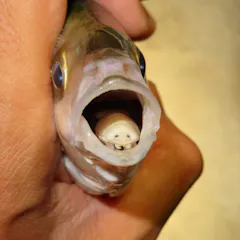
Save the pandas, sure, but what about the worms in their guts?

Our best chance of stabilising our climate and adapting to the changes ahead lies in protecting and actively restoring nature.
Oil and gas companies operating in the North Sea are regularly breaching legal limits and releasing too much polluted wastewater, a new report claims.

The United Nations Framework Convention on Climate Change and its Convention on Biological Diversity are separate platforms, but climate change and biodiversity loss urgently require a joint approach.
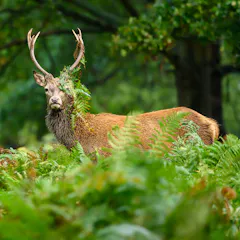
Top conservation scientists demand a legally-binding requirement to reverse biodiversity loss at home and overseas.
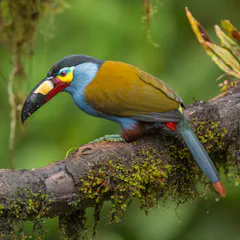
Wildlife can take years or decades to respond to environmental changes made by humans.
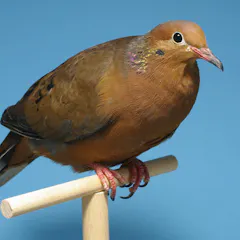
Surviving solely in zoos and botanic gardens are 33 animal and 39 plant species.

Changing habitat ranges, competition for food and water, and biological effects of climate change all pose threats to wildlife.
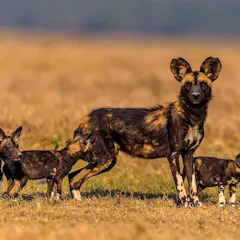
Les chiens sauvages d'Afrique s'adaptent à la hausse des températures en utilisant un indice qui ne permet plus de prévoir avec précision les meilleures conditions de reproduction.
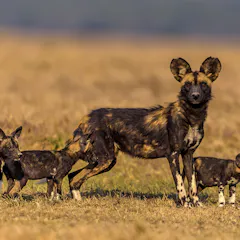
African wild dogs are adapting to rising temperatures using a cue that no longer accurately predicts the best conditions for reproduction.
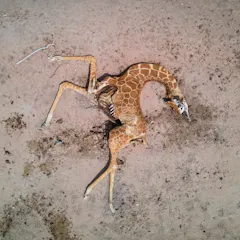
Many wildlife species face an uncertain future due to recurring, severe drought.
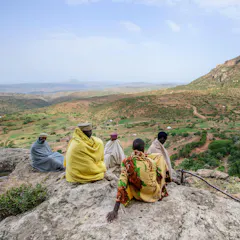
We used satellite imagery to track the decline of vegetation since the civil war began.
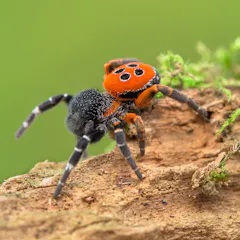
Don’t be afraid of spiders – be afraid for spiders
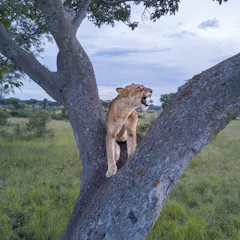
Lions don’t generally have armies of hyenas, but not every aspect of The Lion King is inaccurate.
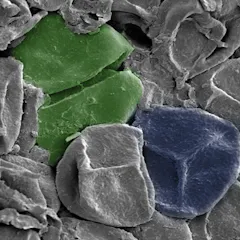
Quand la vie, sortie des océans, a-t-elle gagnée la terre ? Un extrait du livre « Evolution » qui paraît ce jour aux éditions Delachaux & Niestlé.

Many mammals depend on large areas and trans-boundary conservation for their survival. When this is obstructed it can have a catastrophic impact on animal populations.

Elephants, livestock and grass all play an important role in ensuring the survival of the Hirola - the world’s rarest antelope.
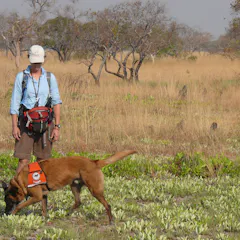
Cheetah’s rarity and elusiveness poses a problem for conservationists who need to know where they still persist, and whether their numbers are increasing or decreasing.
Authors
-

Fellow, Zoological Society of London
-
Professor of Wildlife Epidemiology & Deputy Director of Science, Zoological Society of London
-
Wildlife ecologist, Zoological Society of London
-
Postdoctoral Research Assistant, Zoological Society of London
-
Senior Research Fellow, Zoological Society of London
-
Postdoctoral Researcher, Zoological Society of London
-
Postdoctoral Researcher in Conservation, Zoological Society of London
-
Honorary Research Associate, Zoological Society of London
-
Professor, Conservation Biology, Zoological Society of London
-
Head of Indicators and Assessments Unit, Zoological Society of London
-
Postdoctoral Researcher, Toxicology, Institute of Zoology, Zoological Society of London
-
Professor, Zoological Society of London
-
Professor of Conservation Science, Zoological Society of London
-
Chair of the IUCN Spider and Scorpion Specialist Group, Zoological Society of London
-
Zoologist, Zoological Society of London