

Evidence suggests that Ontario neither had a shortage of pre-authorized housing starts to accommodate its growing population, nor did it have a shortage of designated land to build such homes.
York University, Canada

York University is a modern, multi-campus, urban university located in Toronto, Ontario. Backed by a diverse group of students, faculty, staff, alumni and partners, we bring a uniquely global perspective to help solve societal challenges, drive positive change and prepare our students for success. York’s fully bilingual Glendon Campus is home to Southern Ontario’s Centre of Excellence for French Language and Bilingual Postsecondary Education. York’s campuses in Costa Rica and India offer students exceptional transnational learning opportunities and innovative programs. Together, we can make things right for our communities, our planet, and our future.
Links
Articles

In 1776, with a population of 2.5 million, few imagined that within two centuries, the U.S. would become the dominant superpower. It’s not inconceivable that Canada could do the same by 2223.

The pharma industry claims lower prescription drug prices will mean less access to new medication for Canadians. It’s an old threat that pits profits against patients’ rights to affordable drugs.
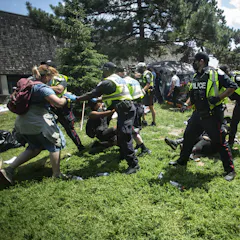
Upcoming changes to how complaints against Ontario police officers are processed will make it even harder to monitor human rights violations by police.

Privatization is an idea that — like a zombie —just won’t die. It’s re-emerging with calls to solve the long-term care crisis with for-profit care homes. Evidence refutes the same old arguments.

A university professor who researches emergency management suddenly found himself in the middle of one of Canada’s worst mass shootings.

It’s very important for tourists to understand the risks of visiting volcanic sites and properly prepare themselves for excursions to see volcanic eruptions.

Mayors are generally successful in getting their policy preferences enacted. That’s why Ontario’s Bill 39 isn’t really necessary.

Digital technologies have the potential to yield positive results, if co-developed and used ethically with Indigenous communities.
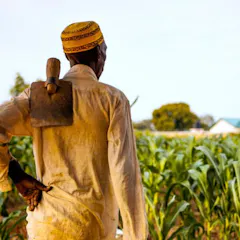
Climate change is affecting the availability of food to the families of farmers in Ghana.

Both teachers and our media landscape contribute to how youth make sense of what is expected of them, and who are bound to excel in which fields.
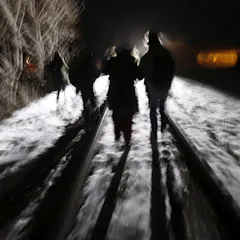
A report finds that Canada’s flawed deportation process undermines refugee protection. Here’s why it must be reformed so that it meets Canada’s human rights obligations.

Cold War-era bunkers in Prague have been repurposed as tourist sites and nightlife venues. With war in Ukraine bringing renewed nuclear threats, could these bunkers revert to their original purpose?

Despite Jair Bolsonaro’s defeat in Brazil, democracy remains under threat. The legacies of authoritarian figures like Bolsonaro and Donald Trump live on.

As Canada offers international students additional pathways to residency, we must improve support and retention strategies if we expect students to contribute to our sustained growth.

Many of the world’s most powerful and aspiring leaders are aging or elderly men. That’s a big problem.
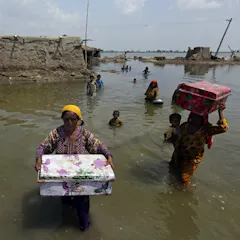
Does the Global North have a moral responsibility to protect and compensate those in the Global South that disproportionately bear the brunt of climate change devastation?

With Twitter users considering a relocation to the decentralized social media network Mastodon, there’s an opportunity for the CBC to lead the way in re-imagining online futures for Canadians.

Members of fan communities in China participate in online activities under Chinese surveillance, but some group members are able to leverage censorship to their own ends.

Sen. Rosa Galvez has called for ambitious and coherent government intervention to address the risks financial institutions pose to climate. Here’s why Canadians must rally around her.
Authors
-

Associate Professor of Human Resource Management, York University, Canada
-
Associate Professor, School of Human Resource Management, York University, Canada
-
Professor of Organisation Studies, University of Oxford; York University, Canada
-
Associate Dean, Indigenous Health, York University, Canada; Queen's University, Ontario
-
JD Candidate at Osgoode Hall Law School, York University, Canada
-
Associate professor, Department of Family and Community Medicine, University of Toronto; York University, Canada; University of Sydney
-
Fellow / Faculty Associate, Berkman Klein Center for Internet & Society, Harvard University; York University, Canada
-
Assistant Professor, School of Nursing, York University, Canada
-
PhD Student, Political Science, York University, Canada
-
Assistant Professor of African Canadian History, York University, Canada
-
Senior Librarian, Digital Scholarship Infrastructure Department, York University, Canada
-
Associate professor, York University, Canada
-
Professor, Faculty of Education, York University, Canada
-
Professor, York University, Canada
-
Professor, Faculty of Education, York University, Canada