

The controversial fantasy novel and its sequels enticed more authors to experiment with self-publishing, but the latter has a history that long predates the steamy bestseller.
York University, Canada

York University is a modern, multi-campus, urban university located in Toronto, Ontario. Backed by a diverse group of students, faculty, staff, alumni and partners, we bring a uniquely global perspective to help solve societal challenges, drive positive change and prepare our students for success. York’s fully bilingual Glendon Campus is home to Southern Ontario’s Centre of Excellence for French Language and Bilingual Postsecondary Education. York’s campuses in Costa Rica and India offer students exceptional transnational learning opportunities and innovative programs. Together, we can make things right for our communities, our planet, and our future.
Links
Articles
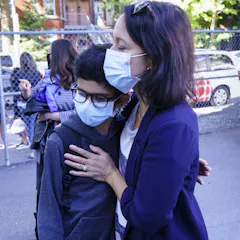
A successful transition in September is a whole-family affair.

A recent survey has found that only a few of the 205 firms who signed the BlackNorth Initiative have actually diversified. Fundamentally, their idea of reform is not about tackling systemic racism.
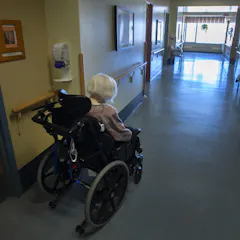
Research on the catastrophic effects of COVID-19 in long-term care homes is shedding light on avenues for positive change.

A discussion is long overdue on how immune-insecure people have to deal with COVID-19.
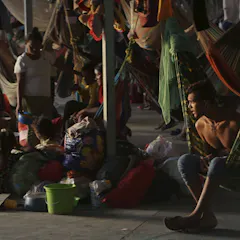
As high-income countries move into post-vaccination life with vaccination rates of over 80 doses per 100 people, only 1.1 per cent of people in low-income countries have received at least one dose.

How can settler-Canadians cheer for their country at the Tokyo Olympics after the recent discoveries of hundreds of unmarked graves of children who attended Indian Residential Schools?
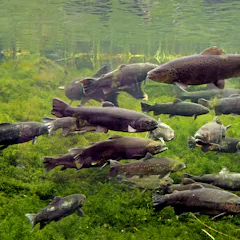
The growing frequency of climate extremes affected human health and caused wide-scale damages to the ecosystems that people depend upon, including agriculture, fisheries and freshwater.

Until wonder is welcomed in all workplaces, the health of our society and our capacity to imagine new alternatives is contingent on the ability to experience and refine wonder in artistic spaces.

Existing racism and implicit bias in Canadian media downplayed the terrorist attack by a white accused while exaggerating and staying silent on the reasons behind a hit-and-run by Muslim teens.

When public art pairs artistic expression with community engagement, it can honour the diverse communities that share public spaces and spur important conversations.

A new standing committee will ensure that Canadian federal policy is based on science. The committee should consider critical ethical thinking, scholarship and action, as well as legal frameworks and sociocultural values.

When a crisis like COVID-19 disrupts expectations for the future, it also disrupts how health messaging works. Advertising research shows three ways that health campaigns can succeed in a crisis.
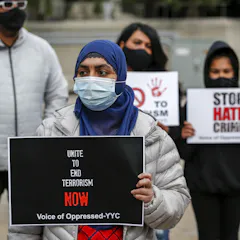
Filing terrorism charges in the London attack marks the first time in Canada investigators have done so in an Islamophobia case.

Whether the perpetrator in the attack on a Muslim family that left four dead is charged with terrorism remains to be seen. But laying terrorism charges is legally complex.

Green spaces can be part of the plan to ‘build back better’ after COVID-19. But city officials and policy-makers must address systemic racism for urban green spaces to benefit public health.
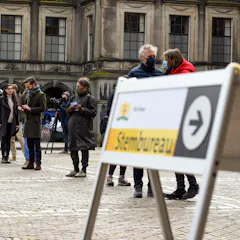
The March elections in the Netherlands, and the fact that a government still hasn’t been formed, illustrate both the benefits and problems with proportional representation.

Known variously in Juno history as ‘Best Single,’ or ‘Best-Selling Single,’ and now ‘Single of the Year’ this award always garners attention. Reflections on select singles since 1979.

As Israel and Egypt enter into discussions about a truce with Hamas, Palestinian children’s thoughts and feelings on the conflict must be heard.
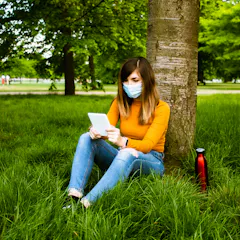
Publishing houses face strain, and in some cases, closure, as a result of the coronavirus pandemic. Authors are looking for alternative ways to get their work to readers.
Authors
-

Associate Professor of Human Resource Management, York University, Canada
-
Associate Professor, School of Human Resource Management, York University, Canada
-
Professor of Organisation Studies, University of Oxford; York University, Canada
-
Associate Dean, Indigenous Health, York University, Canada; Queen's University, Ontario
-
JD Candidate at Osgoode Hall Law School, York University, Canada
-
Associate professor, Department of Family and Community Medicine, University of Toronto; York University, Canada; University of Sydney
-
Fellow / Faculty Associate, Berkman Klein Center for Internet & Society, Harvard University; York University, Canada
-
Assistant Professor, School of Nursing, York University, Canada
-
PhD Student, Political Science, York University, Canada
-
Assistant Professor of African Canadian History, York University, Canada
-
Senior Librarian, Digital Scholarship Infrastructure Department, York University, Canada
-
Associate professor, York University, Canada
-
Professor, Faculty of Education, York University, Canada
-
Professor, York University, Canada
-
Professor, Faculty of Education, York University, Canada