
Infant malaria infections can be cut by up to 30% when anti-malarial drugs are given intermittently over a 12-month period…
WEHI (Walter and Eliza Hall Institute of Medical Research)

WEHI is where the world’s brightest minds collaborate and innovate to make life-changing scientific discoveries that help people live healthier for longer. Our medical researchers have been serving the community for more than 100 years, making transformative discoveries in cancers, infectious and immune diseases, developmental disorders and healthy ageing. WEHI brings together diverse and creative people with different experience and expertise to solve some of the world’s most complex health problems. With partners across science, health, government, industry, and philanthropy, we are committed to long-term discovery, collaboration and translation. At WEHI, we are brighter together.
Links
Articles
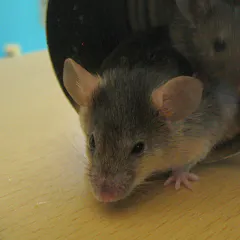
The proportion of people with desirable physical traits could rapidly accelerate over a few generations with the aid of a diet that tweaks particular genes, a study suggests. Research by a team at Sydney’s…
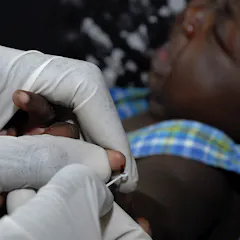
The great burden of death and disease caused by the malaria parasite often goes unnoticed in the developed world. But it’s the leading cause of death in children under five years old in many sub-Sahara…

The Federal Government’s main medical research funding body, the National Health and Medical Research Council (NHMRC), last week announced its 2011 program and development grants, and postgraduate scholarship…

One touch and you’re infected. By the next day your muscles ache, you have a fever and the beginnings of a headache. You don’t know it yet, but you only have a one in three chance of survival and you’ve…
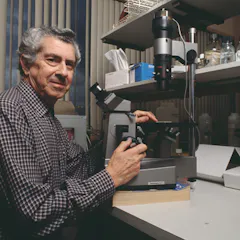
Every year at the beginning of October, a frisson runs through the global medical research community. Who will win the greatest lottery of them all, the Nobel Prize for Medicine? In a cynical and sceptical…

The progress and success of any society, and in fact civilisation, is the result of its collective knowledge. It’s hard to fathom the amount of knowledge gathered through millennia of human evolution…
Researchers have for the first time identified a “programmed cell death” pathway in parasitic worms that could one day lead…

Australia faces many big challenges – in the economy, health, energy, water, climate change, infrastructure, sustainable agriculture and the preservation of our precious biodiversity. To meet these, we…

Why are there fewer women working in science than men? Things have certainly improved, with participation in many branches of science at undergraduate and graduate levels now broadly balanced between the…
A scientific discovery made 20 years ago at the Walter and Eliza Hall Institute has led to the development of a potential…
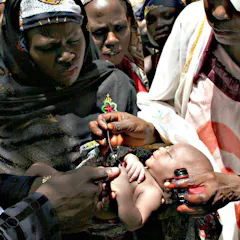
The Lancet, one of most prestigious medical journals in the world recently published a series of five papers on “the new decade of vaccines”. These were followed by a sixth paper – A call to action for…

Read the argument for the proposed legislation No one can deny that improved medical treatments and equity of access to them are essential to improving our community’s quality of life. Unfortunately, the…
Researchers have overturned conventional wisdom on how cell movement across all species is controlled, solving the structure…

Can the way we think influence the way we feel? Most of us would say yes. But can thinking affect the way our bodies behave on a genetic level? Can we, in essence, think ourselves better? A growing band…

Medical researchers breathed a sigh of relief this morning after seeing the News Limited report that cuts to health and medical research were no longer on the table. Although the signs from senior government…
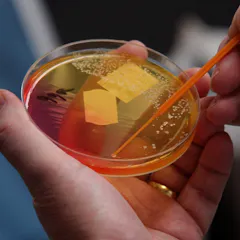
The World Health Organisation’s World Health Day is dedicated to the threat posed by the rapid emergence of drug resistant organisms. Viruses, parasites and bacteria have all developed some resistance…
Authors
-

Clinician Scientist, WEHI (Walter and Eliza Hall Institute of Medical Research)
-
Laboratory Head, Immunology Division, WEHI (Walter and Eliza Hall Institute of Medical Research)
-
Associate Professor, WEHI (Walter and Eliza Hall Institute of Medical Research)
-
Medical Researcher, WEHI (Walter and Eliza Hall Institute of Medical Research)
-
Laboratory Head, WEHI (Walter and Eliza Hall Institute of Medical Research)
-
Senior Research Officer, Blood Cells and Blood Cancer, WEHI (Walter and Eliza Hall Institute of Medical Research)
-
Researcher, WEHI (Walter and Eliza Hall Institute of Medical Research)
-
Masters of Research Student, WEHI (Walter and Eliza Hall Institute of Medical Research)
-
Head, Molecular Medicine Laboratory, WEHI (Walter and Eliza Hall Institute of Medical Research)
-
Postdoctoral Research Fellow, WEHI (Walter and Eliza Hall Institute of Medical Research)
-
PhD Student, Epigenetics and Development Division, WEHI (Walter and Eliza Hall Institute of Medical Research)
-
Immunology and Allergy Lead, Snow Centre for Immune Health, WEHI (Walter and Eliza Hall Institute of Medical Research)
-
Head, Melbourne School of Population and Global Health, The University of Melbourne, WEHI (Walter and Eliza Hall Institute of Medical Research)
-
Senior Research Officer, Blood Cells and Blood Cancer Division, WEHI (Walter and Eliza Hall Institute of Medical Research)
-
Laboratory Head, Immunology Division, WEHI (Walter and Eliza Hall Institute of Medical Research)