

The US National Women’s Soccer League was recently rocked by revelations of sexual abuse. But research shows that physical and verbal abuse is also disturbingly common in organized sports.
Villanova University

Villanova University is a Roman Catholic institution of higher learning founded by the Order of Saint Augustine in 1842 (Philadelphia). Villanova provides a comprehensive education rooted in the liberal arts; a shared commitment to the Augustinian ideals of truth, unity and love; and a community dedicated to service to others.
Links
Articles
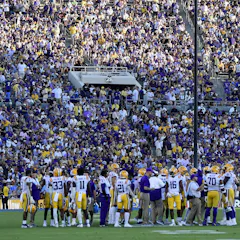
College admissions advantages for recruited athletes likely perpetuate educational inequality even more than those given to children of alumni.

Listen to experts discuss the business practices of pharmaceutical companies in The Conversation Weekly podcast.
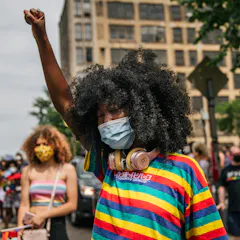
A researcher on youth organizing presents her evidence for how critical race theory benefits students and society.
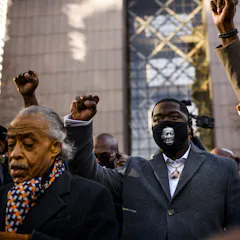
La muerte de Floyd, quien era negro, desencadenó una ola de protestas masivas contra el racismo en Estados Unidos. Este es un resumen de importantes investigaciones sobre la violencia policial.
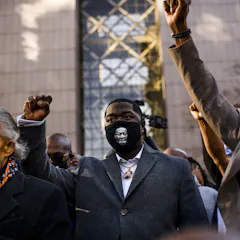
Research on racism and policing in the US, explained by the experts who study it.

Women and their careers benefit when men are allowed – and encouraged – by their employers to do more caregiving.

The gender gap in computing performance has dramatically narrowed, but a confidence gap remains.
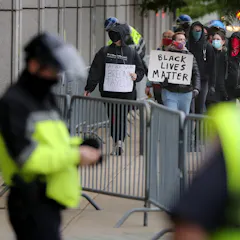
Across the United States, police are shielded from both public and departmental accountability by multiple layers of contractual and legislative protections.
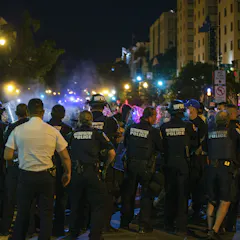
Muchos organismos encargados de hacer cumplir la ley no investigan adecuadamente las denuncias de mala conducta y rara vez sostienen las quejas de los ciudadanos. Las sanciones disciplinarias son pocas y se reservan para los casos más atroces.
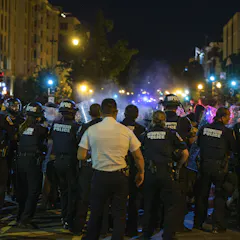
De nombreux organismes chargés de l’application de la loi n’enquêtent pas de manière adéquate sur les allégations de mauvaise conduite et ne reçoivent que rarement des plaintes de citoyens.
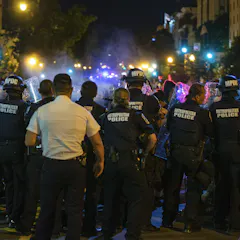
Many law enforcement agencies fail to adequately investigate misconduct allegations and rarely sustain citizen complaints. Disciplinary sanctions are few and reserved for the most egregious cases.

As more and more Americans are laid off, employers have to consider the cost of letting their staff go.
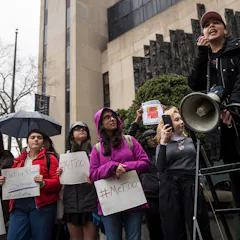
As a student protest continues at Syracuse University, a scholar argues that student activism is a valuable part of the college experience.

Nearly two-thirds of incarcerated mothers have never received a visit from their children. A scholar who studies women in prison explains the barriers that families face and how they might be removed.
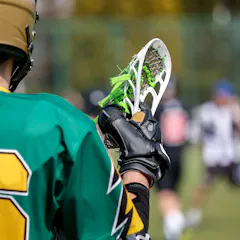
The college admission scandal that involved big bribes, coaches and Hollywood actors grew out of a system that favors rich parents and gives coaches too much leeway in admissions, a scholar argues.
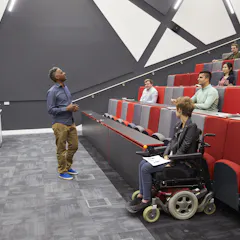
The case of a student with Down Syndrome who was denied entry into all eight of the sororities at her school illustrates a broader problem of exclusion for college students with disabilities.

The ‘resistance’ to the Trump administration has many forms, from grassroots organizing to making music. But a historian of 20th-century Germany asks whether opposing Trump is a real resistance.

Whether they do it full-time or as a side hustle, Americans who have some say over their schedules and tasks seem to covet the flexibility.
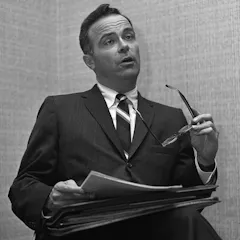
In the 1950s, NCAA Executive Director Walter Byers coined the term ‘student-athlete,’ which laid the groundwork for the organization to reap the windfall from its annual basketball tournament.
Authors
-

Associate Professor of Biochemistry, Villanova University
-
Professor of Law, Villanova University
-
Professor of Astrophysics and Planetary Science, Villanova University
-
Professor of Law, Villanova University
-
Assistant Professor of Theatre, Villanova University
-
Instructor in Communication, Villanova University
-
Professor of Nursing, Villanova University
-
Assistant Professor of Christian Ethics, Villanova University
-
Associate Professor of Communication, Villanova University
-
Assistant Professor of Theology, Villanova University
-
Associate Professor of Law, Villanova University
-
Associate Professor of Environmental Science, Villanova University
-
Director of the Institute to Address Commercial Sexual Exploitation, School of Law, Villanova University
-
Associate Professor of Environmental Science, Villanova University
-
Associate Professor of History, Villanova University